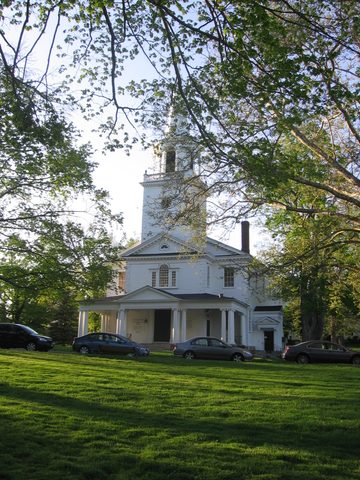

Jamaica, Queens: King Manor, Jamaica Avenue and Prospect Cemetery
Jamaica, New York
Pictures from Jamaica
See all 1 photos →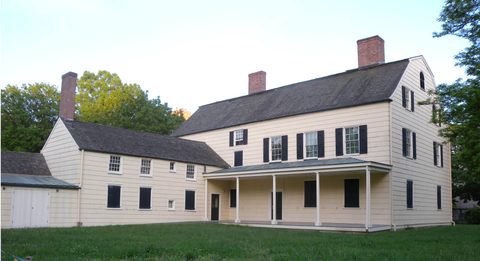
Jamaica is a neighborhood in the New York City borough of Queens, within Queens Community District 12; the district's northern boundary is Hillside Avenue. Rufus King was a delegate from Massachusetts to the Continental Congress and the Philadelphia Convention and one of the signers of the United States Constitution in 1787; he died at his mansion here on April 29, 1827, and that house is now the King Manor museum, at 150-03 Jamaica Avenue. Rufus King Park, 11.5 acres, is bounded by Jamaica Avenue, 150th Street, 89th Avenue and 153rd Street. Along the same avenue stand the First Reformed Church of Jamaica at 153-10, the Jamaica Savings Bank of 1897 at 161-02, the Jamaica Center for Arts & Learning at 161-04, the J. Kurtz and Sons Store Building of 1931 at 162-24, and Loew's Valencia Theatre at 165-11. Prospect Cemetery, at 159th Street and Beaver Road, was established in 1668. The neighborhood's population was 60,993 at the 2020 census.
-
sight
150-03 Jamaica Avenue. The house museum in the mansion where Rufus King, a signer of the United States Constitution, died on April 29, 1827.
-
sight
11.5 acres, bounded by Jamaica Avenue on the south, 150th Street on the west, 89th Avenue on the north and 153rd Street on the east.
-
sight
159th Street and Beaver Road. Established in 1668, with approximately 240 family plots containing 2,100 burials.
-
sight
Erected within Prospect Cemetery in 1857 by Nicholas Ludlum, and rededicated in 2008 as the Illinois Jacquet Performance Space.
-
162-24 Jamaica Avenue. An Art Deco store building of 1931, on the stretch of avenue that also carries the First Reformed Church at 153-10 and JCAL at 161-04.
-
161-04 Jamaica Avenue, in the former Queens Register of Titles and Deeds Building, a New York City landmark since November 12, 1974.
-
sight
165-11 Jamaica Avenue, now the Tabernacle of Prayer for All People.
-
153-10 Jamaica Avenue, now housing the Jamaica Performing Arts Center; jcal.org gives it as an 1859 building seating 400.
-
sight
94-20 160th Street. The surviving facade and bell tower, designated a city landmark on March 13, 1979.
-
89-11 Merrick Boulevard. The present building opened in 1966 and holds 195,000 square feet.
-
sight
85-37 JMC Way, also known as the Jamaica Muslim Center.
-
tip
93-02 Sutphin Boulevard, by the architect Kenneth M. Murchison, and the AirTrain JFK's Queens end; the fare there is $8.75 as of 2026.
King Manor and the buildings on Jamaica Avenue
King Manor stands at 150-03 Jamaica Avenue. Rufus King was a delegate from Massachusetts to the Continental Congress and the Philadelphia Convention and was one of the signers of the United States Constitution in 1787. He successfully added provisions to the 1787 Northwest Ordinance that barred the extension of slavery into the Northwest Territory, and he was an abolitionist and paid his workers. As the de facto Federalist nominee for president in 1816 he lost in a landslide to James Monroe, and he died at the mansion on April 29, 1827. Wikipedia says King Manor "is owned and maintained by the New York City Department of Parks and Recreation, and its interior furnishings are supervised by the King Manor Association," while the museum's own site says it is "owned by the City of New York, operated by the King Manor Association of Long Island, Inc." Rufus King Park is 11.5 acres, bounded by Jamaica Avenue on the south, 150th Street on the west, 89th Avenue on the north and 153rd Street on the east.
Grace Episcopal Church and Graveyard is on Jamaica Avenue, designated by the Landmarks Preservation Commission on May 25, 1967 and listed on the National Register of Historic Places, as the Grace Episcopal Church Complex, on September 8, 1983. The Wikipedia article on Rufus King says he is buried in the Grace Church Cemetery, in Jamaica, Queens.
The First Reformed Church of Jamaica is at 153-10 Jamaica Avenue, designated by the Landmarks Preservation Commission on January 30, 1996 and listed on the National Register on April 16, 1980. Its building now houses the Jamaica Performing Arts Center, and jcal.org gives the church as an 1859 structure seating 400. The Jamaica Center for Arts & Learning occupies the former Queens Register of Titles and Deeds Building at 161-04 Jamaica Avenue, a New York City landmark since November 12, 1974 and on the National Register since 1980. jcal.org says the building was "originally constructed in 1898" as "an imposing neo-Renaissance structure"; Wikipedia says it was "Built between 1895 and 1913," "an imposing, three story building with a limestone facade in the Neo-Italian Renaissance style," that "a rear five story addition was built in 1938," and that it "housed the Office of the Register until 1974." JCAL states its mission as to "offer quality visual and performing arts programs and to provide accessible education programs."
The Jamaica Savings Bank at 161-02 Jamaica Avenue was built in 1897 in the Beaux Arts style, by the architects William C. Hough and Edgar Deuell Jr. The Jamaica Chamber of Commerce Building is at 89-31 161st Street. The J. Kurtz and Sons Store Building, at 162-24 Jamaica Avenue, is Art Deco, built in 1931 by Allmendinger & Schlendorf. Loew's Valencia Theatre, at 165-11 Jamaica Avenue, is now the Tabernacle of Prayer for All People. La Casina is at 90-33 160th Street. St. Monica's Church, at 94-20 160th Street, survives as a facade and bell tower, designated a city landmark on March 13, 1979 and listed on the National Register on April 9, 1980.
Older ground, the institutions and the numbers
Prospect Cemetery, at 159th Street and Beaver Road, was established in 1668 and appears in the early record as a "burring plas." It holds approximately 240 family plots containing 2,100 burials, among them 54 individuals who served as soldiers during the Revolutionary War and the Founding Father Egbert Benson. Surnames on its ground include Bergen, Brinkerhoff, Lefferts, Nostrand, Remsen, Sutphin and Van Wyck, all of them names carried by streets. The Sutphin Boulevard article traces one of them: "It comes from the Dutch name Sutphin, which is derived from the Dutch city of Zutphen." Within the cemetery stands the Chapel of the Sisters, erected in 1857 by Nicholas Ludlum in memory of his three deceased daughters and rededicated in 2008 as the Illinois Jacquet Performance Space.
The Queens Public Library's Central Library is at 89-11 Merrick Boulevard. The present building opened in 1966, cost $5.7 million, holds 195,000 square feet, and "was the first major branch of an urban library to place all public services on one floor." An earlier Central Library, a separate building on Parsons Boulevard in Jamaica, opened in 1930 in Renaissance Revival and was expanded by the Works Progress Administration in 1941. Masjid Al-Mamoor, also known as the Jamaica Muslim Center, is at 85-37 JMC Way. York College, CUNY is a senior college in Jamaica, and its own article credits it with the Bassin Performing Arts Center, seating 1,500, and the Food and Drug Administration's Northeast Regional Laboratory. The Greater Jamaica Development Corporation is at 90-04 161st Street and describes itself as "one of the nation's first community development corporations," with "an overall annual operating budget over 10 million dollars and a professional staff of nearly 30 people." The United States Post Office, Jamaica Station, is at 88-40 164th Street.
The neighborhood's Wikipedia article says it "was named Yameco, a corruption of the word yamecah, meaning 'beaver', in the language spoken by the Lenape." The Jamaica Avenue article says "The English, who took control of the colony in 1664, renamed the little settlement 'Jameco', for the Jameco (or Yamecah) Native Americans."
The neighborhood's population was 60,993 at the 2020 census, recorded as 3.3% Non-Hispanic White, 17.4% Black or African American, 34.9% Asian and 34.2% Hispanic or Latino. Queens Community District 12 is a wider area, covering Jamaica, Hollis, St. Albans, Springfield Gardens, Baisley Park, Rochdale Village and South Jamaica across 9.6 square miles, with 244,302 people in 2016 and a composition given as 61.2% African-American, 12.5% Asian and 16.7% Hispanic and Latino Americans. Community Board 12 is chaired by the Rev. Carlene O. Thorbs, with district manager Yvonne Reddick, and its own description calls it the second largest Community Board in Queens. Jamaica is patrolled by the New York City Police Department's 103rd and 113th Precincts. Crime is reported for Jamaica and Hollis jointly: "with a non-fatal assault rate of 68 per 100,000 people, Jamaica and Hollis's rate of violent crimes per capita is more than that of the city as a whole." South Jamaica is a subsection of greater Jamaica, and its own article says "a proper border has not been established" for it.
Getting there
Jamaica station, at 93-02 Sutphin Boulevard, is a Long Island Rail Road station, and its architect was Kenneth M. Murchison. The AirTrain JFK reaches it: as of 2026, all passengers entering or exiting at either Jamaica or Howard Beach must pay an $8.75 fare, and in 2025 the system carried a total of 11,658,100 passengers.
On the subway, the Sutphin Boulevard–Archer Avenue–JFK Airport station is at the intersection of Sutphin Boulevard and Archer Avenue. Jamaica Center–Parsons/Archer is at Parsons Boulevard and Archer Avenue; it opened on December 11, 1988 as Jamaica Center–Parsons Boulevard and was renamed in 2004. Its artwork includes a $70,000 sculpture called "Jamaica Center Stations Riders, Blue," created by the African American artist Sam Gilliam. Another work there carries a name from elsewhere in the borough: "Astoria–Dreams of New York," a 32-foot mural by Eugenia Marketou carrying seven portraits of first-generation Greek immigrants, was removed after seven days over a lack of African American representation — the artist called the removal censorship — and was reinstalled on February 6, 1992.
The elevated line is not overhead here. The New York City Subway's BMT Jamaica Line, carrying the J and Z trains, runs above Jamaica Avenue through the Cypress Hills section of Brooklyn along with Woodhaven and Richmond Hill.
Buses used the 165th Street Bus Terminal, at 89-21 165th Street, until it closed on June 1, 2025; it had been sold to a developer in January 2023. The 168th Street Bus Terminal, at 90-01 168th Street, opened on June 1, 2025, as a temporary location. The Jamaica Colosseum Mall closed permanently on January 31, 2026.
Frequently asked questions
- How do I get to Jamaica?
- Jamaica station, at 93-02 Sutphin Boulevard, is a Long Island Rail Road station; its architect was Kenneth M. Murchison. The AirTrain JFK reaches it, and as of 2026 all passengers entering or exiting at either Jamaica or Howard Beach must pay an $8.75 fare; in 2025 the AirTrain carried a total of 11,658,100 passengers. On the subway, the Sutphin Boulevard–Archer Avenue–JFK Airport station is at the intersection of Sutphin Boulevard and Archer Avenue, and Jamaica Center–Parsons/Archer is at Parsons Boulevard and Archer Avenue. By bus, the 168th Street Bus Terminal at 90-01 168th Street opened on June 1, 2025 as a temporary location, replacing the 165th Street Bus Terminal at 89-21 165th Street, which closed the same day.
- Who was Rufus King, and what is King Manor?
- King Manor, at 150-03 Jamaica Avenue, is the house where Rufus King died on April 29, 1827, and it is now a museum. King was a delegate from Massachusetts to the Continental Congress and the Philadelphia Convention and one of the signers of the United States Constitution in 1787. He successfully added provisions to the 1787 Northwest Ordinance that barred the extension of slavery into the Northwest Territory, he was an abolitionist and paid his workers, and as the de facto Federalist nominee for president in 1816 he lost in a landslide to James Monroe. Wikipedia says the house is owned and maintained by the New York City Department of Parks and Recreation with its interior furnishings supervised by the King Manor Association; the museum's own site says it is owned by the City of New York and operated by the King Manor Association of Long Island, Inc.
- Where does the name Jamaica come from?
- The neighborhood's Wikipedia article says it "was named Yameco, a corruption of the word yamecah, meaning 'beaver', in the language spoken by the Lenape." The Jamaica Avenue article says "The English, who took control of the colony in 1664, renamed the little settlement 'Jameco', for the Jameco (or Yamecah) Native Americans."
- What is Prospect Cemetery?
- A burial ground at 159th Street and Beaver Road, established in 1668 and appearing in the early record as a "burring plas." It holds approximately 240 family plots containing 2,100 burials, among them 54 individuals who served as soldiers during the Revolutionary War, and the Founding Father Egbert Benson. Surnames on its ground include Bergen, Brinkerhoff, Lefferts, Nostrand, Remsen, Sutphin and Van Wyck, all of them names carried by streets. The Chapel of the Sisters stands within it, erected in 1857 by Nicholas Ludlum in memory of his three deceased daughters and rededicated in 2008 as the Illinois Jacquet Performance Space.
- Which buildings in Jamaica are designated landmarks?
- Grace Episcopal Church and Graveyard, on Jamaica Avenue, was designated on May 25, 1967 and listed on the National Register, as the Grace Episcopal Church Complex, on September 8, 1983. The First Reformed Church of Jamaica, at 153-10, was designated on January 30, 1996 and listed on the National Register on April 16, 1980. The Jamaica Center for Arts & Learning, at 161-04, has been a New York City landmark since November 12, 1974 and on the National Register since 1980. St. Monica's Church, at 94-20 160th Street, was designated a city landmark on March 13, 1979 and listed on the National Register on April 9, 1980.
Connected pages
Nearby
-
Richmond Hill, Queens: A National Register District, the El and Little Guyana
· Richmond Hill, New York
Richmond Hill borders Jamaica and South Jamaica to the east at the Van Wyck Expressway, and both neighborhoods front Jamaica Avenue.
Same region
-
Richmond Hill, Queens: A National Register District, the El and Little Guyana
· Richmond Hill, New York
Richmond Hill's own boundary sentence puts Jamaica and South Jamaica to its east, Kew Gardens to its north, and Woodhaven and Ozone Park to its west.
See also
-
Kew Gardens, Queens: Lefferts Boulevard, Borough Hall and Maple Grove
· Kew Gardens, New York
Queens Borough Hall, with one of the county criminal courts, stands on Queens Boulevard at the northern end of Kew Gardens, at 120-55 Queens Boulevard.
What travelers think
Log in to react.
No reviews yet.