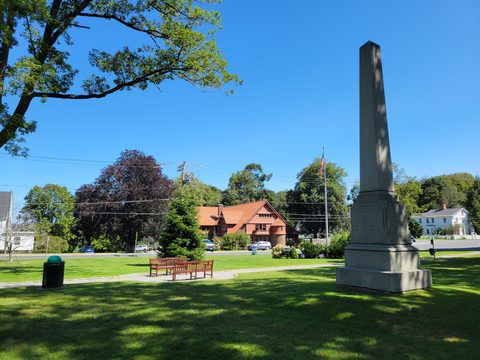

Clinton Hill, Brooklyn: The Gold Coast and Pratt
Clinton Hill, New York
Pictures from Clinton Hill
See all 4 photos →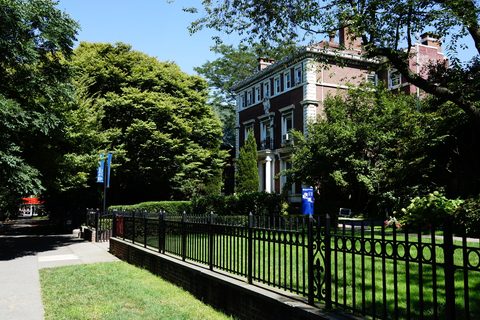
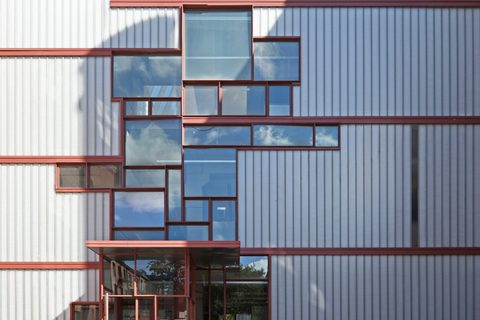
European settlement here dates to the 1640s, when the land above Wallabout Bay was Dutch colonial farm and tobacco-plantation ground. The neighborhood takes its name from Clinton Avenue, laid out in 1832 and named for DeWitt Clinton, the New York governor who pushed the Erie Canal through. By the 1840s it had become a fashionable retreat from the density of urban Brooklyn; Walt Whitman, then editing the Brooklyn Daily Eagle, wrote in 1846 of people determined to escape the closeness of city life by moving there. Rowhouse construction dominated by the 1880s, but it was the oil refiner Charles Pratt who set the tone: his 1874 mansion at 232 Clinton Avenue turned the street into a corridor of large freestanding houses and earned the area its nickname as Brooklyn's Gold Coast. In 1887 he founded Pratt Institute.
-
A 25-acre campus with a sculpture park founded in 1999, holding work by Mark di Suvero and Richard Serra.
-
About 1,063 contributing buildings of the 1840s to 1930, listed on the National Register in June 1985.
-
sight
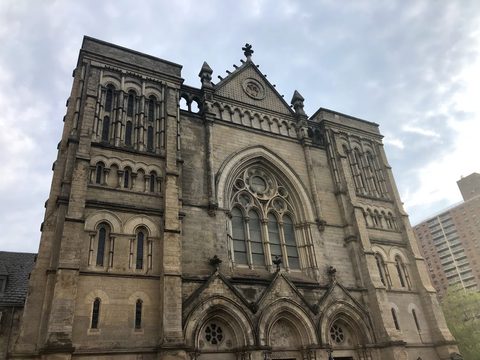
Francis H. Kimball's Gothic Revival church, funded by Charles Pratt and opened in April 1887.
-
A congregation of 1836 in a building of about 1859, at Classon and Willoughby Avenues.
-
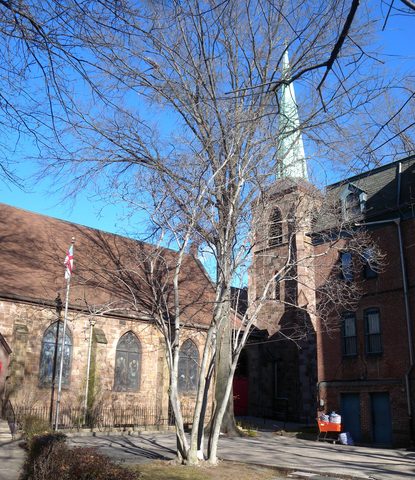
An Episcopal parish on Clinton Avenue serving Clinton Hill, Fort Greene and Prospect Heights.
-
Former Pratt-era mansions on Clinton Avenue, a college campus since 1918.
-
The neighborhood branch on Washington Avenue, open since 1973.
-
food
Tuscan cooking in a converted 1896 pharmacy on Gates Avenue, open since 2001.
Pratt's mansions and Pratt's school
Charles Pratt founded Pratt Institute in 1887 to give working men and women access to training in trades and the applied arts. Its 25-acre main campus is still in the neighborhood, at 200 Willoughby Avenue, and it holds the Pratt Sculpture Park, founded in 1999, which Pratt describes as the largest contemporary sculpture park in New York City; more than forty works stand on the grounds, among them pieces by Mark di Suvero and Richard Serra.
Pratt money built the churches too. Emmanuel Baptist Church, whose congregation formed around 1882 when about 194 members split away from Washington Avenue Baptist Church, got its Gothic Revival building on the strength of Pratt's funding: Francis H. Kimball designed it and it opened on April 17, 1887. It was added to the National Register of Historic Places in 1977. St. Joseph's University's Brooklyn campus, at 245 Clinton Avenue, occupies former Pratt-era mansions; the college moved onto the site in 1918 and was renamed from St. Joseph's College in 2022.
The Clinton Hill Historic District was listed on the National Register on June 19, 1985 under reference number 85001335. It covers roughly 100 acres and 1,063 largely residential contributing buildings put up between the 1840s and 1930, bounded roughly by Willoughby and Grand Avenues, Fulton Street and Vanderbilt Avenue. Merrill Hesch wrote the nomination in September 1984.
Getting there
Two separate stations share the name Clinton–Washington Avenues, and both are in Clinton Hill. The one on Fulton Street, between Clinton and Washington Avenues, is served by the C at all times except late nights, when the A substitutes. The one on Lafayette Avenue, between the same two avenues, is served by the G at all times.
Classon Avenue, at Classon and Lafayette Avenues, is served by the G at all times and sits on the border of Bedford-Stuyvesant and Clinton Hill.
NYC Ferry's Astoria route calls at the Brooklyn Navy Yard landing, at 141 Flushing Avenue. The landing opened on May 20, 2019 and sits in the Navy Yard, which runs along Clinton Hill's northern edge.
Frequently asked questions
- How do I get to Clinton Hill?
- Two stations named Clinton–Washington Avenues both sit in the neighborhood: the one on Fulton Street is served by the C, with the A substituting late nights, and the one on Lafayette Avenue by the G. Classon Avenue, on the Bedford-Stuyvesant border, is also served by the G. NYC Ferry's Astoria route calls at the Brooklyn Navy Yard landing at 141 Flushing Avenue, on the neighborhood's northern edge.
- Why is Clinton Hill called the Gold Coast?
- Because of Clinton Avenue. Charles Pratt built his mansion at 232 Clinton Avenue in 1874, and the street developed into a corridor of large freestanding mansions in its wake, at a time when rowhouses dominated the rest of the neighborhood.
- Can visitors walk through the Pratt Institute campus?
- The 25-acre campus at 200 Willoughby Avenue holds the Pratt Sculpture Park, founded in 1999, with more than forty works including pieces by Mark di Suvero and Richard Serra. Pratt describes it as the largest contemporary sculpture park in New York City.
- What is protected in the Clinton Hill Historic District?
- About 1,063 contributing buildings across roughly 100 acres, mostly residential and built between the 1840s and 1930, including the Pratt-era mansions on Clinton Avenue. It was listed on the National Register of Historic Places on June 19, 1985 under reference number 85001335.
- Where can I stay in Clinton Hill?
- No hotel inside Clinton Hill could be found from the sources available for this guide, which is consistent with the neighborhood's largely residential and institutional character. The nearest verified option is the New York Marriott at the Brooklyn Bridge, a 32-story tower on Adams Street in Downtown Brooklyn.
Connected pages
Nearby
-
Navy Yard, Brooklyn: The Can-Do Shipyard's Second Life
· Navy Yard, New York
The Brooklyn Navy Yard, and Flushing Avenue with it, runs along Clinton Hill's northern edge.
-
Bedford-Stuyvesant, Brooklyn: Victorian Blocks and Restoration Plaza
· Bedford-Stuyvesant, New York
Classon Avenue on the G sits on the border of Bedford-Stuyvesant and Clinton Hill, at Classon and Lafayette Avenues.
-
Fort Greene, Brooklyn: The Martyrs' Monument and BAM
· Fort Greene, New York
The Clinton–Washington Avenues station on the C and A is in Clinton Hill, near Fort Greene's eastern edge.
Same region
-
Downtown Brooklyn, Brooklyn: Borough Hall and the Fulton Mall
· Downtown Brooklyn, New York
No hotel was found inside Clinton Hill; the nearest verified one, the New York Marriott at the Brooklyn Bridge, is on Adams Street in Downtown Brooklyn.
What travelers think
Log in to react.
No reviews yet.