Cornwall, Connecticut: A Covered Bridge and Two Blast Furnaces
Cornwall, Connecticut
Pictures from Cornwall
See all 3 photos →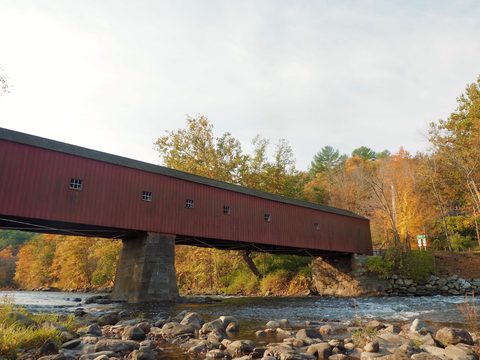
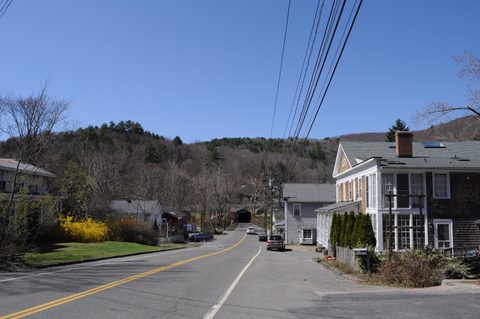
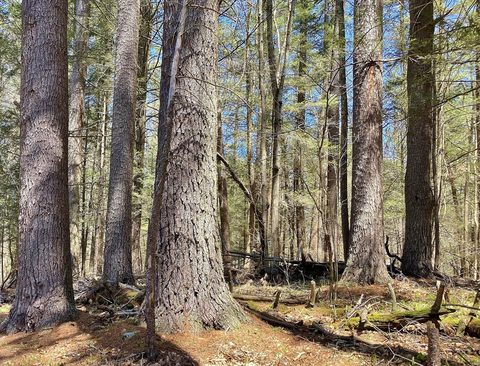
Cornwall was incorporated in May 1740 on the Housatonic River in Litchfield County and has remained one of Connecticut's smallest, most rural towns ever since. Iron became its defining 19th-century industry, supported by two blast furnaces and charcoal-making operations. The West Cornwall Covered Bridge, most likely built in 1864 of red spruce fastened with wooden treenails, still carries a single lane of traffic across the Housatonic and is listed on the National Register of Historic Places; earlier crossings at the same spot, dating to 1762, were destroyed by ice and the Flood of 1837. The town's notable figures include Ethan Allen, raised here as a boy; General John Sedgwick; and Pulitzer Prize-winning poet Mark Van Doren. Henry ʻŌpūkahaʻia, the young Hawaiian whose story inspired Cornwall's Foreign Mission School (1817-1826), was buried in Cornwall Cemetery before his remains were returned to Hawaii in 1993.
-
An 1864 lattice-truss bridge still open to a single lane of traffic.
-
A local-history museum with a 2026 Revolutionary War exhibition.
-
walk
Ten miles of trails around 1,683-foot Mohawk Mountain.
-
Riverside camping and catch-and-release fly fishing on the Housatonic.
-
food
Daily-baked pastries and bread, breakfast and lunch.
-
stay
A 13-room family-owned country inn in Cornwall Bridge.
Iron, a bridge, and a Hawaiian connection
Cornwall's 19th-century economy ran on iron: two blast furnaces and the charcoal-making operations that fed them. The West Cornwall Covered Bridge — 172 feet long, 15 feet wide, its red-spruce timbers held together with wooden treenails — most likely dates to 1864 and still carries traffic on a single lane. Decades earlier, Cornwall's Foreign Mission School trained Indigenous and international students as missionaries from 1817 to 1826; its most famous student, the young Hawaiian Henry ʻŌpūkahaʻia, was originally buried in Cornwall Cemetery, and though his remains were returned to Hawaii in 1993, the town still marks and commemorates the connection.
Getting there
Cornwall is a drive-to destination in the Litchfield Hills: US Route 7 follows the Housatonic River through Cornwall Bridge and West Cornwall, CT Route 4 crosses the town past Mohawk State Forest, and CT Route 128 carries traffic over the covered bridge itself. There's no passenger rail in Cornwall; the nearest station is Metro-North's Harlem Line terminus at Wassaic, New York.
Mohawk Mountain and Cornwall Bridge
Mohawk State Forest surrounds 1,683-foot Mohawk Mountain with ten miles of hiking trails and a rare black spruce bog; the adjoining Mohawk Mountain Ski Area is Connecticut's largest ski hill, with night skiing and snowmaking. At Cornwall Bridge, Housatonic Meadows State Park — which sits on the Sharon/Cornwall town line — offers riverside camping and a stretch of the Housatonic restricted to catch-and-release fly fishing. Cornwall Market bakes bread and pastries daily, and the family-run Cornwall Inn is the area's main lodging.
Frequently asked questions
- How do I get to Cornwall?
- By car via US Route 7 (through Cornwall Bridge and West Cornwall), CT Route 4, or CT Route 128 over the covered bridge. There's no passenger rail; the nearest station is Metro-North's Harlem Line terminus at Wassaic, NY.
- Is the West Cornwall Covered Bridge still open to cars?
- Yes — it carries a single lane of traffic on CT Route 128, though it's officially considered functionally obsolete and was reinforced with hidden steel supports in 1968 and 1973.
- What is the Foreign Mission School's connection to Hawaii?
- Cornwall's Foreign Mission School (1817-1826) trained Indigenous and international students as missionaries; its best-known student, Henry ʻŌpūkahaʻia, was buried in Cornwall Cemetery before his remains were returned to Hawaii in 1993. The town still commemorates the link.
- Can I ski at Mohawk Mountain?
- Yes — Mohawk Mountain Ski Area is Connecticut's largest ski hill, with a 650-foot vertical drop, night skiing, and snowmaking, adjoining Mohawk State Forest.
- Where can I eat and stay in Cornwall?
- Cornwall Market in Cornwall Bridge bakes bread and pastries daily and serves breakfast and lunch. The family-run Cornwall Inn, also in Cornwall Bridge, is the area's main lodging, with 13 rooms and a continental breakfast.
Foliage
Peak this week · estimated peak Oct 7–13
On the Traditional New England foliage driving route.
Derived from the Connecticut DEEP fall foliage map. DEEP's map is a climatological estimate last published in 2023; it describes a normal year, not this one. Stage names are ours. See the statewide forecast.
Connected pages
Nearby
-
Warren, Connecticut: A Bunker Hill General's Namesake
· Warren, Connecticut
The two towns share a border
- Norfolk, Connecticut: The Icebox and a Century of Chamber Music · Norfolk, Connecticut
-
Goshen, Connecticut: The Birthplace of Pineapple Cheese
· Goshen, Connecticut
Mohawk State Forest, centered on Mohawk Mountain in Cornwall, extends across the Goshen town line.
- Kent, Connecticut: Iron Furnaces and a Covered Bridge · Kent, Connecticut
-
Sharon, Connecticut: The Plain of Sharon in the Northwest Corner
· Sharon, Connecticut
Housatonic Meadows State Park sits on the Sharon-Cornwall town line.
- Canaan, Connecticut: A Village Called Falls Village · Canaan, Connecticut
Shared history
-
Salisbury, Connecticut: Arsenal of the Revolution
· Salisbury, Connecticut
Cornwall and Salisbury both built 19th-century economies on Litchfield Hills iron furnaces.
-
Kent, Connecticut: Iron Furnaces and a Covered Bridge
· Kent, Connecticut
Both northwest-corner towns built their economies on 18th-19th century iron ore and furnaces.
Same region
-
Canaan, Connecticut: A Village Called Falls Village
· Canaan, Connecticut
Both on the Traditional New England foliage route
-
Salisbury, Connecticut: Arsenal of the Revolution
· Salisbury, Connecticut
Both on the Traditional New England foliage route
- Litchfield, Connecticut: The First Law School and a Quiet Green · Litchfield, Connecticut
- Warren, Connecticut: A Bunker Hill General's Namesake · Warren, Connecticut
-
Sharon, Connecticut: The Plain of Sharon in the Northwest Corner
· Sharon, Connecticut
Both on the Traditional New England foliage route
-
Kent, Connecticut: Iron Furnaces and a Covered Bridge
· Kent, Connecticut
Both on the Traditional New England foliage route
See also
-
Mohawk Mountain: A 1947 Lease, a Snowmaking Dispute, and the Path to Mount Snow, Butternut, and Sundown
· Town of Cornwall, CT
Mohawk Mountain's own ski-history guide covers Walt Schoenknecht's 1947 founding and its Mount Snow, Butternut, and Sundown connections.
What travelers think
Log in to react.
No reviews yet.