Warren, Connecticut: A Bunker Hill General's Namesake
Warren, Connecticut
Pictures from Warren
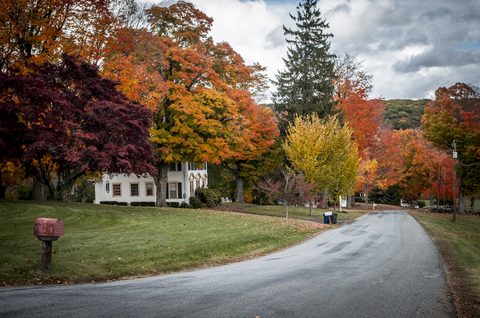
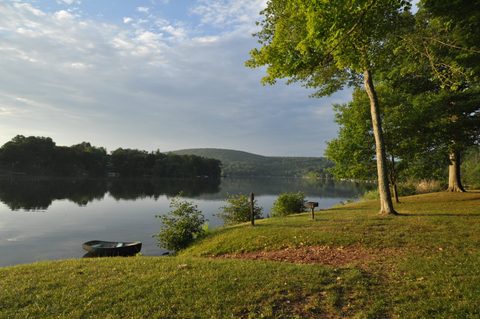
See all 3 photos →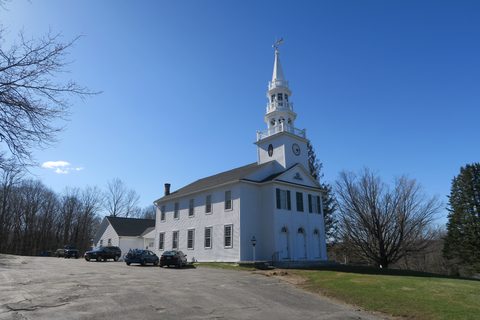
Warren was first settled in 1737 as part of Kent and incorporated separately in 1786, named for Revolutionary War hero General Joseph Warren, killed at the Battle of Bunker Hill. Its religious life predates civil independence: an ecclesiastical society formed in 1750 and a church gathered in 1756, while the area still belonged to Kent. Early Warren was an agricultural community that also took part in northwestern Connecticut's iron industry, and by 1810 the town, with under a thousand residents, supported five private schools and an academy. Charles Grandison Finney, the Second Great Awakening revivalist who later served as president of Oberlin College from 1851 to 1866, was born in Warren in 1792, though his family moved to frontier New York while he was still a small child. Warren's Brick School, the Warren Historical Society says, holds the longest record of continuous operation of any one-room schoolhouse in Connecticut.
-
A 1818-1820 Federal-style meetinghouse on the town's hilltop green.
-
Town history and the Brick School's record-setting one-room schoolhouse.
-
walk
The town's main public open space and event ground.
-
walk
A 31-acre undeveloped park with Cold War radar ruins.
-
Lakeside dining above Lake Waramaug since 1847.
-
stay
Eleven rooms and two apartments, Warren's main lodging.
A general's name and an unusual concentration of schools
Warren's fifty-odd years as part of Kent ended with its 1786 incorporation, named for General Joseph Warren rather than any local figure. By 1810 this agricultural town of under a thousand people supported five private schools and an academy — a striking ratio for a town this size, though Charles Finney, its most famous educational alumnus by birth, left for New York as a small child and never actually attended those schools. The Warren Congregational Church on the hilltop green, built 1818-1820 in the Federal style on the site of a 1769 meetinghouse, holds one of only three documented Federal-period pulpits in Connecticut and was listed on the National Register of Historic Places in 1991.
Getting there
Warren has no rail station and no interstate of its own. Route 45 runs north-south through town and Route 341 runs east-west, the two overlapping for about a mile and a half through the center; Route 341 connects west to US Route 7 in Kent and east to US Route 202 in Washington. There's no rail service of any kind in Warren — the nearest passenger rail is Metro-North's Harlem Line terminus at Wassaic, New York, reachable only by car.
A hilltop inn above Lake Waramaug
The Hopkins Inn has welcomed travelers to its perch above Lake Waramaug's north shore since 1847, serving breakfast, lunch and dinner on a terrace overlooking the water, with eleven guest rooms and two apartments upstairs. Warren Woods, the town's main open-space facility, hosts community events including the Warren Historical Society's fall gathering, while Above All State Park, a 31-acre undeveloped DEEP property established in 1927, keeps informal trails past Cold War-era radar ruins for visitors willing to explore without marked paths or facilities.
Frequently asked questions
- How do I get to Warren?
- By car — Route 45 runs north-south and Route 341 runs east-west through town, overlapping for about a mile and a half in the center; Route 341 connects west to Kent and east to Washington. There's no rail service in Warren; the nearest passenger station is Metro-North's Harlem Line terminus at Wassaic, New York.
- Why is the town named Warren?
- For General Joseph Warren, the Revolutionary War hero killed at the Battle of Bunker Hill in 1775 — not for any local resident. Warren incorporated as its own town in 1786 after fifty years as part of Kent.
- What is the Warren Congregational Church?
- A Federal-style meetinghouse built 1818-1820 on Warren's hilltop green, replacing an earlier 1769 building; its congregation dates to 1750, when the area was still part of Kent. The pulpit is one of only three documented Federal-period pulpits surviving in Connecticut, and the church was listed on the National Register of Historic Places in 1991.
- Is Above All State Park developed?
- No — it's a 31-acre undeveloped DEEP-administered park established in 1927, with informal, unmaintained trails, no facilities and no marked parking, plus remnants of a Cold War-era radar installation. It's a spot for experienced explorers, not a typical day-use park.
- Where can I eat and stay in Warren?
- The Hopkins Inn is Warren's definitive restaurant and lodging, perched above Lake Waramaug's north shore since 1847, with eleven guest rooms and two apartments. Its 2026 season runs March 24 through January 1; the restaurant and front desk are closed Mondays.
Foliage
Near peak this week · estimated peak Oct 14–20
On the Traditional New England foliage driving route.
Derived from the Connecticut DEEP fall foliage map. DEEP's map is a climatological estimate last published in 2023; it describes a normal year, not this one. Stage names are ours. See the statewide forecast.
Connected pages
Nearby
-
Kent, Connecticut: Iron Furnaces and a Covered Bridge
· Kent, Connecticut
Warren was settled in 1737 as part of Kent; Route 341 connects the two directly.
-
Washington, Connecticut: The Gunnery and Five Villages
· Washington, Connecticut
Route 341 connects Warren directly east to Washington.
-
Cornwall, Connecticut: A Covered Bridge and Two Blast Furnaces
· Cornwall, Connecticut
The two towns share a border
-
Goshen, Connecticut: The Birthplace of Pineapple Cheese
· Goshen, Connecticut
The two towns share a border
-
Litchfield, Connecticut: The First Law School and a Quiet Green
· Litchfield, Connecticut
The two towns share a border
Shared history
-
Kent, Connecticut: Iron Furnaces and a Covered Bridge
· Kent, Connecticut
Warren was first settled in 1737 as part of Kent, incorporating separately in 1786.
Same region
- Cornwall, Connecticut: A Covered Bridge and Two Blast Furnaces · Cornwall, Connecticut
-
Sherman, Connecticut: The Forgotten Founder's Namesake Town
· Sherman, Connecticut
Both on the Traditional New England foliage route
-
New Milford, Connecticut: Roger Sherman's Town Green
· New Milford, Connecticut
Both on the Traditional New England foliage route
-
Washington, Connecticut: The Gunnery and Five Villages
· Washington, Connecticut
Both on the Traditional New England foliage route
-
Bethlehem, Connecticut: America's Christmas Town
· Bethlehem, Connecticut
Both on the Traditional New England foliage route
- Bridgewater, Connecticut: The Last Dry Town on the Housatonic · Bridgewater, Connecticut
What travelers think
Log in to react.
No reviews yet.