Greenwich, Connecticut: Twenty-Five Coats and a Harbor Point
Greenwich, Connecticut
Part of The Merritt Parkway
Pictures from Greenwich
See all 3 photos →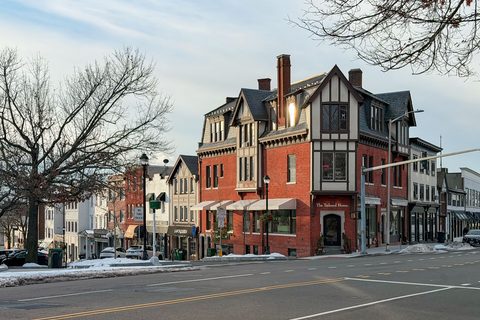
Greenwich's founding families bought the land that is now Old Greenwich from the Siwanoy in 1640, paying twenty-five coats through agents Robert Feake and Captain Daniel Patrick, sent from Watertown, Massachusetts. The area first fell under a New Netherland claim, then joined the New Haven Colony in 1650; the Connecticut General Assembly in Hartford declared it a township, named for Greenwich near London, on May 11, 1665. That same purchase gave Elizabeth Winthrop Feake her own "particular purchase" at Greenwich Point, among the earliest instances of a woman individually holding title to real property in the New World. The Revolution reached town in February 1779, when General Israel Putnam eluded British dragoons by riding down today's Put's Hill to rally support in Stamford. By the 1880s, banker J. Kennedy Tod had turned that same point into his private "Innis Arden" estate; the town bought it back for the public in 1945.
-
sight
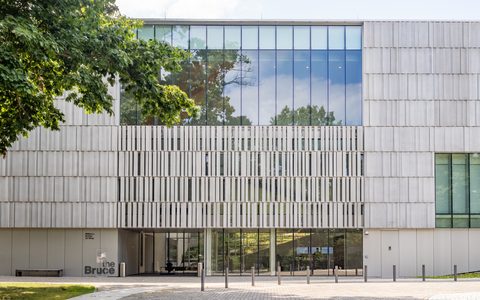
Art, science, and natural history under one roof, with rotating exhibitions and a cafe. Tue-Sun, 10-5.
-
sight
The Greenwich Historical Society's house museum at the center of the Cos Cob art colony, with Revolutionary-era Bush family history. Tue-Sun, 11-4.
-
sight
The National Audubon Society's first environmental education center, opened 1943; 686 acres across seven sanctuaries and miles of trails.
-
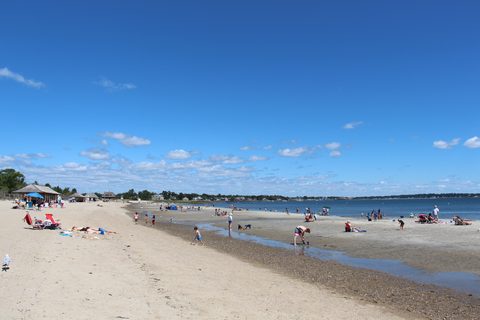
147 acres of beach, restored historic buildings, and Long Island Sound views on banker J. Kennedy Tod's former estate.
-
Six daily oyster varieties and signature pan-fried oysters at a 20-plus-year Greenwich institution.
-
food
A Greenwich Avenue tavern-restaurant with a late-open bar, seven nights a week.
-
food
French Provencal waterfront dining at the Delamar, from breakfast through afternoon tea.
-
Waterfront luxury on Greenwich Harbor, with a spa, marina charters, and L'escale on site.
-
stay
A 21-room, family-run 1843 bed & breakfast with complimentary breakfast and a seasonal pool.
Twenty-five coats and a point of her own
Greenwich's founding families bought the land that is now Old Greenwich from the Siwanoy in 1640, paying twenty-five coats through agents Robert Feake and Captain Daniel Patrick, sent from Watertown, Massachusetts. The area was first claimed by New Netherland, then joined the New Haven Colony in 1650; the Connecticut General Assembly in Hartford declared it a township, named for Greenwich near London, on May 11, 1665. That same purchase gave Elizabeth Winthrop Feake her own "particular purchase" at Greenwich Point — among the earliest instances of a woman individually holding title to real property in the New World. The Revolution reached town on February 26, 1779, when General Israel Putnam eluded British dragoons by riding down today's Put's Hill to rally support in Stamford; the c. 1690 Knapp Tavern where Patriots gathered survives today as Putnam Cottage. By the 1880s, banker J. Kennedy Tod had assembled Greenwich Point into his private "Innis Arden" estate; the Town of Greenwich bought it back for the public for $550,000 on January 10, 1945, and Connecticut's Supreme Court overturned its residents-only beach rule in 2001.
Getting there
Drivers reach Greenwich on I-95 (exits 2-5) or the Merritt Parkway, with U.S. Route 1 (the Post Road) running through town. Car-free travelers use Metro-North's New Haven Line, which stops at four stations in town — Greenwich, Cos Cob, Riverside, and Old Greenwich, with direct service to Grand Central Terminal. No Amtrak, Shore Line East, or Hartford Line service stops in Greenwich; the nearest Amtrak station is in neighboring Stamford.
A museum, a sanctuary, and the shoreline
The Bruce Museum on Museum Drive combines art, science, and natural history under one roof. In Cos Cob, the Greenwich Historical Society operates the Bush-Holley House, once the center of the Cos Cob art colony and a landmark of American Impressionism, with tours that also cover the Bush family's Revolutionary-era history from 1777 to 1783. The Greenwich Audubon Center, established in 1943 as the National Audubon Society's first environmental education center in the country, now stewards 686 acres across seven sanctuaries. And Greenwich Point Park — Tod's former estate — remains open to the public year-round for swimming, boating, and walks along Long Island Sound.
Frequently asked questions
- How do I get to Greenwich?
- Drivers use I-95 (exits 2-5), the Merritt Parkway, or U.S. Route 1. Metro-North's New Haven Line stops at four in-town stations — Greenwich, Cos Cob, Riverside, and Old Greenwich, with direct service to Grand Central Terminal; there is no Amtrak, Shore Line East, or Hartford Line service here.
- Why is it called Greenwich Point, or Tod's Point?
- Banker J. Kennedy Tod assembled the peninsula into his "Innis Arden" estate between 1884 and 1887. The Town of Greenwich bought it for $550,000 on January 10, 1945; its residents-only beach rule stood until Connecticut's Supreme Court overturned it in 2001.
- What is the Bush-Holley House?
- A house museum in Cos Cob run by the Greenwich Historical Society, central to the Cos Cob art colony and American Impressionism, with tours also covering the Bush family's Revolutionary-era history from 1777 to 1783.
- When was Greenwich founded?
- Founding families bought the Old Greenwich area from the Siwanoy in 1640; the Connecticut General Assembly declared Greenwich a township on May 11, 1665.
- Where can I stay in Greenwich?
- The Delamar Greenwich Harbor is the waterfront luxury option on Steamboat Road; the Stanton House Inn is a 21-room, family-run 1843 bed & breakfast on Maple Avenue.
Foliage
Still green this week · most advanced Nov 4–10
This town never reaches full colour on the state's map — DEEP's eight weeks run out before it turns.
Derived from the Connecticut DEEP fall foliage map. DEEP's map is a climatological estimate last published in 2023; it describes a normal year, not this one. Stage names are ours. See the statewide forecast.
Connected pages
Nearby
- Stamford, Connecticut: Typewriters, Shavers, and a Rail Junction · Stamford, Connecticut
Shared history
-
Stamford, Connecticut: Typewriters, Shavers, and a Rail Junction
· Stamford, Connecticut
In 1779, Gen. Israel Putnam rode down Put's Hill in Greenwich to rally support in Stamford during the British invasion of the town.
See also
-
Midtown, Manhattan: Terminal City and the Tallest Tower
· Midtown, New York
Metro-North's New Haven Line reaches four Greenwich stations with direct service from Grand Central Terminal.
What travelers think
Log in to react.
No reviews yet.