Groton, Connecticut: From Fort Griswold to the Submarine Capital
Groton, Connecticut
Pictures from Groton
See all 3 photos →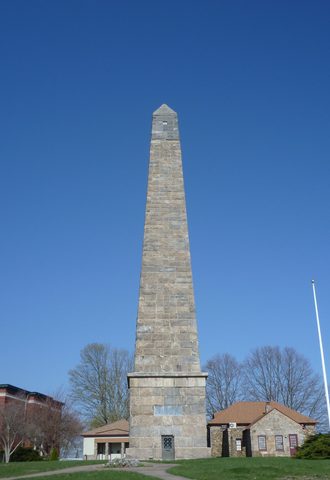
Groton traces its founding to 1646, when John Winthrop Jr. established Pequot Plantation on former Pequot land at the mouth of the Thames River; the town separated from New London and incorporated on its own in 1705, taking its name from the Winthrop family's English estate. Its bloodiest chapter came on September 6, 1781, when British forces under the turncoat Benedict Arnold stormed Fort Griswold on Groton Heights and killed 88 of the fort's 165 defenders, including commander Col. William Ledyard — Connecticut's costliest Revolutionary War battle. Groton's maritime economy turned to submarines in the twentieth century: the Electric Boat Division delivered 74 diesel submarines during World War II, earning Groton the title "Submarine Capital of the World," and in 1954 the USS Nautilus, the world's first nuclear-powered submarine, launched here and remains berthed at Goss Cove. The City of Groton, a separate municipality within the town, incorporated in 1903.
-
The 1781 battlefield, its granite obelisk, and the Ebenezer Avery House.
-
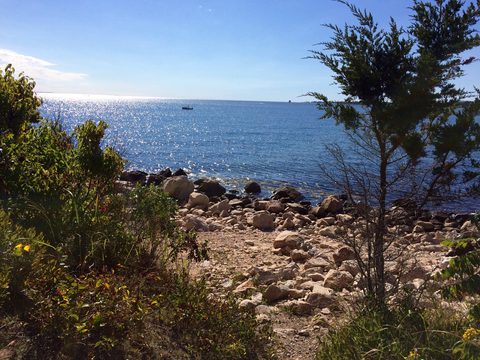
An 800-acre coastal reserve with a 3.45-mile loop trail.
-
sight
A c.1800 house museum interpreted to the 1890-1930 period.
-
A weekend water taxi connecting Groton and New London's historic sites.
-
food
Fresh pasta made daily since 1988.
-
A craft taproom founded in 2015.
-
A seasonal, BYOB waterside lobster shack in Noank since 1947.
-
A full-service 285-room hotel at I-95 Exit 88.
-
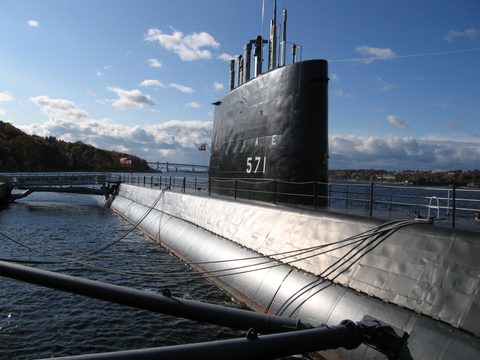
Free, Navy-run, and the reason most first-time visitors come to Groton.
From Fort Griswold to the Submarine Capital
Groton traces its founding to 1646, when John Winthrop Jr. established Pequot Plantation on former Pequot land at the mouth of the Thames River; the town separated from New London and incorporated on its own in 1705, taking its name from the Winthrop family's English estate. Its bloodiest chapter came on September 6, 1781, when British forces under the turncoat Benedict Arnold stormed Fort Griswold on Groton Heights and killed 88 of the fort's 165 defenders, including commander Col. William Ledyard — Connecticut's costliest Revolutionary War battle. Groton's maritime economy turned to submarines in the twentieth century: the Electric Boat Division delivered 74 diesel submarines during World War II, earning Groton the title "Submarine Capital of the World," and in 1954 the USS Nautilus, the world's first nuclear-powered submarine, launched here and remains permanently berthed at Goss Cove near the Naval Submarine Base.
Getting there
Groton straddles I-95 roughly midway between New York and Boston, with Exit 88 serving the Mystic/North Road side of town. There is no rail station in Groton itself — trains arrive at New London Union Station just across the Thames River, with about nine daily Amtrak Northeast Regional trains in each direction (Acela no longer stops) plus Shore Line East commuter service from New Haven, which terminates at New London.
Fort Griswold, Bluff Point, and the Thames waterfront
Fort Griswold Battlefield State Park preserves the 1781 battlefield with a 135-foot granite obelisk and a museum in the restored Ebenezer Avery House. Bluff Point State Park, an 800-acre wooded peninsula designated a Coastal Reserve in 1975, circles a flat 3.45-mile gravel loop trail along Long Island Sound. On weekends through September, the Thames River Heritage Park water taxi connects more than 30 historic sites in Groton and New London — including Fort Griswold and the Submarine Force Museum, home of the historic USS Nautilus.
Frequently asked questions
- How do I get to Groton?
- Groton sits on I-95 roughly midway between New York and Boston, with Exit 88 serving the Mystic/North Road side of town. There is no rail station in Groton itself; the nearest is New London Union Station across the Thames, with about nine daily Amtrak Northeast Regional trains each way and Shore Line East service from New Haven.
- What happened at Fort Griswold?
- On September 6, 1781, British forces under the turncoat Benedict Arnold stormed Fort Griswold on Groton Heights and killed 88 of its 165 defenders, including commander Col. William Ledyard — Connecticut's bloodiest Revolutionary War engagement. The site is preserved as Fort Griswold Battlefield State Park.
- Why is Groton called the 'Submarine Capital of the World'?
- The Electric Boat Division of General Dynamics delivered 74 diesel submarines to the Navy from Groton during World War II, and in 1954 the USS Nautilus, the world's first nuclear-powered submarine, launched here and remains berthed at Goss Cove.
- What is Bluff Point State Park?
- An 800-acre wooded peninsula on Long Island Sound, designated a Coastal Reserve in 1975 as the last major undeveloped coastal tract in Connecticut, with a flat 3.45-mile loop trail for foot and non-motorized traffic. Open daily 8 a.m. to sunset.
- Is Mystic part of Groton?
- The village of Mystic is a census-designated place straddling both Groton and Stonington — see the separate Mystic guide for its landmarks.
Foliage
Still green this week · estimated peak Oct 28–Nov 3
On the Connecticut Heritage foliage driving route.
Derived from the Connecticut DEEP fall foliage map. DEEP's map is a climatological estimate last published in 2023; it describes a normal year, not this one. Stage names are ours. See the statewide forecast.
Connected pages
Nearby
- Ledyard, Connecticut: Farm Town Turned Resort Destination · Ledyard, Connecticut
-
Stonington, Connecticut: A Borough That Defied the British Navy
· Stonington, Connecticut
The two towns share a border
-
Waterford, Connecticut: A Standard Oil Mansion and a Nuclear Plant
· Waterford, Connecticut
The two towns share a border
- Mystic, Connecticut: 600 Ships and a Village Split in Two · Mystic, Connecticut
-
New London, Connecticut: The Whaling City's Harbor
· New London, Connecticut
Electric Boat's submarine industry made Groton the 'Submarine Capital of the World' just across the Thames from New London's harbor and Coast Guard Academy.
Same region
-
New London, Connecticut: The Whaling City's Harbor
· New London, Connecticut
Both on the Connecticut Heritage foliage route
-
Waterford, Connecticut: A Standard Oil Mansion and a Nuclear Plant
· Waterford, Connecticut
Both on the Connecticut Heritage foliage route
-
Stonington, Connecticut: A Borough That Defied the British Navy
· Stonington, Connecticut
Both on the Connecticut Heritage foliage route
-
North Stonington, Connecticut: The Town That Wasn't Named Jefferson
· North Stonington, Connecticut
Both on the Connecticut Heritage foliage route
What travelers think
Log in to react.
No reviews yet.