
Meatpacking District, Manhattan: Slaughterhouses to the High Line
Meatpacking District, New York
Pictures from Meatpacking District
See all 3 photos →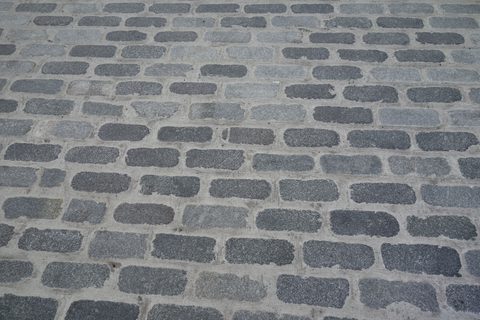
The Meatpacking District earned its name honestly: by 1900 roughly 250 slaughterhouses and packing plants crowded these blocks around Gansevoort Market, an open-air farmers' market that began in 1879 on former freight yards, joined in 1884 by the brick trading buildings of West Washington Market. Gansevoort Street itself predates both markets — it follows a Lenape footpath that once led inland from the Hudson-shore trading post of Sapohanikan, and takes its name from Revolutionary War general Peter Gansevoort. The meat trade held on through the 1970s before 1960s-era containerization, supermarkets, and refrigerated trucking eroded it; nightlife venues, including many serving the neighborhood's LGBTQ+ community, filled the vacuum until high-end boutiques and restaurants arrived in the late 1990s. The cobblestoned core became a National Register historic district in 2007, and its defining transformation came via the High Line, the elevated freight viaduct whose last train ran in 1980 before it reopened as a public park in 2009.
-
walk
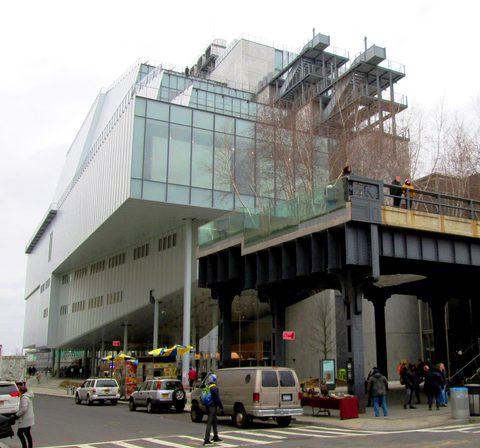
The elevated park's southern terminus, at Gansevoort Street beside the Whitney Museum.
-
walk
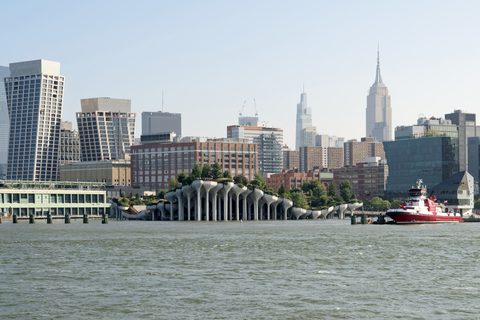
A free waterfront park on tulip-shaped piers, with a ticketed summer performance season.
-
The Belgian-block streets and market buildings of the old meatpacking trade, now landmarked.
-
A steakhouse operating since 1868, a rare survivor of the district's meat-market days.
-
food
Keith McNally's French bistro, a fixture of the district's 1999 revival.
-
A luxury hotel with a heated rooftop pool at the district's center.
From Meat Market to Museum Mile
The Gansevoort Market Historic District, designated by the city's Landmarks Preservation Commission in September 2003 and listed on the National Register on May 30, 2007, covers 140 buildings, two structures, and one site — preserving the Belgian-block streets where the meat trade once ran around the clock. The neighborhood's biggest cultural arrival came in 2015, when the Whitney Museum of American Art relocated to 99 Gansevoort Street, at the foot of the High Line, cementing the district's shift from meat market to arts and dining destination (the Whitney itself is covered under this guide series' West Village entry). The High Line's southern terminus, with the Tiffany & Co. Foundation Overlook, sits right beside it.
Getting there by subway
The A/C/E and L trains meet at the 14th Street/Eighth Avenue station complex, at the district's northeast corner and a short walk from Gansevoort Street and the High Line's southern entrance. A and E run at all times, L runs at all times, and C runs at all times except late nights.
Frequently asked questions
- How do I get to the Meatpacking District by subway?
- A/C/E and L trains stop at 14th Street/Eighth Avenue, a short walk from Gansevoort Street and the High Line's southern entrance. The A, E, and L run at all times; the C runs at all times except late nights.
- Where does the neighborhood's name come from?
- From the meatpacking industry that once dominated it: by 1900 roughly 250 slaughterhouses and packing plants operated here, a trade that held on into the 1970s.
- Is Little Island free to visit?
- Yes, the park grounds on Pier 55 are free to enter daily; only its seasonal performance program requires tickets.
- Where can I stay in the Meatpacking District?
- Gansevoort Meatpacking NYC, at 18 Ninth Avenue, is the neighborhood's verified in-district option, with a heated year-round rooftop pool and on-site dining.
Connected pages
Nearby
- West Village, Manhattan: Crooked Streets, Stonewall's Legacy · West Village, New York
- Chelsea, Manhattan: Freight Rails Into Gallery Row · Chelsea, New York
Same region
-
Chelsea, Manhattan: Freight Rails Into Gallery Row
· Chelsea, New York
Another Manhattan neighborhood covered in this series.
-
Steakhouses in Manhattan: Twenty-Three Rooms on the Midtown Spine
· Manhattan Steakhouses, New York
Old Homestead at 56 Ninth Avenue is a Meatpacking District place and is carried on that guide.
See also
-
West Village, Manhattan: Crooked Streets, Stonewall's Legacy
· West Village, New York
This guide notes the Whitney, at the foot of the High Line, is covered under the series' West Village entry.
-
Hudson Yards, Manhattan: Rail Yards Rebuilt Sky-High
· Hudson Yards, New York
The High Line's northern section wraps the Hudson Yards site; this series covers the park itself under its Meatpacking District entry.
-
Chelsea, Manhattan: Freight Rails Into Gallery Row
· Chelsea, New York
The High Line's Gansevoort Street terminus and the Whitney sit over the Meatpacking District line, just south.
What travelers think
Log in to react.
No reviews yet.