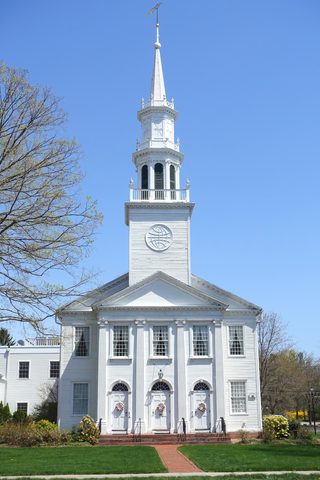

Chelsea, Manhattan: Freight Rails Into Gallery Row
Chelsea, New York
Pictures from Chelsea
See all 4 photos →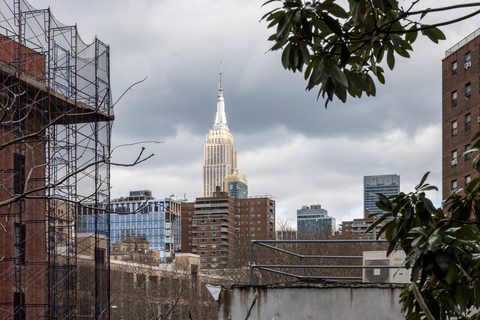
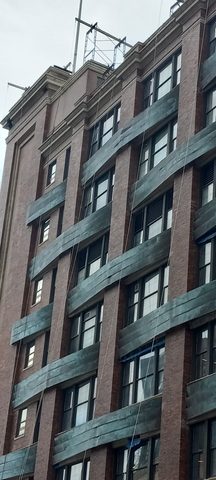
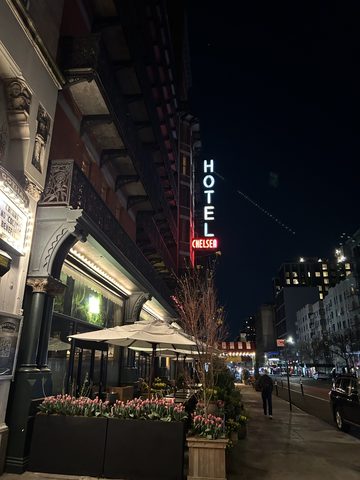
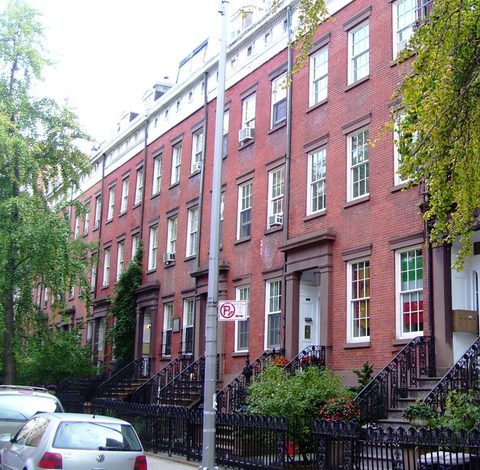
Chelsea takes its name from a 1750 country estate that retired British Major Thomas Clarke named after London's Royal Hospital Chelsea. Clement Clarke Moore, credited with writing 'A Visit From St. Nicholas,' inherited the estate, donated his apple orchard to the General Theological Seminary in 1827, and laid out the rest as residential lots under covenants barring commercial use. The 1847 Hudson River Railroad undid that plan: freight tracks along the waterfront brought distilleries, gas works, and piers worked largely by Irish immigrants, and West 23rd Street grew into a theater district after Pike's Opera House opened in 1868. The 1883 Hotel Chelsea rose amid that district and became one of New York's most storied artists' residences. Beginning in the late 1990s, galleries priced out of SoHo turned West Chelsea into the city's contemporary-art hub, joining a neighborhood with a substantial LGBTQ community since the mid-1980s.
-
sight
A former Nabisco factory turned indoor food hall, open daily 7 a.m. to 10 p.m.
-
sight
New York's dance-dedicated theater, with a 40-45 week annual season.
-
sight
A Hudson River sports and entertainment complex on the historic piers, open since 1995.
-
food
A Tenth Avenue restaurant across from the High Line, with menus that change frequently.
-
food
Stephen Starr's Pan-Asian dining room inside Chelsea Market.
-
One of the bakery's three Manhattan storefronts; it dates its own beginnings to 2003.
-
Korean street-food noodles and shareable 'Anju' plates inside Chelsea Market's food hall.
-
stay
The storied 1883-1885 artists' hotel, reopened in 2022 with three in-house restaurants.
-
stay
A hotel of 121 rooms and 5 suites in the West 16th Street 'pizza box' building, open since 2003.
From Freight Line to Gallery District
The elevated freight viaduct now known as the High Line ran its first train in 1933, carrying coal, dairy, and beef directly into Chelsea's warehouses; its last train, hauling frozen turkeys, ran in 1980. After decades of disuse it reopened as a public park in phases starting June 8, 2009, drawing about eight million visitors a year by 2019 and helping pull West Chelsea's more than 200 art galleries into one of the city's densest concentrations of contemporary art. The Hotel Chelsea, built 1883–1885 on West 23rd Street, predates all of it — Dylan Thomas was staying there in 1953 when he was taken to St. Vincent's Hospital, where he died.
Getting there by subway
Chelsea is ringed by three north-south trunk lines: A/C/E on Eighth Avenue (14 St and 23 St–8 Av), 1/2/3 on Seventh Avenue (14 St, 18 St, and 23 St), and F/M on Sixth Avenue, plus the L train's Manhattan terminus at 14 St/8 Av and the 7 at 34 St–Hudson Yards on the neighborhood's northern edge. For the gallery district and the High Line, 23 St–8 Av (C/E) is the closest stop.
Chelsea Market and the Piers
Chelsea Market, in a former Nabisco factory at 75 Ninth Avenue, is an indoor food hall with vendors including Buddakan and Mokbar; the concourse is open daily 7 a.m. to 10 p.m. On the waterfront, Chelsea Piers occupies the historic Hudson River piers with a marina, ice rink, and driving range, roughly 30 years into its run since opening in 1995. Just south, the High Line's Gansevoort Street terminus and the Whitney Museum of American Art sit over the Meatpacking District line, and Little Island's tulip-shaped piers rise from the river a few blocks further down.
Frequently asked questions
- How do I get to Chelsea by subway?
- A/C/E on Eighth Avenue and 1/2/3 on Seventh Avenue both stop at 14th and 23rd Streets, with F/M on Sixth Avenue and the L terminating at 14 St/8 Av. For the galleries and the High Line, get off at 23 St–8 Av (C/E).
- Where did Chelsea get its name?
- From a 1750 country estate that British Major Thomas Clarke named after London's Royal Hospital Chelsea; his descendant Clement Clarke Moore later developed the land into residential lots.
- Is the Hotel Chelsea open to visit?
- It operates as a hotel again, with three in-house restaurants — El Quijote, Café Chelsea, and Teruko — after reopening in 2022 following renovation. Non-guests can visit the restaurants and lobby.
- Can I still see the Rubin Museum's collection in Chelsea?
- No — the Rubin's West 17th Street building is no longer open to visitors; the museum now operates through traveling exhibitions and partner institutions rather than a Chelsea location.
- Is the High Line free?
- Yes. The 1.45-mile elevated park is free and open daily, with wheelchair-accessible entrances at Gansevoort, 14th, 16th, 23rd, and 30th Streets.
Connected pages
Nearby
- Garment District, Manhattan: Where Fashion Avenue Was Sewn · Garment District, New York
- Hudson Yards, Manhattan: Rail Yards Rebuilt Sky-High · Hudson Yards, New York
- Meatpacking District, Manhattan: Slaughterhouses to the High Line · Meatpacking District, New York
- Flatiron District, Manhattan: A Skyscraper Named the Area · Flatiron District, New York
- West Village, Manhattan: Crooked Streets, Stonewall's Legacy · West Village, New York
- Union Square, Manhattan: Where Protest Meets Produce · Union Square, New York
Shared history
-
SoHo, Manhattan: Cast-Iron Blocks the Artists Saved
· SoHo, New York
From the late 1990s, galleries priced out of SoHo turned West Chelsea into the city's contemporary-art hub.
Same region
-
Meatpacking District, Manhattan: Slaughterhouses to the High Line
· Meatpacking District, New York
Another Manhattan neighborhood covered in this series.
See also
-
Meatpacking District, Manhattan: Slaughterhouses to the High Line
· Meatpacking District, New York
The High Line's Gansevoort Street terminus and the Whitney sit over the Meatpacking District line, just south.
What travelers think
Log in to react.
No reviews yet.