Ansonia, Connecticut: The Copper City's Disputed Birthday
Ansonia, Connecticut
Pictures from Ansonia
See all 3 photos →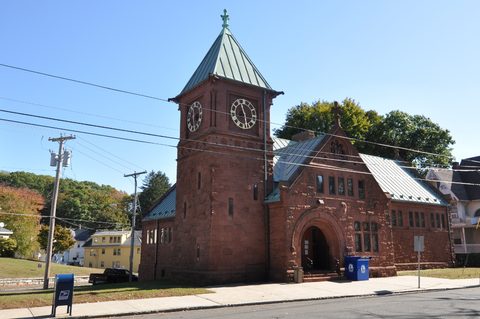
English colonists first settled this stretch of the Naugatuck Valley in 1652 as part of Derby township. Exactly when Ansonia became its own town is disputed: the borough was chartered in 1864, while the National Register district record and other accounts date the full separation from Derby to 1889 — all agree the city followed in 1893. The name honors merchant Anson Greene Phelps, who wanted to call his mill village "Phelpsville" until he learned the name was taken and used his own first name instead. In 1844 Phelps bought land along the Naugatuck and dug a canal to power his factories, launching a run as the "Copper City" that also produced brass, rubber and plastics. The Ansonia Clock Company, founded here in 1851, later sold its machinery to a Soviet trading company in 1929, seeding the USSR's own clock industry. French mechanic Pierre Lallement road-tested an early bicycle patent on Ansonia's streets in 1866.
-
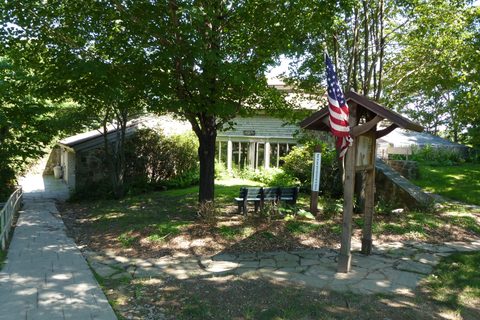
156 acres of wooded hills, fields and a pond, free admission.
-
The birthplace of Washington's aide and future Minister to Spain.
-
sight
An 1892 Richardsonian Romanesque landmark with a Toy Library.
-
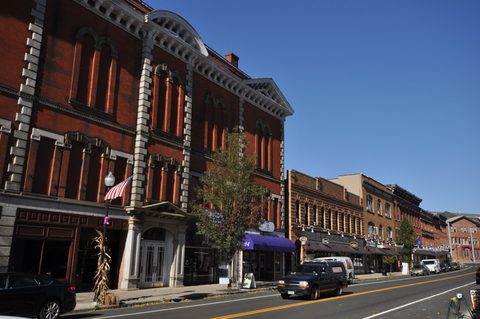
A row of 1870-1900 commercial buildings centered on the Opera House.
-
New American cooking with a rotating wine list on Main Street.
-
food
Thai kitchen with live jazz on Friday nights.
-
Occupies the ground floor of the historic Ansonia Opera House.
Clocks, bicycles and a canal-powered valley
David Humphreys — aide-de-camp to George Washington and later U.S. Minister to Spain — was born July 10, 1752 in what was then Derby and is now Ansonia; in 1802 he imported merino sheep from Spain and founded the first successful woolen mill in the United States. The Ansonia Clock Company, a Phelps subsidiary founded in 1851 with Bristol clockmakers Theodore Terry and Franklin C. Andrews, moved most production to Brooklyn in the late 1870s; in 1929 its remaining machinery and tooling were sold to the Soviet trading company Amtorg and shipped to Moscow, where they seeded the Poljot and Sekonda clock brands. Pierre Lallement, a French carriage maker, demonstrated his pedal-driven "boneshaker" velocipede on the roads of Ansonia and New Haven before receiving a U.S. patent on November 20, 1866. The Upper Main Street Historic District, listed on the National Register on December 2, 1982, is a row of Classical Revival and Italianate commercial buildings from 1870-1900 centered on the Ansonia Opera House of about 1870.
Getting there
Ansonia sits directly on Connecticut Route 8, about ten miles north of I-95 in Bridgeport; the highway meets the Merritt Parkway in Trumbull and Interstate 84 at Waterbury's Mixmaster interchange. Route 34 interchanges with Route 8 just south of Ansonia and runs southeast toward Derby and New Haven. Metro-North's Waterbury Branch has a real Ansonia station at 40 West Main Street, between Derby-Shelton to the south and Seymour to the north — but travelers should know that buses replace all Waterbury Branch rail service from July 20, 2026 through May 31, 2027, part of a $29.2 million platform-reconstruction program; Ansonia's new 350-foot canopied platform is due to open in June 2027. CTtransit New Haven's Route 255 bus connects Ansonia station to New Haven. There is no Amtrak, Shore Line East or CTrail Hartford Line service in Ansonia; the nearest is New Haven Union Station.
Frequently asked questions
- How do I get to Ansonia?
- By car on Connecticut Route 8, which meets the Merritt Parkway in Trumbull and I-84 at Waterbury. Ansonia has a Metro-North Waterbury Branch station at 40 West Main Street, but buses currently replace all rail service on the branch from July 20, 2026 through May 31, 2027 while the platform is rebuilt — do not plan to arrive by train until the new platform opens in June 2027.
- Is Ansonia's incorporation year 1864 or 1889?
- Sources disagree. Connecticuthistory.org gives 1864, the year the borough was chartered; the National Register district record and other accounts date the town's full separation from Derby to 1889. Every source agrees Ansonia reincorporated as a city in 1893.
- What is Ansonia's Toy Library?
- A lending program at the Ansonia Library (53 South Cliff Street), an 1892 Richardsonian Romanesque building on the National Register since 1985, that lets visitors borrow toys the way they borrow books. Hours are Mon 9 a.m.-4 p.m., Tue-Thu 9 a.m.-7 p.m., Fri 9 a.m.-4 p.m.; closed Saturdays until Labor Day.
- Is there a hotel in Ansonia?
- No hotel, motel, inn or B&B could be verified inside Ansonia. The nearest confirmed lodging is Hotel Marcel, a Marcel Breuer-designed, all-electric net-zero hotel at 500 Sargent Drive in New Haven.
- What can I see at the Ansonia Nature and Recreation Center?
- 156 acres of wooded hills, fields, streams and a two-acre pond at 10 Deerfield Lane, with free admission and guided hikes every Sunday at 1 p.m. The building keeps resident Animal Ambassadors including box turtles; the nature center itself is closed Sundays, though the park stays open sunrise to sunset.
Foliage
Turning this week · estimated peak Oct 28–Nov 3
Derived from the Connecticut DEEP fall foliage map. DEEP's map is a climatological estimate last published in 2023; it describes a normal year, not this one. Stage names are ours. See the statewide forecast.
Connected pages
Nearby
-
Woodbridge, Connecticut: From Amity Parish to a Printing Press
· Woodbridge, Connecticut
The two towns share a border
-
Derby, Connecticut: Connecticut's Smallest City by Area
· Derby, Connecticut
Ansonia separated from Derby township; Osbornedale State Park still straddles both towns' shared border.
-
Seymour, Connecticut: From Humphreysville to a Flood-Changed Town
· Seymour, Connecticut
Ansonia's Metro-North station sits between Derby-Shelton to the south and Seymour to the north on the Waterbury Branch.
Same region
-
New Haven, Connecticut: A Grid, a Colony, and Coal-Fired Apizza
· New Haven, Connecticut
Pierre Lallement demonstrated his early bicycle patent on the roads of both Ansonia and New Haven in 1866.
What travelers think
Log in to react.
No reviews yet.