New Haven, Connecticut: A Grid, a Colony, and Coal-Fired Apizza
New Haven, Connecticut
Pictures from New Haven
See all 3 photos →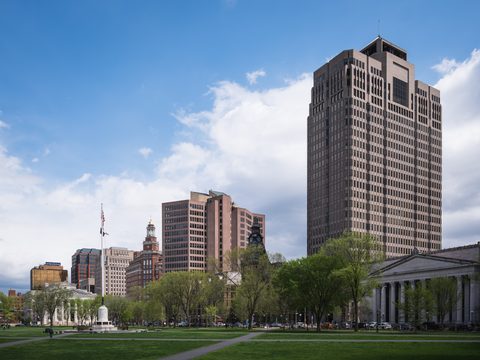
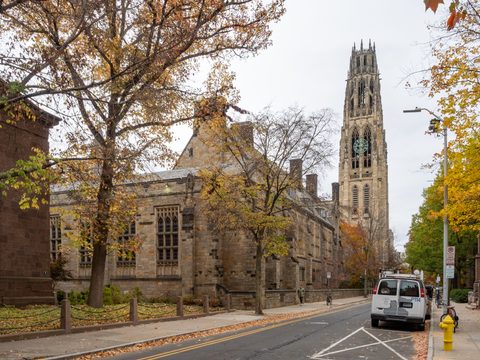
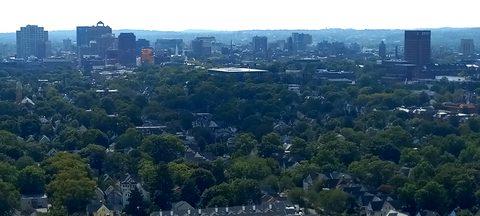
New Haven was founded in 1638, when English Puritans established New Haven Colony and laid out the town on a grid — the "Nine Square Plan," which arguably makes New Haven America's first planned town. The original nine squares remain at the heart of downtown, centered on the Green. New Haven was incorporated as a city in 1784. Its port and mercantile trade gave way to nineteenth-century industry, and in 1839, after enslaved Africans revolted aboard the schooner Amistad and the ship was captured off Long Island, the captives were imprisoned in New Haven, making the city central to the Amistad trials. In the mid-1900s, as industrial decline reshaped American cities, New Haven took the lead in federal urban renewal programs, a legacy still visible downtown today.
-
sight
Free natural-history galleries across three levels, including the famous Brontosaurus skeleton.
-
Free and open to the public, between York and High Streets.
-
sight
The city's own history museum, with a Roger Sherman exhibition.
-
sight
Opened 1914; hosted 600-plus pre-Broadway tryouts, including Oklahoma! and A Streetcar Named Desire.
-
The 1925 birthplace of New Haven-style coal-fired apizza.
-
food
Library of Congress-recognized birthplace of the hamburger, cooking since 1895.
-
food
Founded 1938 by Salvatore "Sally" Consiglio; now seven locations across two states.
-
food
Brick-oven apizza at 700 degrees; closed Mondays.
-
stay
124-room boutique hotel steps from the Yale University Art Gallery.
-
stay
Boutique hotel near Yale with the High George rooftop bar.
A grid, a colony, and the Amistad trials
English Puritans founded New Haven in 1638, establishing New Haven Colony and laying out the town according to the "Nine Square Plan" — a grid that arguably makes New Haven America's first planned town, and whose original nine squares still form the heart of downtown, centered on the Green. New Haven was incorporated as a city in 1784. Early New Haven thrived as a port and mercantile center; by the nineteenth century, industry had become the dominant force in the city's economy. In 1839, enslaved Africans revolted aboard the schooner Amistad; after the ship was captured off Long Island, its captives were imprisoned in New Haven, putting the city at the center of the Amistad trials. In the mid-1900s, as industrial decline reshaped many American cities, New Haven took the lead in federal urban renewal programs, reshaping downtown in ways still visible today.
Getting there
Drivers reach New Haven where I-95, the shoreline corridor, meets I-91 north to Hartford. Rail travelers arrive at Union Station, 50 Union Avenue — the busiest train station in Connecticut — served by Metro-North's New Haven Line direct to Grand Central Terminal, Amtrak's Northeast Regional, Acela, and Vermonter, CT Rail Shore Line East (from Union Station and the State Street stop, east to New London), and the CTrail Hartford Line north to Hartford and Springfield, Massachusetts.
Yale, apizza, and a pre-Broadway stage
The Yale Peabody Museum offers free admission to newly renovated galleries across three levels, including its famous Brontosaurus skeleton, with no reservations required for individual visitors. The Yale University Art Gallery is likewise free and open to the public. The New Haven Museum tells the city's own history, including an exhibition on Roger Sherman, a framer of the Constitution. The Shubert Theatre, opened December 11, 1914, is nicknamed the "Birthplace of the Nation's Greatest Hits" for hosting more than 600 pre-Broadway tryouts, including the 1943 premiere of Oklahoma! and the 1947 premiere of A Streetcar Named Desire, which launched Marlon Brando. New Haven is also the birthplace of New Haven-style apizza: Frank Pepe originated the coal-fired style in 1925, Sally's Apizza followed in 1938, and Modern Apizza bakes its pies in 700-degree brick ovens. Louis' Lunch, founded in 1895, is recognized by the Library of Congress as the birthplace of the hamburger sandwich and still cooks on its original 1898 cast-iron vertical broilers.
Frequently asked questions
- How do I get to New Haven?
- Drivers reach New Haven where I-95 meets I-91. Union Station (50 Union Avenue), the busiest train station in Connecticut, has Metro-North New Haven Line service direct to Grand Central Terminal, Amtrak Northeast Regional/Acela/Vermonter, CT Rail Shore Line East, and the CTrail Hartford Line.
- What is New Haven-style apizza?
- A coal-fired pizza style originated by Frank Pepe in 1925; Sally's Apizza (founded 1938 by Salvatore "Sally" Consiglio) and Modern Apizza, whose brick ovens reach 700 degrees Fahrenheit, are two of the city's other classic apizza houses.
- Is Louis' Lunch really the birthplace of the hamburger?
- It's recognized as such by the Library of Congress. Founded in 1895 at 261 Crown Street, it still cooks burgers on the original 1898 cast-iron vertical gas broilers under fourth-generation family ownership.
- Are the Yale museums free to visit?
- Yes. Both the Yale Peabody Museum (170 Whitney Ave.) and the Yale University Art Gallery (1111 Chapel St.) offer free general admission; the Peabody requires no reservation for individual visitors.
- Where can I stay in New Haven?
- The Study at Yale (1157 Chapel Street), a 124-room boutique hotel with Heirloom Restaurant & Lounge, and The Blake New Haven (9 High Street), near Yale with the modern Italian restaurant Siena, are both verified in-town options.
- What is the Shubert Theatre known for?
- Opened in 1914 and nicknamed the "Birthplace of the Nation's Greatest Hits," it has hosted over 600 pre-Broadway tryouts, including the 1943 world premiere of Oklahoma! and the 1947 premiere of A Streetcar Named Desire.
Foliage
Still green this week · most advanced Oct 21–27
This town never reaches full colour on the state's map — DEEP's eight weeks run out before it turns.
On the New Haven & Neighborhood foliage driving route.
Derived from the Connecticut DEEP fall foliage map. DEEP's map is a climatological estimate last published in 2023; it describes a normal year, not this one. Stage names are ours. See the statewide forecast.
Connected pages
Nearby
- Hamden, Connecticut: An Armory, a Ridge, and a Sleeping Giant · Hamden, Connecticut
-
West Haven, Connecticut: Connecticut's Youngest City
· West Haven, Connecticut
The two towns share a border
-
Orange, Connecticut: PEZ Candy's North American Home
· Orange, Connecticut
The two towns share a border
-
North Haven, Connecticut: A Continent's First Brickyard
· North Haven, Connecticut
North Haven grew out of New Haven's colonial land divisions and separated as its own town in 1786.
-
Woodbridge, Connecticut: From Amity Parish to a Printing Press
· Woodbridge, Connecticut
Woodbridge was incorporated from portions of New Haven and Milford; West Rock Ridge State Park also spans Woodbridge and New Haven.
-
East Haven, Connecticut: Iron Works and a Century-Old Trolley Line
· East Haven, Connecticut
East Haven separated from New Haven, incorporating as its own town in 1785.
Shared history
-
Branford, Connecticut: Granite Quarries and the Thimble Islands
· Branford, Connecticut
Branford was established in 1644 on land New Haven Colony settlers had purchased in 1638.
-
Milford, Connecticut: Oysters, a Tombolo, and Captain Kidd's Legend
· Milford, Connecticut
Milford's 1639 land purchase from Ansantawae was made by colonists affiliated with New Haven Colony.
Same region
-
Branford, Connecticut: Granite Quarries and the Thimble Islands
· Branford, Connecticut
The two are near neighbours along the shoreline rather than bordering towns.
-
Milford, Connecticut: Oysters, a Tombolo, and Captain Kidd's Legend
· Milford, Connecticut
The two are near neighbours along the shoreline rather than bordering towns.
-
Hamden, Connecticut: An Armory, a Ridge, and a Sleeping Giant
· Hamden, Connecticut
Both on the New Haven & Neighborhood foliage route
-
North Haven, Connecticut: A Continent's First Brickyard
· North Haven, Connecticut
Both on the New Haven & Neighborhood foliage route
-
Hartford, Connecticut: The Constitution State's Capital
· Hartford, Connecticut
Both sit on the CTrail Hartford Line, which runs Hartford Union Station to New Haven Union Station.
-
Orange, Connecticut: PEZ Candy's North American Home
· Orange, Connecticut
New Haven Union Station, reached via I-95 or U.S. Route 1, is the nearest Amtrak and Metro-North hub to Orange.
-
West Haven, Connecticut: Connecticut's Youngest City
· West Haven, Connecticut
The nearest verified lodging, The Blake New Haven, sits in downtown New Haven near Yale and the Green.
-
East Haven, Connecticut: Iron Works and a Century-Old Trolley Line
· East Haven, Connecticut
Both on the New Haven & Neighborhood foliage route
-
Cromwell, Connecticut: Rose King and Brownstone Seaport
· Cromwell, Connecticut
Cromwell sits roughly 28 miles north of New Haven along the I-91/Route 9 corridor.
-
Ansonia, Connecticut: The Copper City's Disputed Birthday
· Ansonia, Connecticut
Pierre Lallement demonstrated his early bicycle patent on the roads of both Ansonia and New Haven in 1866.
See also
-
Midtown, Manhattan: Terminal City and the Tallest Tower
· Midtown, New York
Union Station, the busiest train station in Connecticut, has Metro-North New Haven Line service direct to Grand Central Terminal.
What travelers think
Log in to react.
No reviews yet.