Branford, Connecticut: Granite Quarries and the Thimble Islands
Branford, Connecticut
Pictures from Branford
See all 3 photos →
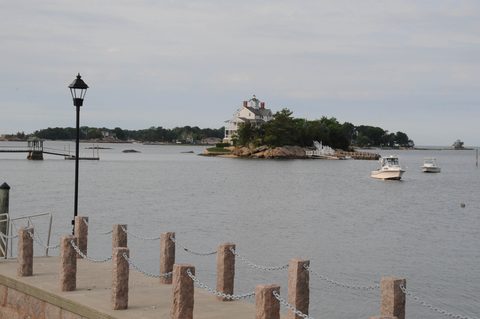
Branford was established in 1644 on land along Long Island Sound that New Haven Colony settlers had purchased from Native peoples in 1638; the area was known to its Indigenous inhabitants as Totoket. The town was incorporated in 1685, its name said to derive from Brentford, England. After the railroad arrived in 1852, Stony Creek's granite quarries rose to prominence, supplying stone for the Brooklyn Bridge and the Statue of Liberty's base. The Thimble Islands, an archipelago of glacial granite islands off Stony Creek, made Branford a popular tourist destination from the 1850s through the 1920s, and the town still maintains roughly 20 miles of coastline. The Branford Electric Railway, preserved today as the oldest continuously operating suburban trolley line in the United States, still runs cars toward Branford's Short Beach section. Notable figures include forensic scientist Henry Lee and 2009 Nobel chemistry laureate Thomas Steitz.
-
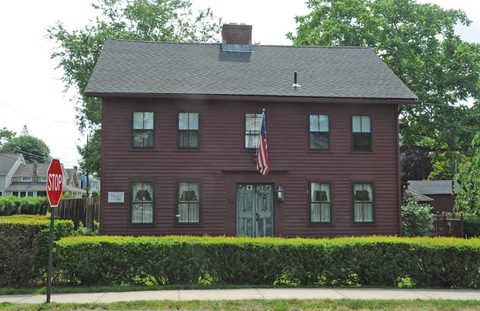
An 1724 saltbox home run by the Branford Historical Society.
-
sight
Mainstage, concert, and comedy series in Stony Creek village.
-
Narrated cruises among the granite Thimble Islands.
-
Shoreline seafood house serving chowders and lobster since 1968.
-
food
Downtown comfort food, 14 years running.
-
Waterfront taproom on the Branford River, at the former Stony Creek Brewery site.
-
A beachfront inn and beach club welcoming guests since 1847.
Totoket, granite, and the Thimble Islands
Branford was established in 1644 on land along Long Island Sound that settlers from New Haven Colony had purchased from Native peoples in 1638; the area was known to its Indigenous inhabitants as Totoket. The town was incorporated in 1685, its name said to derive from the town of Brentford, England. After the railroad arrived in 1852, Stony Creek's granite quarries rose to prominence, supplying stone for landmarks including the Brooklyn Bridge and the base of the Statue of Liberty; other defining industries included the Malleable Iron Fittings Company, Branford Lockworks, and Atlantic Wire Company. The Thimble Islands, an archipelago of glacial granite islands off Stony Creek, made Branford a popular tourist destination from the 1850s through the 1920s, and the town still maintains roughly 20 miles of coastline with town parks and beaches. The Harrison House, built in 1724 by Nathaniel Harrison 2nd, retains original hand-hewn oak corner posts and exposed joists; the Branford Historical Society, founded in 1960, preserves it as a museum. Notable Branford figures include forensic scientist Henry Lee, 2009 Nobel chemistry laureate Thomas Steitz, and celebrity chef Todd English.
Getting there
Drivers reach Branford on I-95 along the shoreline, with US 1 (Main Street) and scenic Route 146 threading the coastal villages. Train travelers use CTrail Shore Line East's accessible Branford station at 39 Maple Street, with free daily parking, level boarding, and elevators; the line connects at New Haven Union Station to Metro-North's New Haven Line, Amtrak, and the CTrail Hartford Line.
The Thimble Islands and a historic beach inn
Narrated Sea Mist cruises depart the Stony Creek Town Dock for sightseeing among the Thimble Islands, charted by Adriaen Block in 1614 and tied to Captain Kidd treasure lore, with past uses ranging from farming to granite quarrying. The Legacy Theatre, in a restored historic building in Stony Creek village, presents a mainstage season plus concert and comedy series. The Branford Electric Railway, preserved by the Shore Line Trolley Museum, is billed as the oldest continuously operating suburban trolley line in the United States, with cars still running toward Branford's Short Beach. For lodging, the Owenego Inn & Beach Club, a beachfront inn and family beach club that has welcomed guests since 1847, is the one independently verified inn in Branford; travelers wanting more options should look to New Haven's hotel stock, about 8 miles west on I-95.
Frequently asked questions
- How do I get to Branford?
- Drivers use I-95 along the shoreline, with US 1 (Main Street) or scenic Route 146. CTrail Shore Line East's Branford station (39 Maple Street) connects at New Haven Union Station to Metro-North's New Haven Line, Amtrak, and the CTrail Hartford Line.
- What are the Thimble Islands?
- An archipelago of glacial granite islands off Branford's Stony Creek village, charted by Adriaen Block in 1614 and tied to Captain Kidd treasure lore; Sea Mist offers narrated sightseeing cruises from the Stony Creek Town Dock.
- Can I ride a historic trolley near Branford?
- Yes. The Shore Line Trolley Museum (17 River Street, East Haven) preserves the Branford Electric Railway, billed as the oldest continuously operating suburban trolley line in the U.S., with cars running toward Branford's Short Beach section.
- Where can I stay in Branford?
- The Owenego Inn & Beach Club, a beachfront inn welcoming guests since 1847, is the one independently verified inn in Branford. Travelers wanting more options should look to New Haven, about 8 miles west.
- What is the Harrison House Museum?
- A saltbox home built in 1724 by Nathaniel Harrison 2nd, with original hand-hewn oak corner posts, operated by the Branford Historical Society (founded 1960). Open June-September, Saturdays 1-4 p.m., free admission.
Foliage
Still green this week · most advanced Nov 4–10
This town never reaches full colour on the state's map — DEEP's eight weeks run out before it turns.
On the New Haven & Neighborhood foliage driving route.
Derived from the Connecticut DEEP fall foliage map. DEEP's map is a climatological estimate last published in 2023; it describes a normal year, not this one. Stage names are ours. See the statewide forecast.
Connected pages
Nearby
-
East Haven, Connecticut: Iron Works and a Century-Old Trolley Line
· East Haven, Connecticut
The Branford Electric Railway, preserved as the Shore Line Trolley Museum at 17 River Street in East Haven, runs cars toward Branford's Short Beach.
- Guilford, Connecticut: Puritans, Granite, and the Oldest Stone House · Guilford, Connecticut
-
North Branford, Connecticut: The Shredded Coconut Capital That Almost Was
· North Branford, Connecticut
North Branford separated from Branford and was incorporated as its own town in 1831.
Shared history
-
North Branford, Connecticut: The Shredded Coconut Capital That Almost Was
· North Branford, Connecticut
North Branford separated from Branford and incorporated in 1831; both sit on land its Indigenous inhabitants knew as Totoket.
-
New Haven, Connecticut: A Grid, a Colony, and Coal-Fired Apizza
· New Haven, Connecticut
Branford was established in 1644 on land New Haven Colony settlers had purchased in 1638.
-
East Haven, Connecticut: Iron Works and a Century-Old Trolley Line
· East Haven, Connecticut
Branford supplied land and charcoal for Connecticut's first iron works, built near Lake Saltonstall in East Haven in 1655.
Same region
-
East Haven, Connecticut: Iron Works and a Century-Old Trolley Line
· East Haven, Connecticut
Both on the New Haven & Neighborhood foliage route
-
New Haven, Connecticut: A Grid, a Colony, and Coal-Fired Apizza
· New Haven, Connecticut
Both on the New Haven & Neighborhood foliage route
-
Durham, Connecticut: A Farming Town's Second-Oldest Library
· Durham, Connecticut
Both on the New Haven & Neighborhood foliage route
-
Guilford, Connecticut: Puritans, Granite, and the Oldest Stone House
· Guilford, Connecticut
Both on the New Haven & Neighborhood foliage route
What travelers think
Log in to react.
No reviews yet.