.jpg)
SoHo, Manhattan: Cast-Iron Blocks the Artists Saved
SoHo, New York
Pictures from SoHo
See all 4 photos →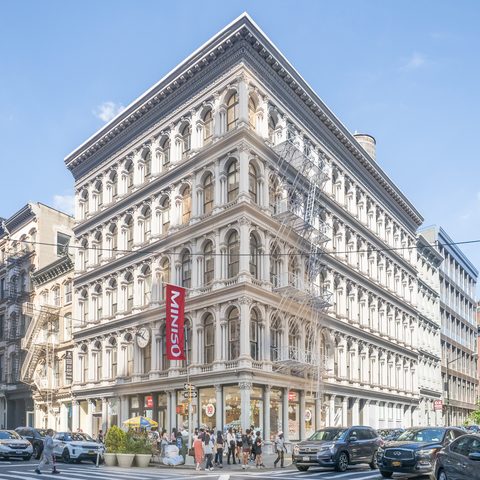
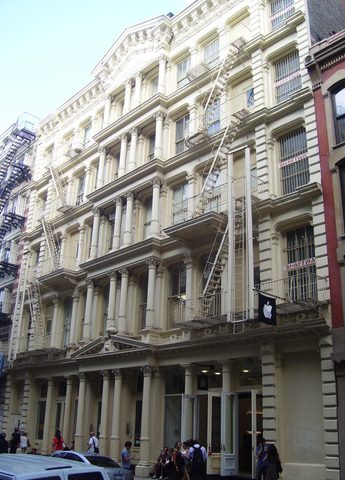
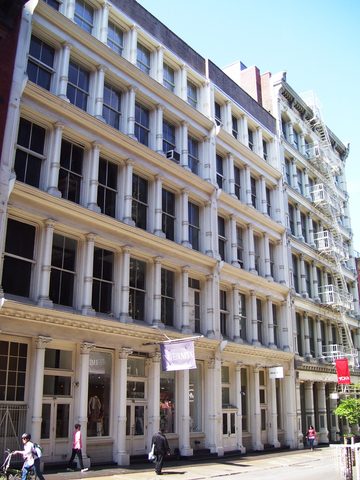
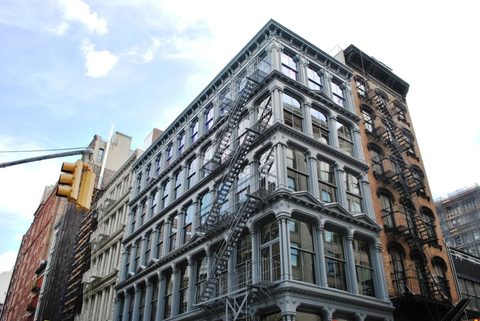
SoHo takes its name from a 1962 planning study — urban planner Chester Rapkin's 'The South Houston Industrial Area,' known as the Rapkin Report — but the ground beneath it has cycled through identities for three centuries. Colonial-era farmland here was part of a grant to freed Black settlers of the Dutch West India Company, and by the mid-1800s the same streets had become New York's dry-goods and textile hub, filled with masonry and cast-iron loft buildings. When wholesale trade moved out after World War II, the empty factories left an area so desolate New Yorkers nicknamed it Hell's Hundred Acres. Robert Moses wanted to run an elevated expressway straight through it in the 1960s; preservationists and the artists who had quietly moved into the vacant lofts stopped him. A 1971 zoning change legalized their live-work lofts, the 1982 Loft Law secured their tenancy, and in 1973 the city landmarked the SoHo-Cast Iron Historic District — about 500 buildings now called the world's greatest concentration of cast-iron architecture.
-
Donald Judd's home and studio since 1968, restored and open for guided visits since 2013.
-
sight
A museum devoted to drawing and works on paper, on Wooster Street.
-
A museum of art by queer artists, open Wednesday to Sunday, noon to 6 p.m.
-
A stroll along Greene, Mercer, and Wooster Streets covers most of the roughly 500 landmarked cast-iron buildings.
-
food
A French brasserie on Spring Street, open since April 1997.
-
Where the Cronut was created in 2013; the DKA and cannelés are signatures too.
-
food
A basement-level seafood restaurant on Mercer Street, with a raw bar and sushi.
-
stay
A 73-room hotel on Mercer Street, with Sartiano's restaurant on site.
-
stay
A West Broadway hotel with DJ sets at its Grand Bar & Salon, Wednesday to Saturday.
-
stay
A Firmdale hotel on Crosby Street, with 86 individually designed rooms and suites.
Hell's Hundred Acres to Historic District
SoHo's cast-iron blocks were built for commerce, not looks: mid-19th-century dry-goods and textile firms favored the material because cast-iron facades could be prefabricated cheaply and cast to mimic carved stone. After the wholesale trade left following World War II, the abandoned factories sat empty at night and earned the neighborhood its "Hell's Hundred Acres" nickname through the 1950s. Robert Moses's proposed Lower Manhattan Expressway would have demolished much of it in the 1960s, but preservationists and the artists already colonizing the lofts defeated the plan. The roughly 26-block, 500-building SoHo-Cast Iron Historic District was designated by the city in 1973, extended in 2010, and named a National Historic Landmark in 1978 — sparing the very buildings Moses meant to level.
Getting there by subway
SoHo has no station at its core but is ringed by local stops on four different lines: the N/R/W at Prince Street, the 6 at Spring Street (Lexington Avenue line), the C/E at Spring Street (Eighth Avenue line), and the 1 at Houston Street (with the 2 stopping there late nights only). Because these are all local stations, express trains like the A and the daytime Q roll past without stopping — plan around the local lines above.
Loft Law Legacy
The artists who moved into SoHo's empty manufacturing lofts in the 1960s worked outside the law until a 1971 zoning amendment created "Joint Live-Work Quarters for Artists," formally legalizing artist residency in commercial buildings. The 1982 Loft Law then gave those tenants rent protection and stability. One of the best-preserved examples is 101 Spring Street, the five-story 1870 cast-iron building Donald Judd bought in 1968 as his home and studio — restored and opened for public visits in 2013, it still holds his artwork and furniture exactly as he placed them.
Frequently asked questions
- How do I get to SoHo by subway?
- Take the N/R/W to Prince Street, the 6 to Spring Street (Lexington Ave line), the C/E to Spring Street (Eighth Ave line), or the 1 to Houston Street (2 late nights only) — all local stops ringing the neighborhood's edges.
- Where does the name SoHo come from?
- It stands for "South of Houston Street," coined in 1962 by urban planner Chester Rapkin in his study "The South Houston Industrial Area," known as the Rapkin Report.
- Why does SoHo have so many cast-iron buildings?
- Mid-19th-century dry-goods and textile merchants built with cast-iron facades because the material could be prefabricated and cast to mimic carved stone cheaply. About 500 of those buildings survive within the SoHo-Cast Iron Historic District, landmarked in 1973 and named a National Historic Landmark in 1978.
- Can you visit Donald Judd's SoHo house?
- Yes — 101 Spring Street, the cast-iron building Judd bought in 1968, was restored and opened for guided public visits in June 2013 through the Judd Foundation, with his artwork and furniture in place.
- Is SoHo still an artists' neighborhood?
- The 1982 Loft Law gave the artists who colonized SoHo's lofts in the 1960s rent protection and stability, and that live-work legacy is still visible in buildings like 101 Spring Street, even as the neighborhood has become a retail and gallery district.
Connected pages
Nearby
- West Village, Manhattan: Crooked Streets, Stonewall's Legacy · West Village, New York
- NoHo, Manhattan: Astor's Row, Reborn in Lofts · NoHo, New York
- Greenwich Village, Manhattan: Bohemia Since the 1910s · Greenwich Village, New York
- Tribeca, Manhattan: Triangle Below Canal, Loft by Loft · Tribeca, New York
- Little Italy, Manhattan: Five Blocks and a Hundred Years · Little Italy, New York
- NoLIta, Manhattan: North of Little Italy Since 1996 · NoLIta, New York
Shared history
-
Tribeca, Manhattan: Triangle Below Canal, Loft by Loft
· Tribeca, New York
Tribeca's artists moved into emptied warehouse lofts following the live/work model pioneered in neighboring SoHo.
-
Chelsea, Manhattan: Freight Rails Into Gallery Row
· Chelsea, New York
From the late 1990s, galleries priced out of SoHo turned West Chelsea into the city's contemporary-art hub.
Same region
-
Tribeca, Manhattan: Triangle Below Canal, Loft by Loft
· Tribeca, New York
Another Manhattan neighborhood covered in this series.
-
Greenwich Village, Manhattan: Bohemia Since the 1910s
· Greenwich Village, New York
Another Manhattan neighborhood covered in this series.
See also
-
NoHo, Manhattan: Astor's Row, Reborn in Lofts
· NoHo, New York
NoHo's name, coined in the 1970s, was meant to set the area apart from SoHo to its south.
What travelers think
Log in to react.
No reviews yet.