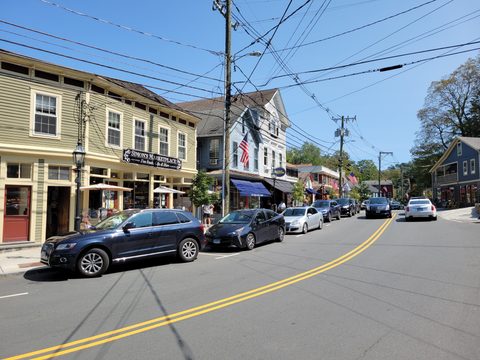

Kensington, Brooklyn: Ocean Parkway and Little Bangladesh
Kensington, New York
Pictures from Kensington
See all 2 photos →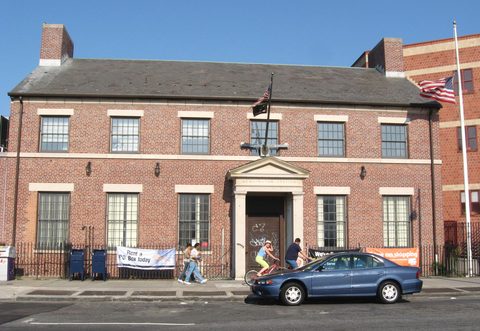
The land Kensington occupies was first colonised by Dutch farmers in the seventeenth century, inside the town of Flatbush, and re-settled by British colonists in 1737. Building began in 1885, after Ocean Parkway was completed, and the area took its name from the London borough at the turn of the twentieth century. Jeremiah Johnson Jr., president of the Brooklyn Real Estate Exchange, developed Kensington Heights around 1891 and Kensington-in-Flatbush around 1894; the town of Flatbush, the Kensington tracts included, was annexed by the City of Brooklyn in 1894, ahead of the consolidation of the five boroughs on January 1, 1898. For most of the twentieth century nobody called it Kensington at all. Residents, demographers and the press treated it as the western section of Flatbush, or West Flatbush, and the current name only took hold in the 1980s.
-
walk
The Olmsted and Vaux boulevard between Church Avenue and Seabreeze Avenue, on the National Register since 1983.
-
A McDonald Avenue post office building on the National Register since November 1988.
-
The Kensington Synagogue on Clara Street, listed on the National Register in February 2016.
-
A synagogue on Ocean Parkway, listed on the National Register in December 2009.
-
walk
A pocket of parkland on Dahill Road, in the community board that covers most of Kensington.
-
sight
A vacant lot residents turned into a plaza at McDonald Avenue and Avenue C.
-
A Bangladeshi kitchen on McDonald Avenue, a few doors off the Church Avenue corner.
-
food
A Bangladeshi sweets counter on Church Avenue in the Little Bangladesh corridor.
How Kensington got its name back
Rezoning during construction of the IND Culver subway line reshaped the housing stock. Six-storey elevator apartment buildings became increasingly common on upper Ocean Parkway and its side streets between the late 1920s and 1941, replacing many of the earlier suburban villas. After the Second World War, construction of the Prospect Expressway was followed by more apartment-house building on and near Ocean Parkway, including the Marlene J., later Caton Towers, and the Americana Towers, continuing to the mid-1960s. The Church Avenue streetcar line closed in 1956 and was replaced by buses.
The name came back administratively before it came back in speech. The city's 1969 Plan for New York City informally designated the tracts between McDonald and Coney Island Avenues as Kensington. Community boards had been established in 1963, and most of present-day Kensington had gone into the Borough Park-dominated Brooklyn Community Board 12 while eastern Flatbush and Midwood went into Community Board 14 — a split Wikipedia describes as possibly stemming from the Kensington Democratic leader Howard Golden's ties to Borough Park's Roosevelt Club. By the early 1980s, as the older Irish- and then Italian-American population aged out, real-estate interests adopted the Kensington name quickly, and the neighborhood drew young professionals, Orthodox Jews and immigrant communities during the city's co-op conversion movement.
Neighborhood boundaries here are contested and have never been officially defined by the city. A 2001 New York Times article gave Kensington's borders as Caton Avenue and Fort Hamilton Parkway on the north, 36th Street, Dahill Avenue and 47th Street on the west, Foster Avenue on the south and Coney Island Avenue on the east. The Encyclopedia of New York City in 2010 instead put the western edge at McDonald Avenue and carried the southern edge to Avenue H. The two do not agree, and neither is definitive.
Little Bangladesh
On October 16, 2022, City Council Member Shahana Hanif co-named the intersection of McDonald and Church Avenues Little Bangladesh. Hanif is the first Muslim woman elected to the New York City Council, a lifelong Kensington resident and the daughter of Bangladeshi immigrants. The co-naming recognises a corridor that is home to roughly 35 percent of the Bangladeshis living in New York City, most of them from the Chittagong, Sandwip and Noakhali regions, who began settling there in the early 1980s.
The corridor's food is the most visible part of it. Radhuni Sweets + Restaurant sits on McDonald Avenue just off Church Avenue, and Abdullah Sweets is on Church Avenue itself. A block away at McDonald Avenue and Avenue C, residents pushed to turn a long-unused vacant lot into a public plaza.
Getting there
The IND Culver Line runs through the neighborhood. Church Avenue, an underground station at Church and McDonald Avenues in Kensington, is served by the F at all times and by the G at all times as the G's southern terminus, with limited peak-direction F express service. Fort Hamilton Parkway, also underground and served by the F and G at all times, sits on the Kensington and Windsor Terrace border.
South of there the line rises. Ditmas Avenue, an elevated station on the Kensington and Borough Park border, is served only by the F at all times and by peak-direction express trains; the G does not stop there. 18th Avenue, also elevated and also F-only, sits at the point where Borough Park, Kensington and Mapleton meet.
Frequently asked questions
- How do I get to Kensington?
- By subway on the IND Culver Line. Church Avenue at Church and McDonald Avenues is served by the F and by the G, which terminates there. Fort Hamilton Parkway, on the Kensington and Windsor Terrace border, is served by the F and G. Ditmas Avenue and 18th Avenue further south are F-only elevated stations.
- Why is Kensington sometimes called West Flatbush?
- Because that is what it was called. For much of the twentieth century the area was seldom distinguished as its own neighborhood, and residents, demographers and the press identified it as the western section of Flatbush. The name Kensington, taken from the London borough at the turn of the twentieth century, was only adopted widely by real-estate interests in the early 1980s.
- What is Little Bangladesh?
- A corridor around McDonald and Church Avenues, co-named on October 16, 2022 by Council Member Shahana Hanif. Roughly 35 percent of the Bangladeshis living in New York City live in the area, most from the Chittagong, Sandwip and Noakhali regions, and settlement there began in the early 1980s.
- Can I go inside the synagogues on the National Register?
- Congregation Chevra Linath Hazedeck at 109 Clara Street and the Ocean Parkway Jewish Center at 550 Ocean Parkway are both listed on the National Register. No source consulted for this guide confirms whether non-congregants can visit the interiors, so treat them as buildings to look at from the street.
- Are there hotels in Kensington?
- No lodging is listed here, and none is borrowed from a neighbouring neighborhood.
Connected pages
Nearby
-
Windsor Terrace, Brooklyn: Forty-Nine Pleasant Cottage Lots
· Windsor Terrace, New York
The Fort Hamilton Parkway station on the F and G sits on the Kensington and Windsor Terrace border.
Same region
-
Flatbush, Brooklyn: Midwout, Erasmus Hall and Kings Theatre
· Flatbush, New York
For much of the twentieth century Kensington was identified as the western section of Flatbush, or West Flatbush.
-
Prospect Park South, Brooklyn: Dean Alvord's Rus in Urbe
· Prospect Park South, New York
The B68, one of the routes listed as serving Kensington, runs along Coney Island Avenue past the Prospect Park South Historic District.
-
Borough Park, Brooklyn: Blythebourne, Reynolds and Thirteenth Avenue
· Borough Park, New York
The B35 lists Sunset Park, Borough Park, Kensington, Flatbush, East Flatbush, Remsen Village and Brownsville among the communities it serves.
-
Ditmas Park, Brooklyn: A Landmarked District Inside Flatbush
· Ditmas Park, New York
The broader traditional Ditmas Park boundary is described as reaching toward Coney Island Avenue, Prospect Park South and Kensington.
-
Midwood, Brooklyn: Vitagraph, Fiske Terrace and Avenue J
· Midwood, New York
Community boards were established in 1963; most of Kensington went into Community Board 12, while Midwood went into Community Board 14.
What travelers think
Log in to react.
No reviews yet.