
Flatbush, Brooklyn: Midwout, Erasmus Hall and Kings Theatre
Flatbush, New York
Pictures from Flatbush
See all 3 photos →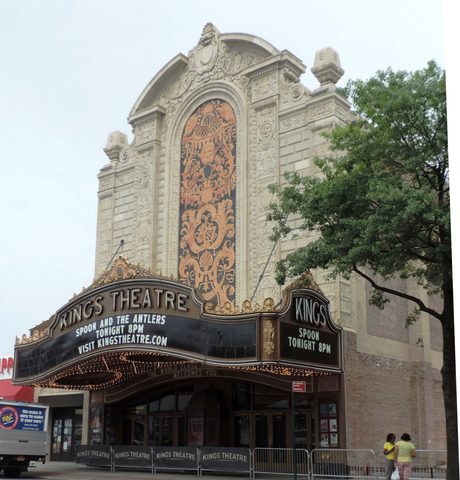
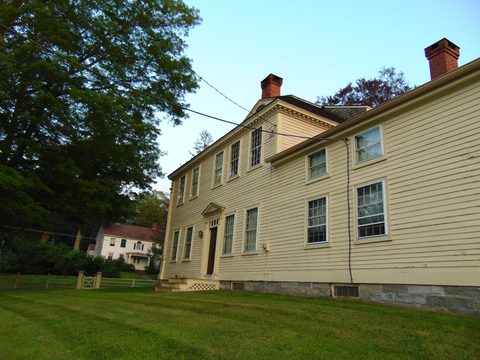
Dutch settlers established Flatbush between roughly 1630 and 1636 as the town of Midwout, also recorded as Vlacke Bos, meaning wooded plain. The township received its patent in 1652, and the English name gradually replaced the Dutch names after 1685. Before any of that, the Canarsee people had a settlement called Keskachauge near what is now the meeting of Flatbush Avenue and Kings Highway. Slavery ran deep in the town: 29 percent of a recorded population of 539 was enslaved in 1738, rising to 41 percent by 1790. The Reformed Dutch congregation dates to 1654 and Erasmus Hall Academy to 1786, and the town governed itself until the City of Brooklyn annexed it in 1894. Its edges have never been settled, and sources place Ditmas Park, Prospect Lefferts Gardens and Fiske Terrace inside or outside Flatbush depending on who is drawing the line.
-
sight
A 3,690-seat house that opened in 1929, went dark in 1977 and came back in January 2015 after a $95 million restoration.
-
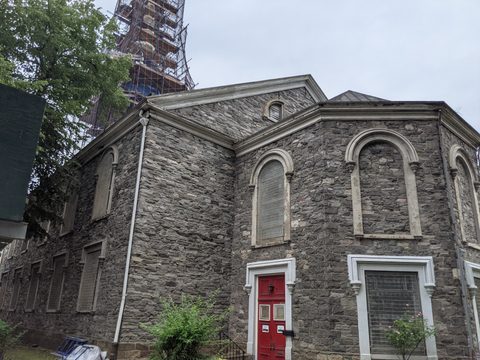
The congregation dates to 1654; the church went up between 1793 and 1798, and the burying ground holds markers from 1754.
-
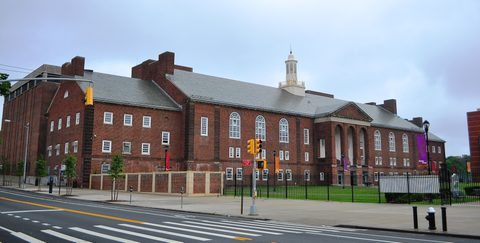
The 1787 academy building stands inside a working school campus on Flatbush Avenue, landmarked in 1966.
-
sight
The college moved to this 35-acre campus in 1937; it straddles the Midwood and Flatbush sections.
-
sight
A farmhouse of about 1783, moved into Prospect Park in 1918 and reopened in May 2023 after restoration.
-
walk
Fifteen numbered courts and fields on a detached piece of Prospect Park that runs up against the Flatbush grid.
-
food
A Haitian-owned cafe on Beverly Road, open since May 2024 and known for its Cremas Latte.
From Midwout to Little Haiti
Flatbush Avenue began as a Native American trail that Dutch settlers widened into a ferry road in the seventeenth century. It operated as a toll plank road for much of the nineteenth century and was straightened to its current alignment in the late 1920s. During the 1776 Battle of Long Island, American forces tried to check the British advance at a site now known as Battle Pass, inside what is today Prospect Park.
The Town of Flatbush stayed an independent municipality until it was annexed into the City of Brooklyn in 1894, shortly before Brooklyn itself joined New York City. Erasmus Hall Academy, founded in 1786 by Rev. John H. Livingston and Senator John Vanderbilt, became a public school in 1896; the city closed it as a single high school in 1994 after years of poor results and converted the buildings at 899-925 Flatbush Avenue into the Erasmus Hall Educational Campus, housing several small schools.
The neighborhood changed quickly after 1970, from about 89 percent white to about 30 percent a decade later, driven in part by blockbusting that pushed white residents to sell and leave. Stores along Flatbush Avenue and Church Avenue were looted during the citywide blackout of 1977. In 1997, officers from Flatbush's 70th Precinct sexually assaulted Abner Louima, a case of police brutality that resulted in what was then the largest individual payment, $8.7 million, in an NYPD brutality case.
Haitian immigrants began settling the Nostrand Avenue corridor in the 1960s and 1970s. The city officially designated the area from East 16th Street to Brooklyn Avenue 'Little Haiti' in 2018, and in 2021 the Newkirk Avenue subway station was renamed Newkirk Avenue-Little Haiti in recognition of the community.
Sub-sections and shifting edges
Flatbush's boundaries are not fixed or official. The area is understood to encompass distinct sub-sections, and sources disagree about exactly where Flatbush ends and neighbouring East Flatbush, Midwood, Flatlands and Kensington begin.
Ditmas Park, one of those sub-sections, was built primarily between 1902 and 1914 on former farmland owned by the Ditmas family, developed in part by Lewis H. Pounds; it was designated a New York City historic district in 1981 and added to the National Register of Historic Places in 1983. Prospect Lefferts Gardens, a residential section within Flatbush, traces to 1893, when James Lefferts subdivided his family's estate into roughly 600 building lots with deed restrictions requiring detached single-family brick or stone houses of at least two storeys. Its current name, coined in 1968, combines references to Prospect Park, Lefferts Manor and the Brooklyn Botanic Garden.
This guide covers those sections in their own pages rather than folding them in here, which is the same treatment the sources give them: sometimes part of Flatbush, sometimes not.
Getting there
The BMT Brighton Line runs the length of the neighborhood. Church Avenue, at Church Avenue and East 18th Street, is a Flatbush station served by the Q at all times and the B on weekdays. Beverley Road, in the Ditmas Park section, is served by the Q at all times; the B runs past without stopping. Newkirk Plaza, which sits across Flatbush and Ditmas Park, is served by the Q and the B. Avenue H, at Avenue H and East 16th Street, sits on the Midwood and Flatbush border and is served by the Q. Prospect Park, at Empire Boulevard and Flatbush Avenue near the Crown Heights border and next to Prospect Lefferts Gardens, is served by the Q at all times, the B on weekdays and the Franklin Avenue Shuttle at all times.
On the IRT Nostrand Avenue Line, Newkirk Avenue-Little Haiti at Newkirk and Nostrand Avenues is served by the 2 and the 5. Beverly Road, at Beverley Road and Nostrand Avenue, straddles East Flatbush and Flatbush and is served by the 2 at all times and the 5 on weekdays. Flatbush Avenue-Brooklyn College sits at the corner known as The Junction, bordering East Flatbush, Flatlands and Midwood, and is served by the 2 and the 5.
Frequently asked questions
- How do I get to Flatbush?
- By subway. The Q runs the BMT Brighton Line through the neighborhood, calling at Church Avenue, Beverley Road, Newkirk Plaza, Avenue H and Prospect Park, with B service on weekdays at Church Avenue, Newkirk Plaza and Prospect Park. On the IRT Nostrand Avenue Line, the 2 and 5 call at Newkirk Avenue-Little Haiti, Beverly Road and Flatbush Avenue-Brooklyn College.
- Where does the name Flatbush come from?
- From the Dutch. The town was founded as Midwout, also recorded as Vlacke Bos, meaning wooded plain; the English name Flatbush gradually replaced the Dutch names after 1685.
- Is the Kings Theatre still open?
- Yes. The theatre closed in 1977 and sat vacant for decades, then reopened in January 2015 after a $95 million restoration. It operates as a live concert and events venue run by ATG Entertainment.
- Can I go inside the Erasmus Hall Academy building?
- The 1787 academy building stands inside the active Erasmus Hall Educational Campus at 899-925 Flatbush Avenue, which houses several small public schools. It was designated a New York City landmark in 1966 and listed on the National Register in 1975.
- Are there hotels in Flatbush?
- No hotel is listed here, and none is borrowed from a neighbouring neighborhood.
- What is Little Haiti?
- A stretch of the Nostrand Avenue corridor where Haitian immigrants began settling in the 1960s and 1970s. The city officially designated it Little Haiti, from East 16th Street to Brooklyn Avenue, in 2018.
Connected pages
Nearby
-
Prospect Park
· park · Park Slope
Prospect Park's southern boundary runs along Parkside Avenue, Ocean Avenue and Flatbush Avenue, next to Flatbush.
-
East Flatbush, Brooklyn: Little Caribbean and Holy Cross
· East Flatbush, New York
Church Avenue, Beverly Road and Newkirk Avenue-Little Haiti on the 2 and 5 are all described as straddling East Flatbush and Flatbush.
-
Midwood, Brooklyn: Vitagraph, Fiske Terrace and Avenue J
· Midwood, New York
Avenue H on the Q sits on the Midwood and Flatbush border, and the Fiske Terrace-Midwood Park Historic District sits on the same line.
Shared history
-
Farragut, Brooklyn: The Central Section of East Flatbush
· Farragut, New York
Farragut was originally part of the colonial Town of Flatbush.
Same region
-
Prospect Lefferts Gardens, Brooklyn: Covenanted Blocks and Nostrand Avenue
· Prospect Lefferts Gardens, New York
Prospect Lefferts Gardens is a residential section within Flatbush, subdivided from the Lefferts estate in 1893.
-
Ditmas Park, Brooklyn: A Landmarked District Inside Flatbush
· Ditmas Park, New York
Ditmas Park is one of the sub-sections that sources treat as part of the broader Flatbush area.
-
Flatlands, Brooklyn: Nieuw Amersfoort's Old Town Center
· Flatlands, New York
The Flatbush Avenue-Brooklyn College station at The Junction is described as bordering Flatbush, East Flatbush, Flatlands and Midwood.
-
Prospect Park South, Brooklyn: Dean Alvord's Rus in Urbe
· Prospect Park South, New York
Prospect Park South is one of the planned enclaves grouped informally as Victorian Flatbush.
-
Kensington, Brooklyn: Ocean Parkway and Little Bangladesh
· Kensington, New York
For much of the twentieth century Kensington was identified as the western section of Flatbush, or West Flatbush.
What travelers think
Log in to react.
No reviews yet.