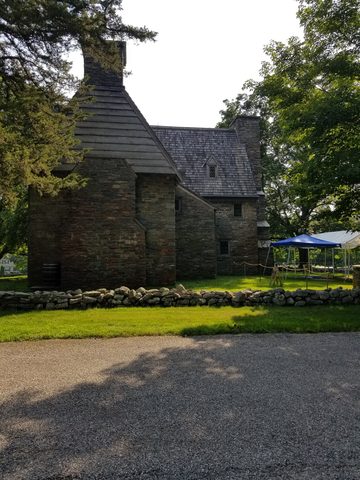

Morningside Heights, Manhattan: The Academic Acropolis
Morningside Heights, New York
Pictures from Morningside Heights
See all 4 photos →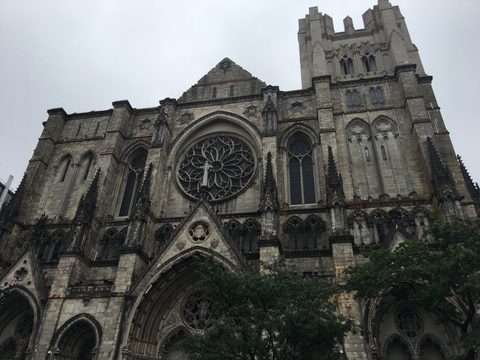
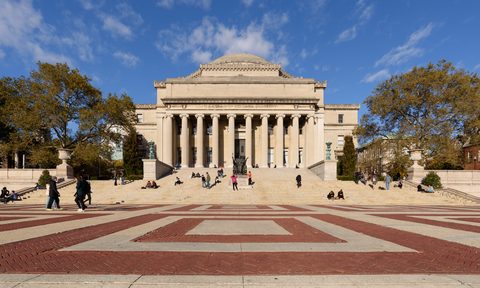
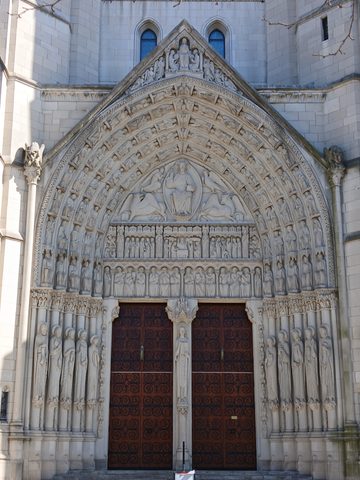
As early as 1738 this plateau was known as Vandewater Heights; Morningside Heights became the standard name only after 1898, once Morningside Park (completed 1895) settled a contest against rivals like Bloomingdale and Cathedral Heights. For most of the 19th century the land was dominated by the Bloomingdale Insane Asylum and the Leake and Watts Orphan Asylum, whose grounds Columbia University and the Episcopal Diocese bought between 1888 and 1891. Columbia's new campus opened in 1897, joined by Teachers College, Barnard, and the Union and Jewish Theological Seminaries, earning the nickname Academic Acropolis. The subway arrived in October 1904, and St. John the Divine laid its cornerstone in 1892; still two-thirds finished, it is nicknamed St. John the Unfinished. In 1968, Columbia's plan for a gymnasium with separate entrances in Morningside Park triggered a student occupation; trustees cancelled it in 1969, and the excavation became the park's pond and waterfall in 1993.
-
The still-unfinished fourth-largest Christian cathedral in the world.
-
sight
The tallest church tower in North America, with skyline tours.
-
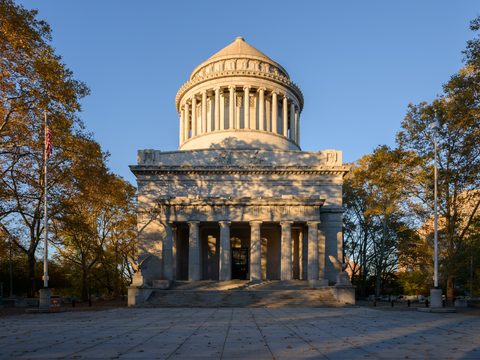
The largest mausoleum in North America, entombing President Grant.
-
walk
An Olmsted and Vaux park whose pond marks the site of a cancelled 1968 gymnasium.
-
food
A 1940s Greek-American diner known as the Seinfeld exterior and Tom's Diner muse.
-
A no-wifi literary cafe operating since 1961.
-
food
A French brasserie serving the neighborhood since 1998.
-
food
A neighborhood Italian trattoria near the 125th Street subway.
From Farmland and Asylums to the Academic Acropolis
The Battle of Harlem Heights was fought here on September 16, 1776, with the fiercest fighting in a wheat field on the site of today's Barnard College. The plateau stayed largely institutional through the 19th century — home to the Bloomingdale Insane Asylum (opened 1821) and the Leake and Watts Orphan Asylum — until their land was sold to Columbia University and the Episcopal Diocese of New York between 1888 and 1891. Columbia's new campus welcomed its first classes in October 1897, and within a decade the surrounding blocks held Teachers College, Barnard College, Union Theological Seminary, Jewish Theological Seminary, St. Luke's Hospital, and Woman's Hospital, earning the neighborhood its nickname, the Academic Acropolis. The Cathedral of St. John the Divine, whose cornerstone was laid December 27, 1892, remains only about two-thirds complete and ranks as the fourth-largest Christian cathedral in the world.
Getting there by subway
The neighborhood is served by a single line, the 1 train on the IRT Broadway-Seventh Avenue Line, which opened here in October 1904. Take it to 116th Street-Columbia University for the campus core, Cathedral Parkway-110th Street for the cathedral and Morningside Park's south end, or 125th Street for the north end near Riverside Church and Grant's Tomb.
Frequently asked questions
- How do I get to Morningside Heights by subway?
- Take the 1 train to 116th Street-Columbia University for the campus, Cathedral Parkway-110th Street for St. John the Divine and Morningside Park, or 125th Street for Riverside Church and Grant's Tomb.
- Why is it called the Academic Acropolis?
- By the early 1900s the plateau held Columbia University (new campus opened 1897), Teachers College, Barnard College, Union Theological Seminary, Jewish Theological Seminary, and two hospitals — a concentration of institutions that earned it the nickname.
- Is the Cathedral of St. John the Divine finished?
- No. Its cornerstone was laid in 1892, and it remains about two-thirds complete, earning the nickname St. John the Unfinished; it is nonetheless the fourth-largest Christian cathedral in the world.
- What happened with Columbia's gym in Morningside Park?
- In 1968 Columbia planned a gymnasium in the park with separate entrances that protesters saw as circumventing civil rights law, triggering a student building occupation; trustees cancelled the project in March 1969, and the excavated site became the park's ornamental pond and waterfall, completed in 1993.
- Where can I stay in Morningside Heights?
- No hotel or bed-and-breakfast currently operates within Morningside Heights itself; travelers typically base themselves nearby on the Upper West Side or in Harlem.
Connected pages
Nearby
- Harlem, Manhattan: The Renaissance and the Apollo · Harlem, New York
- Hamilton Heights, Manhattan: The Grange and Sugar Hill · Hamilton Heights, New York
- Upper West Side, Manhattan: Bloomingdale to Lincoln Center · Upper West Side, New York
Same region
-
Harlem, Manhattan: The Renaissance and the Apollo
· Harlem, New York
Another Manhattan neighborhood covered in this series.
-
Upper West Side, Manhattan: Bloomingdale to Lincoln Center
· Upper West Side, New York
Another Manhattan neighborhood covered in this series.
See also
-
Upper West Side, Manhattan: Bloomingdale to Lincoln Center
· Upper West Side, New York
This guide notes no hotel operates in Morningside Heights itself; travelers typically base nearby on the Upper West Side.
-
Harlem, Manhattan: The Renaissance and the Apollo
· Harlem, New York
With no lodging inside Morningside Heights, this guide points travelers to Harlem as one of the two nearby bases.
What travelers think
Log in to react.
No reviews yet.