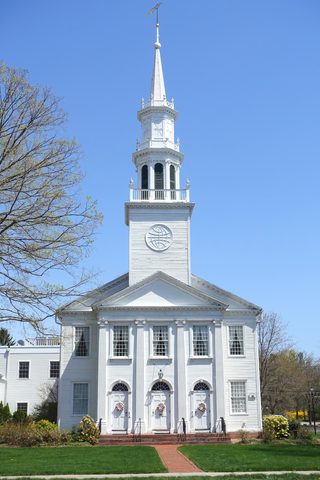

Upper West Side, Manhattan: Bloomingdale to Lincoln Center
Upper West Side, New York
Pictures from Upper West Side
See all 4 photos →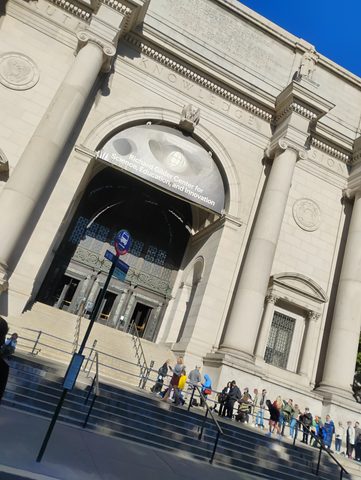
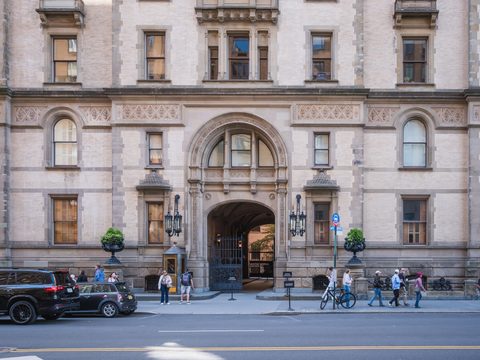
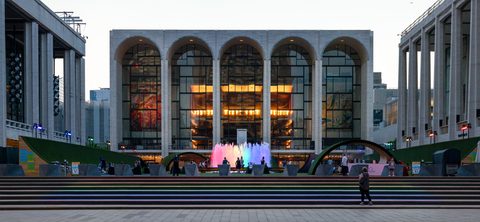
The Upper West Side began as the Bloomingdale District, its name an anglicization of the Dutch "Bloemendaal"; Bloomingdale Road, regularized in 1703, became today's Broadway and has served as the district's main artery since colonial times. Development followed when the Ninth Avenue Elevated reached the area in the late 1870s, sparking a defining building boom between 1885 and 1910 that accelerated further once the city's first subway opened beneath Broadway in 1904. The Dakota, at 72nd Street and Central Park West, is New York's oldest surviving luxury apartment building and anchored the neighborhood's rise as a fashionable address. In the 1960s, Lincoln Center rose on the site of the tenement neighborhood of San Juan Hill — its demolition deliberately delayed so the 1961 film "West Side Story" could shoot exterior scenes there first. A second subway spine, the IND Eighth Avenue line, opened beneath Central Park West in 1932.
-
A 21-building museum complex with the Richard Gilder Center, opened 2023.
-
walk
Six miles of Hudson River waterfront with playgrounds and monuments.
-
sight
New York's oldest museum, recently expanded with the Tang Wing.
-
sight
A 1929 movie palace turned landmark concert hall on Broadway.
-
Ten resident arts organizations on the former site of San Juan Hill.
-
walk
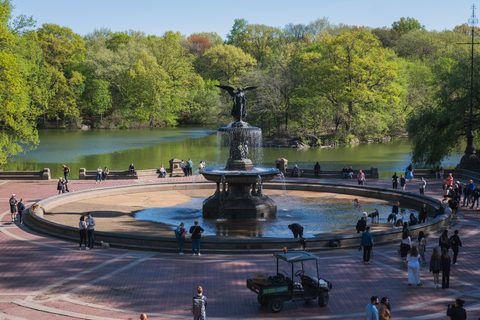
The park along the neighborhood's Central Park West edge, home to Bethesda Fountain.
-
food
A century-old appetizing institution known as "The Sturgeon King."
-
food
A 90-year-old gourmet landmark for smoked fish, rugelach, and coffee.
-
food
The original West 74th Street home of Levain's famous chocolate chip cookies.
-
food
A French-American brasserie serving bistro fare since 1983.
-
stay
A landmark 1904 building with the adjoining Nice Matin restaurant.
-
stay
Apartment-style rooms with kitchenettes next to the Beacon Theatre.
From Bloomingdale to a Building Boom
The Upper West Side was originally the Bloomingdale District, a name derived from the Dutch "Bloemendaal" and anglicized by early settlers. Bloomingdale Road, regularized in 1703, later became Broadway and has been the district's main artery since the colonial era. Growth followed the Ninth Avenue Elevated's arrival in the neighborhood in the late 1870s, and the district's defining building boom ran from 1885 to 1910, accelerated by the 1904 opening of the city's first subway line beneath Broadway; a second rapid-transit spine, the IND Eighth Avenue line, opened under Central Park West in 1932. The Dakota, at 72nd Street and Central Park West, is New York City's oldest surviving luxury apartment building and anchored the neighborhood's emergence as a fashionable residential district.
Lincoln Center and San Juan Hill
Lincoln Center for the Performing Arts was built in the 1960s on the site of San Juan Hill, a tenement neighborhood cleared during that era's urban renewal; demolition was deliberately delayed so exterior scenes for the 1961 film "West Side Story" could be shot there first, linking the district's renewal-era history to its enduring cultural identity. Today Lincoln Center is home to ten resident organizations, including the Metropolitan Opera, the New York Philharmonic, New York City Ballet, Juilliard, and Jazz at Lincoln Center.
Getting there by subway
Two north-south subway spines serve the Upper West Side: the 1/2/3 under Broadway, with express stops at 72nd and 96th Streets, and the A/B/C/D under Central Park West, including 81st Street-Museum of Natural History. At 59th Street-Columbus Circle, trains run 1/A/B/C/D (the 2 stops there only late nights). Practically, staying near Broadway or Central Park West puts you a few blocks from a train.
Frequently asked questions
- How do I get to the Upper West Side by subway?
- Take the 1/2/3 under Broadway (express stops at 72nd and 96th Streets) or the A/B/C/D under Central Park West (including 81st Street-Museum of Natural History). At 59th Street-Columbus Circle, service runs 1/A/B/C/D, with the 2 stopping there only late nights.
- Where does the name "Upper West Side" come from historically?
- The area was originally called the Bloomingdale District, from the Dutch "Bloemendaal," anglicized by early settlers; its main street, Bloomingdale Road, was regularized in 1703 and later became Broadway.
- What was on the site of Lincoln Center before it was built?
- Lincoln Center was built in the 1960s on the site of San Juan Hill, a tenement neighborhood demolished during urban renewal; the demolition was deliberately delayed so exterior scenes for the 1961 film "West Side Story" could be shot there first.
- Is Central Park part of the Upper West Side?
- Central Park West forms the Upper West Side's eastern edge; the American Museum of Natural History, the New York Historical, and The Dakota all face the park along this stretch.
- Where can I stay on the Upper West Side?
- The Lucerne Hotel, in a landmark 1904 building on West 79th Street, and Hotel Beacon, adjacent to the Beacon Theatre with kitchenette-equipped rooms, are both verified in-neighborhood options.
Connected pages
Nearby
- Morningside Heights, Manhattan: The Academic Acropolis · Morningside Heights, New York
- Hell's Kitchen, Manhattan: From Gopher Gang to Restaurant Row · Hell's Kitchen, New York
Same region
-
Morningside Heights, Manhattan: The Academic Acropolis
· Morningside Heights, New York
Another Manhattan neighborhood covered in this series.
-
Hell's Kitchen, Manhattan: From Gopher Gang to Restaurant Row
· Hell's Kitchen, New York
Another Manhattan neighborhood covered in this series.
See also
-
Morningside Heights, Manhattan: The Academic Acropolis
· Morningside Heights, New York
This guide notes no hotel operates in Morningside Heights itself; travelers typically base nearby on the Upper West Side.
-
Upper East Side, Manhattan: Farmland to Museum Mile
· Upper East Side, New York
Central Park borders the Upper East Side to the west and is documented as a place in the neighboring Upper West Side guide.
What travelers think
Log in to react.
No reviews yet.