
NoLIta, Manhattan: North of Little Italy Since 1996
NoLIta, New York
Pictures from NoLIta
See all 3 photos →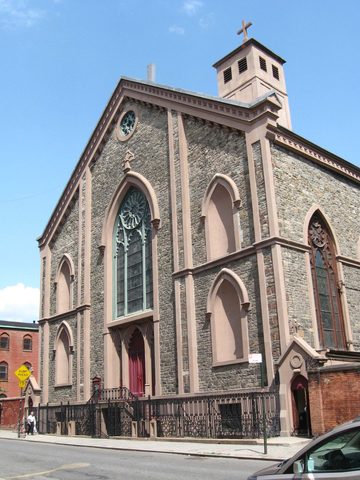
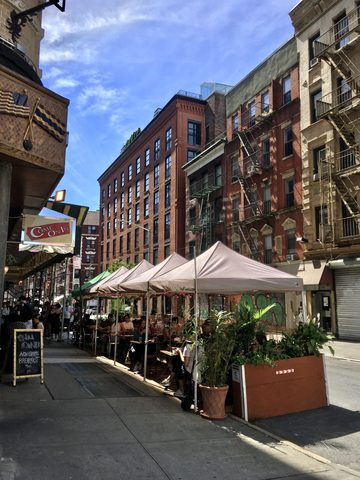
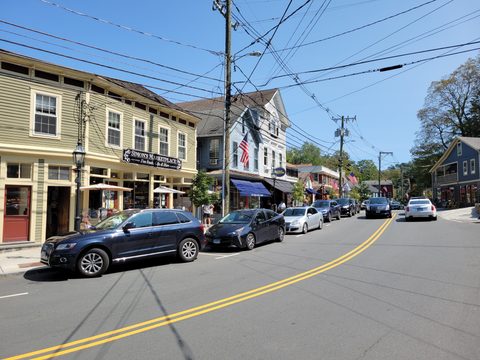
The name 'Nolita' — a contraction of 'North of Little Italy' — was formally adopted by real-estate promoters in 1996, documented in a May 5, 1996 New York Times piece, following the naming pattern set by SoHo and TriBeCa. The neighborhood is bounded by Houston Street to the north, the Bowery to the east, Broome Street to the south, and Lafayette Street to the west — east of SoHo, south of NoHo, and north of Little Italy and Chinatown. It was historically part of Little Italy, settled by Italian immigrants, and still keeps Italian traditions including the annual Feast of San Gennaro on Mulberry Street after Labor Day, though rapidly rising rents since the 1990s gentrification wave have eroded much of its recognizable Italian character.
-
New York's original Catholic cathedral, dedicated in 1815, with catacomb walking tours available.
-
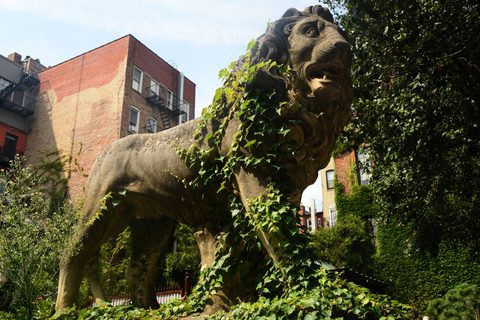
A sculpture garden that was fought over for years and formally became city parkland in November 2025.
-
food
Licensed in 1905 and popularly (if not uncontested-ly) called America's first pizzeria.
-
food
A corner cafe since 1998, best known for its grilled corn and Cuban sandwiches.
-
food
Thin-crust pizza and hand-made pasta from a Nolita Italian-American favorite.
-
food
The Elizabeth Street taqueria that launched Tacombi's expansion across the city.
-
stay
A boutique hotel inside the neighborhood, with a pet-friendly policy and Piccolo Morini downstairs.
A Cathedral and a Garden, Saved
St. Patrick's Old Cathedral, on Mulberry Street, was designed by Joseph-François Mangin — co-designer of New York City Hall — with its cornerstone laid June 8, 1809, and its dedication on May 14, 1815; it served as the seat of New York's Catholic diocese until the Midtown St. Patrick's Cathedral opened in 1879, and Pope Benedict XVI named it a minor basilica on March 17, 2010. Its underground catacombs, with 35 family crypts and 5 clerical vaults, are open for walking tours. A few blocks away, Elizabeth Street Garden — a sculpture-filled community green space — won a years-long preservation fight: in June 2025 the city canceled a proposed housing development on the site and moved the affordable housing to Suffolk Street, and in November 2025 Mayor Adams designated the garden official New York City parkland.
Getting there by subway
NoLIta has no subway station in its own core but is ringed by stops a short walk away: the 6 at Spring Street (Lafayette Street), the N/R/W at Prince Street (Broadway), the B/D/F/M plus the 6 at the Broadway-Lafayette Street/Bleecker Street complex on Houston Street, and the J/Z at Bowery (Delancey Street) on the eastern edge.
Frequently asked questions
- How do I get to Nolita by subway?
- There's no station inside the neighborhood, but you're never far from one: the 6 at Spring Street, the N/R/W at Prince Street, the B/D/F/M and 6 at Broadway-Lafayette Street/Bleecker Street, or the J/Z at Bowery.
- Where does the name Nolita come from?
- It's a contraction of 'North of Little Italy,' formally adopted by real-estate promoters in 1996 — documented in a May 5, 1996 New York Times piece — following the naming pattern set by SoHo and TriBeCa.
- What happened to Elizabeth Street Garden?
- After a years-long preservation fight, the city canceled a planned housing development on the site in June 2025 and relocated the affordable housing to Suffolk Street; in November 2025, Mayor Adams designated the garden official New York City parkland.
- Is Lombardi's really America's first pizzeria?
- That's the long-repeated claim — the business was licensed in 1905 and credited via the Pizza Hall of Fame — but it's contested: recent research attributes the founding to Filippo Milone around 1897 and points to other pizzerias that may predate it by more than a decade.
- Where can I stay in Nolita?
- The Nolitan Hotel, at 30 Kenmare Street, is a boutique property inside the neighborhood itself, with on-site dining at Piccolo Morini.
Connected pages
Nearby
- Lower East Side, Manhattan: Tenements, Reform, and Reinvention · Lower East Side, New York
- SoHo, Manhattan: Cast-Iron Blocks the Artists Saved · SoHo, New York
- NoHo, Manhattan: Astor's Row, Reborn in Lofts · NoHo, New York
- Little Italy, Manhattan: Five Blocks and a Hundred Years · Little Italy, New York
Shared history
-
Little Italy, Manhattan: Five Blocks and a Hundred Years
· Little Italy, New York
Nolita was historically part of Little Italy and still keeps traditions like the Feast of San Gennaro on Mulberry Street.
See also
-
Chinatown, Manhattan: From Park Row to Columbus Park
· Chinatown, New York
Nolita sits north of Little Italy and Chinatown, with Broome Street as its southern boundary.
-
Little Italy, Manhattan: Five Blocks and a Hundred Years
· Little Italy, New York
No hotel operates in Little Italy's Mulberry Street core; The Nolitan Hotel, one block north in adjacent Nolita, is the nearest option.
What travelers think
Log in to react.
No reviews yet.