Thomaston, Connecticut: A Clockmaker's Name on the Naugatuck
Thomaston, Connecticut
Pictures from Thomaston
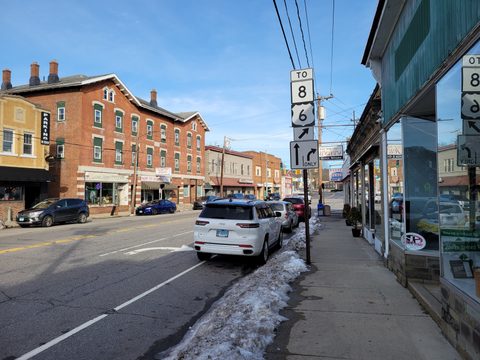
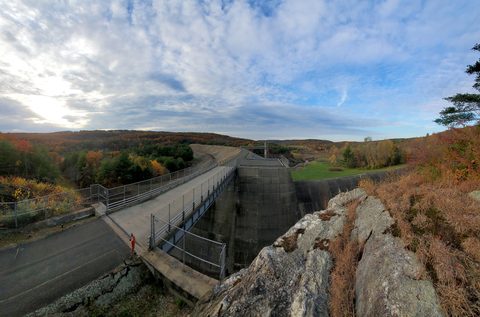
See all 3 photos →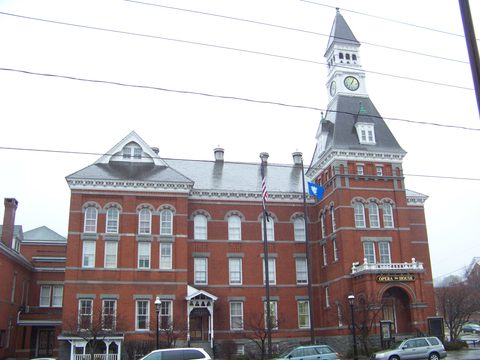
Thomaston's land was part of the Farmington proprietors' 1684 purchase of the Mattatuck Plantation, becoming the separate Northbury Parish in 1739, merging into Watertown in 1780, then splitting off again as Plymouth in 1795 — with the section that is now Thomaston known as "Plymouth Hollow." Clockmaking predates the town's namesake: Eli Terry established a factory in 1803 and patented the shelf clock in 1814, but it was Seth Thomas, who came to the hollow to manufacture clocks in 1813, whose name the town took when the legislature confirmed its 1875 separation from Plymouth. Father Michael J. McGivney, founder of the Knights of Columbus, served as pastor of St. Thomas Church here from 1884 until his death in 1890 and was beatified in 2020. After catastrophic 1955 flooding on the Naugatuck River, the U.S. Army Corps of Engineers built Thomaston Dam, completed in 1960 at a cost of $14 million.
-
Heritage excursions from the 1881 Thomaston Station.
-
sight
An 1885 building that doubles as both theater and town hall.
-
A clockmaker's family home, open for tours select Saturdays.
-
walk
849 acres of flood-control recreation land across four towns.
-
Seth Thomas memorabilia atop the Opera House, by appointment.
-
food
A Main Street tavern near the Opera House.
-
Thomaston's own brewery, with weekly trivia and bingo.
-
food
Seafood and a raw bar near the railroad station.
-
food
An all-day breakfast diner with a drive-thru window.
-
A boutique cupcake and cake bakery on Main Street.
-
stay
A restored historic home on Union Street, Thomaston's one B&B.
Clockmakers and a catastrophic flood
Eli Terry's 1814 shelf-clock patent reduced the cost of a clock from roughly $25 to $5, helping pioneer American mass production, before Seth Thomas built the factory that gave the town its name in 1875. Hurricane Diane dropped record rainfall in August 1955, and the resulting Naugatuck River flood killed dozens statewide and destroyed bridges throughout the valley — Thomaston Dam, completed in 1960 for $14 million, now covers 849 acres of recreation land spanning Thomaston, Harwinton, Litchfield and Plymouth. The Thomaston Opera House, built 1883-1885 by Waterbury architect Robert Hill, doubles uniquely as the town hall and is listed on the National Register of Historic Places.
Getting there
Route 8, the Naugatuck Valley expressway, runs right through Thomaston along the river with three town exits, and US Route 6 comes in from Bristol and Hartford to the east. There is no passenger rail station in Thomaston — the Naugatuck Railroad tracks through town carry heritage excursion trains and freight between Torrington and a Waterbury interchange, not scheduled passenger transit. The nearest Metro-North service is the Waterbury Branch, terminating in Waterbury to the south — though Branch trains are replaced by buses from July 20, 2026 through May 31, 2027 for station reconstruction.
A heritage railroad and a clock tower
The Railroad Museum of New England runs the Naugatuck Railroad out of the 1881 Thomaston Station, marking 30 years of operation in September 2026 with special excursions on restored New Haven equipment. The Seth Thomas Bradstreet House, on Main Street since at least 1838, opens for guided tours on select Saturdays. Black Rock State Park, whose 444 acres border Thomaston, is administered from neighboring Watertown. On Main Street, Black Rock Tavern and Crabby Al's Seafood anchor Thomaston's dining, and the Plume House Inn is the town's one verified bed-and-breakfast.
Frequently asked questions
- How do I get to Thomaston?
- By car — Route 8 runs through town along the Naugatuck River with three local exits, and US Route 6 enters from Bristol and Hartford. There's no passenger rail station in Thomaston; the nearest Metro-North service is the Waterbury Branch, terminating in Waterbury, but Branch trains are replaced by buses from July 20, 2026 through May 31, 2027 for station reconstruction.
- Why is Thomaston named for a clockmaker?
- Seth Thomas came to the village then called Plymouth Hollow in 1813 to manufacture clocks, and by 1856 was labeling them "Thomas Town." On July 6, 1875, the Connecticut legislature confirmed the town's separation from Plymouth under the name Thomaston, in his memory.
- Can I ride a train at the Railroad Museum of New England?
- Yes — the Naugatuck Railroad runs seasonal excursions from the 1881 Thomaston Station, including a "Celebrate 30" weekend in September 2026 marking 30 years of operation, with trains running between Thomaston, Waterville and Thomaston Dam.
- Is Black Rock State Park in Thomaston?
- The park borders Thomaston along the Route 6 corridor, but its official address and administration are in neighboring Watertown. It's a 444-acre park with swimming, hiking and camping around Black Rock Pond.
- Where can I eat and stay in Thomaston?
- Black Rock Tavern and Crabby Al's Seafood anchor Main Street dining, with Clocktown Brewing Company for beer and Cutie Pies for cupcakes and cakes. The Plume House Inn, a restored historic home on Union Street, is Thomaston's one verified bed-and-breakfast.
Foliage
Turning this week · estimated peak Oct 14–20
Derived from the Connecticut DEEP fall foliage map. DEEP's map is a climatological estimate last published in 2023; it describes a normal year, not this one. Stage names are ours. See the statewide forecast.
Connected pages
Nearby
-
Plymouth, Connecticut: Eli Terry and the Lock Museum of America
· Plymouth, Connecticut
Thomaston split off from Plymouth in 1875.
-
Watertown, Connecticut: Sewing Machines and the Old Leatherman's Loop
· Watertown, Connecticut
Black Rock State Park borders Thomaston but is administered from Watertown.
- Harwinton, Connecticut: A Portmanteau Town Since 1737 · Harwinton, Connecticut
-
Waterbury, Connecticut: A Brass City Travel Guide
· Waterbury, Connecticut
The two towns share a border
-
Litchfield, Connecticut: The First Law School and a Quiet Green
· Litchfield, Connecticut
The two towns share a border
Shared history
-
Plymouth, Connecticut: Eli Terry and the Lock Museum of America
· Plymouth, Connecticut
Thomaston was Plymouth's western section, "Plymouth Hollow," until splitting off in 1875.
Same region
- Litchfield, Connecticut: The First Law School and a Quiet Green · Litchfield, Connecticut
What travelers think
Log in to react.
No reviews yet.