Watertown, Connecticut: Sewing Machines and the Old Leatherman's Loop
Watertown, Connecticut
Pictures from Watertown
See all 3 photos →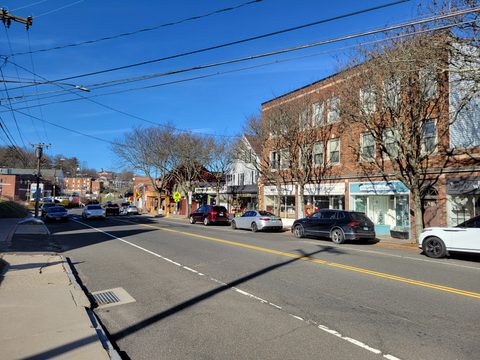
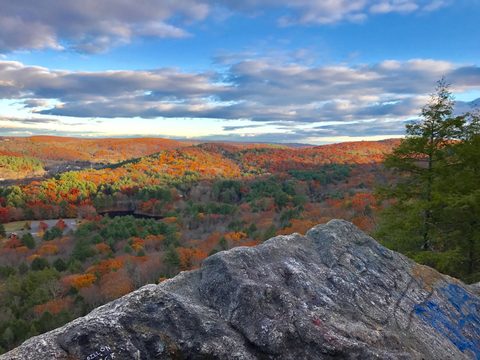
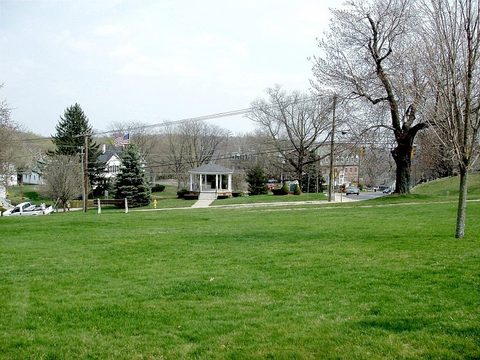
The land that became Watertown was bought in 1684 by Thomas Judd and 35 other proprietors from the Paugasuck people; the First Ecclesiastical Society of Westbury formed in 1738, and the parish separated from Waterbury and was renamed Watertown upon incorporation in 1780. Watertown's original territory also included what are now Plymouth and Thomaston, with Plymouth set off in 1795. Carriage-maker Nathaniel Wheeler met sewing-machine inventor Allen B. Wilson in August 1851 and formed the Wheeler & Wilson Manufacturing Co. two years later; the firm outgrew Watertown, moved to Bridgeport in 1856, and was sold to Singer in 1905. Light manufacturing followed too, from spooled silk thread to plastic dinnerware, while dairying peaked at more than 30 operations before falling to four by 1986. Watertown was a regular stop on the leather-clad Old Leatherman's 365-mile circuit through Connecticut and New York from the 1850s until his 1889 death.
-
sight
444 acres of swimming, hiking and camping on the Thomaston line.
-
sight
An estate winery overlooking the Litchfield Hills.
-
Watertown's municipal 18-hole golf course.
-
A rotating exhibition program on the historic Taft campus.
-
A 160-year-old library with a museum-pass program.
-
Free preserves including the Gail Sangree Loop Trail.
-
food
Farm-to-table dining named for the town's main highway.
-
food
Fresh American fare and a Sunday brunch buffet.
A sewing-machine startup and a dairy peak
Wheeler & Wilson's Watertown-born sewing machine venture started with an August 1851 handshake and 500 machines, growing into a $160,000 company by 1853 before outgrowing the town and relocating to Bridgeport in 1856; Singer bought the firm in 1905. Joseph Munson, Watertown's first dairy farmer, was producing 6,000 to 7,000 quarts of milk a year by 1896, and more than 30 dairy operations followed over the next several decades — Peter Petersen won the New England Green Pastures Contest in 1960 — before the industry contracted to just four operations by 1986. John Trumbull, the Revolutionary-era satirical poet and one of the "Hartford Wits" (not the painter of the same name), was born in Watertown in 1750.
Getting there
Watertown is a drive-to town in the Litchfield Hills: the Route 8 expressway runs through the eastern edge of town, with I-84 interchanges in neighboring Waterbury and Middlebury, and US Route 6, Route 63 and Route 73 leading into the center. There is no train station in Watertown itself; the nearest rail is Metro-North's Waterbury Branch terminal in Waterbury, but Branch trains are replaced by buses from July 20, 2026 through May 31, 2027 for station reconstruction. Local bus service also runs via CTtransit and Northeast Transportation.
A state park and a working winery
Black Rock State Park, whose 444 acres straddle the Thomaston-Watertown line, offers swimming, hiking and camping around Black Rock Pond, one of Connecticut's designated trout parks. Hawk Ridge Winery, established in 2013 on 58 acres overlooking the Litchfield Hills, pours more than two dozen wines with an on-premise scratch kitchen and weekend live music. The Watertown Library Association, founded in 1865, runs a circulating museum-pass program useful for touring other Connecticut attractions, and the Watertown Land Trust maintains several free preserves including the Fleischer Preserve's Gail Sangree Loop Trail.
Frequently asked questions
- How do I get to Watertown?
- By car — the Route 8 expressway runs through the eastern edge of town, with I-84 interchanges in neighboring Waterbury and Middlebury, and US Route 6, Route 63 and Route 73 leading into the center. There's no train station in Watertown; the nearest is Metro-North's Waterbury Branch terminal in Waterbury, but Branch trains are replaced by buses from July 20, 2026 through May 31, 2027 for station reconstruction.
- Is Black Rock State Park in Watertown?
- Yes — its official address and administration are in Watertown, though the park's 444 acres border neighboring Thomaston too. It offers swimming, hiking and camping around Black Rock Pond, one of Connecticut's designated trout parks.
- What is Hawk Ridge Winery?
- An estate winery established in 2013 on 58 acres overlooking the Litchfield Hills, pouring more than two dozen wines from eight grape varieties with an on-premise scratch kitchen. Hours run Sunday-Tuesday noon-6 p.m., Wednesday-Saturday noon-8 p.m.
- Who was the Old Leatherman?
- A leather-clad itinerant who walked a 365-mile loop through southwestern Connecticut and adjacent New York from the 1850s until his death in 1889, passing through Watertown, Danbury, New Fairfield and other towns on a roughly 34-day circuit.
- Where can I eat and stay in Watertown?
- The Local 63 and Echo Craft Kitchen anchor Main Street dining. No hotel, inn or B&B could be verified as operating in Watertown; the nearest confirmed option is the Heritage Hotel & Conference Center in Southbury.
Foliage
Turning this week · estimated peak Oct 14–20
Derived from the Connecticut DEEP fall foliage map. DEEP's map is a climatological estimate last published in 2023; it describes a normal year, not this one. Stage names are ours. See the statewide forecast.
Connected pages
Nearby
-
Thomaston, Connecticut: A Clockmaker's Name on the Naugatuck
· Thomaston, Connecticut
Black Rock State Park sits on the shared Thomaston-Watertown line.
- Bethlehem, Connecticut: America's Christmas Town · Bethlehem, Connecticut
- Plymouth, Connecticut: Eli Terry and the Lock Museum of America · Plymouth, Connecticut
- Waterbury, Connecticut: A Brass City Travel Guide · Waterbury, Connecticut
-
Woodbury, Connecticut: Antiques Capital, the Glebe House, and Main Street
· Woodbury, Connecticut
The two towns share a border
-
Morris, Connecticut: South Farms on Connecticut's Largest Lake
· Morris, Connecticut
The two towns share a border
-
Middlebury, Connecticut: Quassy, the Greenway, and the Quiet Side of the Valley
· Middlebury, Connecticut
The two towns share a border
Same region
- Middlebury, Connecticut: Quassy, the Greenway, and the Quiet Side of the Valley · Middlebury, Connecticut
- Morris, Connecticut: South Farms on Connecticut's Largest Lake · Morris, Connecticut
What travelers think
Log in to react.
No reviews yet.