
Two Bridges, Manhattan: Little Fuzhou Between the Spans
Two Bridges, New York
Pictures from Two Bridges
See all 4 photos →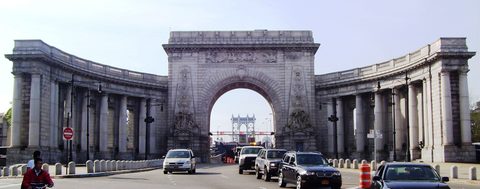
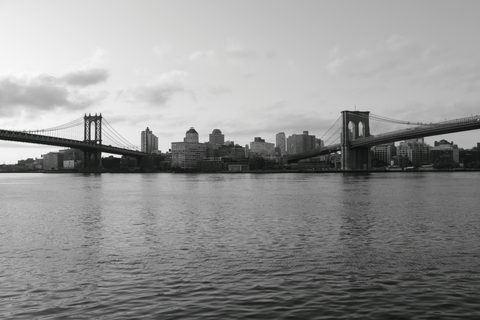
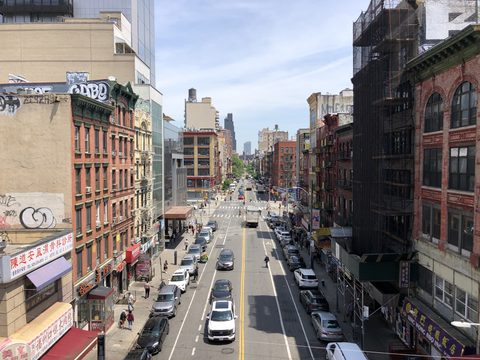
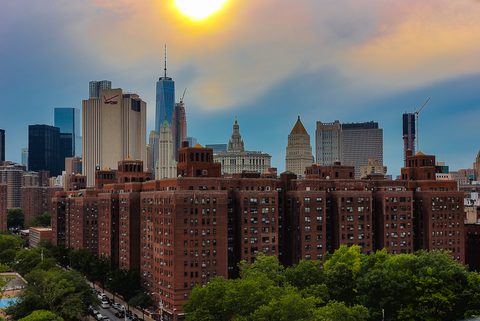
Two Bridges takes its name from the two East River crossings that frame it — the Brooklyn Bridge and the Manhattan Bridge — with the term coming into use when the Two Bridges Neighborhood Council was established in 1955. The area has long been an immigrant gateway at the southern end of the Lower East Side: Jewish, Italian, Irish, and Greek residents in the early 20th century, Puerto Rican and African American communities after 1950s public-housing construction, and Cantonese-speaking Chinese immigrants from the 1960s onward. Beginning in the early 1980s, Fuzhounese immigrants from Fujian Province arrived in large numbers and by the late 1980s and 1990s had become the area's largest population, establishing 'Little Fuzhou' centered on East Broadway with shops, restaurants, and clan associations. The nine-block Two Bridges Historic District was added to the National Register of Historic Places on August 29, 2003, and includes Knickerbocker Village, Mariner's Temple, and St. James Church.
-
An amphitheater-style pier and greenway stretch along the East River, a short walk from the bridges.
-
North America's oldest Jewish congregation's original burial ground, in use from 1683 to 1833 — viewable from the street, interior by appointment.
-
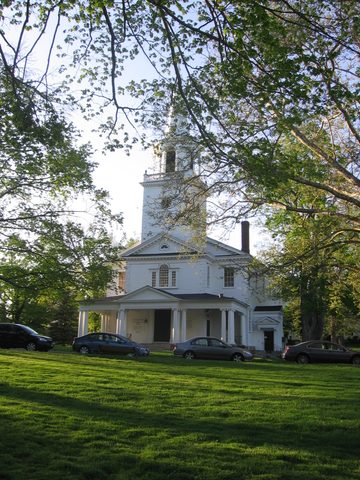
A Greek Revival brownstone congregation dating to 1795, still active today.
-
sight
The first federally funded apartment complex in the country, and where the Rosenbergs once lived — view from the street.
-
sight
The rowhouse where a four-term governor and 1928 presidential candidate spent his formative years — exterior only.
-
food
Nyonya cuisine from a James Beard semifinalist chef, walk-ins only.
-
food
A Cantonese banquet hall serving dim sum to Little Fuzhou and beyond.
-
food
A seafood-forward dinner spot on the Canal Street edge of the neighborhood.
-
food
Candlelit Venetian cooking and wine on Division Street.
Knickerbocker Village and a Governor's Boyhood
Knickerbocker Village, a Depression-era complex of 12 thirteen-story buildings completed in 1933-34 by developer Fred F. French, was the first apartment development in the United States to receive federal funding — the Reconstruction Finance Corporation covered 97% of its $10 million cost — and it replaced the notorious 'Lung Block,' named for its high tuberculosis rates. Julius and Ethel Rosenberg later lived on the eleventh floor of 10 Monroe Street. A few blocks away, four-term New York Governor and 1928 Democratic presidential candidate Alfred E. Smith grew up in the neighborhood and lived at 25 Oliver Street from 1907 to 1923; the rowhouse was designated a National Historic Landmark in 1972, and Smith served as an altar boy at nearby St. James Church.
Getting there by subway
Two Bridges has one subway station of its own — East Broadway on the F train, at East Broadway and Rutgers Street, in continuous service since 1936 — so plan around the F; other lines require a short walk into Chinatown or Lower Manhattan.
Where to stay
No hotel or bed-and-breakfast operates within Two Bridges itself. The nearest verified option is the Leon Hotel, a 46-room boutique hotel at 125 Canal Street in adjacent Chinatown; it's operating per its official site, but confirm availability directly before you go.
Frequently asked questions
- How do I get to Two Bridges by subway?
- Take the F train to East Broadway, at East Broadway and Rutgers Street — the neighborhood's only subway station. Other lines mean a short walk into Chinatown or Lower Manhattan.
- Where does the name Two Bridges come from?
- It's named for the two East River crossings that frame the neighborhood, the Brooklyn Bridge and the Manhattan Bridge; the term came into use when the Two Bridges Neighborhood Council was established in 1955.
- What is Little Fuzhou?
- Starting in the early 1980s, immigrants from Fuzhou in China's Fujian Province settled in large numbers and by the late 1980s and 1990s had become the area's largest population, establishing 'Little Fuzhou' centered on East Broadway with shops, restaurants, and clan associations.
- Can I go inside Knickerbocker Village?
- No — it's an occupied residential complex, so it's an exterior-viewing stop only. The same is true of the Alfred E. Smith House, a private residence.
- Where can I stay near Two Bridges?
- No hotel operates within the neighborhood itself. The nearest verified option is the Leon Hotel at 125 Canal Street in adjacent Chinatown — confirm availability directly before you go.
Connected pages
Nearby
- Lower East Side, Manhattan: Tenements, Reform, and Reinvention · Lower East Side, New York
- Financial District, Manhattan: From Dutch Wall to Wall Street · Financial District, New York
- Chinatown, Manhattan: From Park Row to Columbus Park · Chinatown, New York
Shared history
-
Lower East Side, Manhattan: Tenements, Reform, and Reinvention
· Lower East Side, New York
Two Bridges sits at the southern end of the Lower East Side and has long been an immigrant gateway.
Same region
-
Lower East Side, Manhattan: Tenements, Reform, and Reinvention
· Lower East Side, New York
Another Manhattan neighborhood covered in this series.
-
Chinatown, Manhattan: From Park Row to Columbus Park
· Chinatown, New York
Another Manhattan neighborhood covered in this series.
See also
-
Chinatown, Manhattan: From Park Row to Columbus Park
· Chinatown, New York
The nearest hotel to Two Bridges is the Leon Hotel at 125 Canal Street in adjacent Chinatown.
What travelers think
Log in to react.
No reviews yet.