
Upper East Side, Manhattan: Farmland to Museum Mile
Upper East Side, New York
Pictures from Upper East Side
See all 3 photos →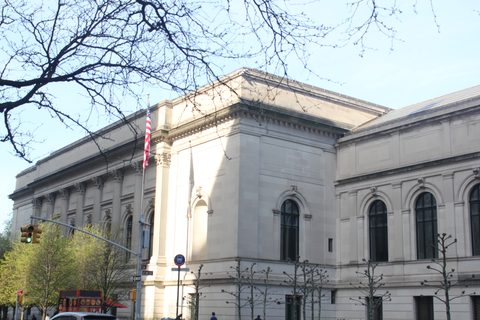
Before Fifth Avenue's mansions, the Upper East Side was farmland crossed by the Boston Post Road and, from 1837, the New York and Harlem Railroad, with Lenape fishing camps once dotting the East River shore. The neighborhood's transformation began after the Park Avenue railroad tunnel was covered in 1910, when industrialists including Andrew Carnegie and Henry Clay Frick built mansions along Fifth Avenue; the first apartment house to replace one of them was 907 Fifth Avenue, completed in 1916 at 72nd Street. That corridor became "Museum Mile," the stretch of Fifth Avenue between 82nd and 105th Streets now lined with the Metropolitan Museum of Art, the Guggenheim, and the Jewish Museum. To the east, Yorkville became a predominantly German enclave from 1880 onward, swelled further after the 1904 General Slocum disaster killed over a thousand Lower East Side Germans, sending survivors uptown.
-
The largest art museum in the Americas, founded 1870 and anchoring Museum Mile.
-
sight
Henry Clay Frick's Fifth Avenue mansion, with galleries that keep a domestic feel.
-
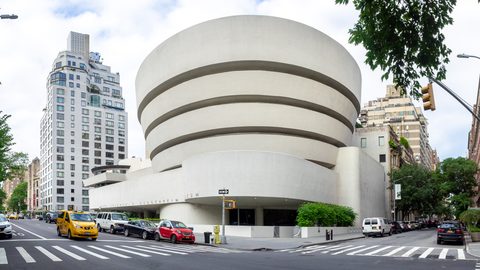
Frank Lloyd Wright's only museum design, dedicated in 1959.
-
walk
The park bordering the Upper East Side to the west, defined in the Upper West Side guide.
-
food
A 1925 luncheonette and soda fountain, marking its 100th anniversary in 2025.
-
food
Daniel Boulud's three-Michelin-recognized flagship French restaurant.
-
food
A 1916 Hungarian-founded bakery still baking traditional rye and grain breads.
-
food
The original hot-dog-and-papaya-drink stand, reopened on East 86th Street in 2024.
-
stay
A luxury hotel named among The World's 50 Best Hotels.
-
Home to Bemelmans Bar and Cafe Carlyle's 70th-anniversary season.
Mansions to Museum Mile
Before the Gilded Age, the Upper East Side was farmland traversed by the Boston Post Road and, from 1837, the New York and Harlem Railroad; Lenape fishing camps are thought to have once dotted the East River shore. The mansion era took off after the Park Avenue railroad tunnel was covered in 1910, drawing industrialists such as Andrew Carnegie and Henry Clay Frick to build along Fifth Avenue. As the private-mansion era waned, 907 Fifth Avenue, completed in 1916 at 72nd Street, became the first apartment house to replace one of them. The stretch of Fifth Avenue between 82nd and 105th Streets — Museum Mile — grew around institutions including the Metropolitan Museum of Art (founded 1870) and the Guggenheim (dedicated 1959), Frank Lloyd Wright's only museum design.
A German Enclave to the East
Yorkville, the neighborhood's eastern section, became predominantly German from 1880 onward. The General Slocum steamship disaster of June 15, 1904, in which an estimated 1,021 of the 1,342 people aboard died — most of them German immigrants from the Lower East Side — accelerated the community's move uptown, and Yorkville went on to draw Czech, Slovak, Irish, Polish, and Hungarian immigrants as well.
Getting there by subway
The Upper East Side is served by two trunk lines: the Lexington Avenue Line (4/5/6) running the length of the neighborhood, and the Second Avenue Subway, whose first phase opened January 1, 2017, with stations at 72nd, 86th, and 96th Streets served by the Q at all times plus limited rush-hour N and R trains. Rule of thumb: use the 4/5/6 for the west side of the neighborhood and Museum Mile, and the Q on Second Avenue for the eastern blocks toward Yorkville.
Frequently asked questions
- How do I get to the Upper East Side by subway?
- Use the 4/5/6 Lexington Avenue Line for the west side of the neighborhood and Museum Mile, or the Second Avenue Subway's Q train (plus limited rush-hour N and R) at 72nd, 86th, and 96th Streets for the eastern blocks toward Yorkville.
- What is Museum Mile?
- It's the stretch of Fifth Avenue between 82nd and 105th Streets, lined with major institutions including the Metropolitan Museum of Art, the Solomon R. Guggenheim Museum, and the Jewish Museum.
- When did the Second Avenue Subway open?
- Phase 1 opened January 1, 2017, with three Upper East Side stations at 72nd, 86th, and 96th Streets built for $4.45 billion. A Phase 2 extension toward Harlem-125th Street is under construction, with cost estimates ranging from about $6 billion to $7.7 billion.
- Is Central Park part of the Upper East Side?
- Central Park borders the Upper East Side to the west; it is documented as a place within the neighboring Upper West Side guide.
- Where can I stay on the Upper East Side?
- The Mark, the only New York City hotel named among The World's 50 Best Hotels, and The Carlyle, home to Bemelmans Bar and Cafe Carlyle, are both verified in-neighborhood options.
Connected pages
Nearby
- Yorkville, Manhattan: Manhattan's Old Germantown · Yorkville, New York
- Carnegie Hill, Manhattan: A Steel-Framed Mansion and Museum Mile's North End · Carnegie Hill, New York
- East Harlem, Manhattan: Italian Harlem to El Barrio · East Harlem, New York
- Midtown, Manhattan: Terminal City and the Tallest Tower · Midtown, New York
Shared history
-
Yorkville, Manhattan: Manhattan's Old Germantown
· Yorkville, New York
Yorkville, the eastern section of the Upper East Side, became a predominantly German enclave from 1880 onward.
See also
-
Upper West Side, Manhattan: Bloomingdale to Lincoln Center
· Upper West Side, New York
Central Park borders the Upper East Side to the west and is documented as a place in the neighboring Upper West Side guide.
-
East Harlem, Manhattan: Italian Harlem to El Barrio
· East Harlem, New York
This guide suggests staying on the Upper East Side, a short ride away on the 4/5/6 or Q.
-
Carnegie Hill, Manhattan: A Steel-Framed Mansion and Museum Mile's North End
· Carnegie Hill, New York
The Guggenheim, on the neighborhood's western edge, is documented in the neighboring Upper East Side guide.
-
Yorkville, Manhattan: Manhattan's Old Germantown
· Yorkville, New York
This guide's nearest verified place to stay is the Courtyard by Marriott Manhattan/Upper East Side, on East 92nd Street.
What travelers think
Log in to react.
No reviews yet.