Bridgeport, Connecticut: An Industrial Powerhouse, and Barnum's City
Bridgeport, Connecticut
Pictures from Bridgeport
See all 3 photos →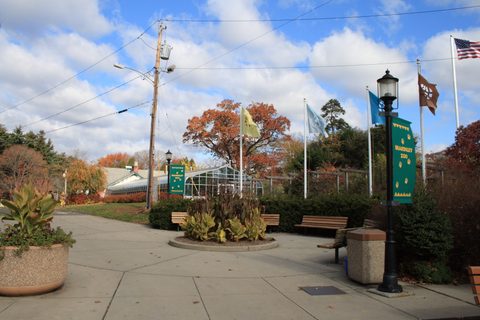
Bridgeport was settled in the mid-17th century as part of Stratford, became Connecticut's first borough in 1800, incorporated as a town in 1821, and was chartered as a city in 1836 — named for the Newfield, or Lottery, Bridge that once spanned the Pequonnock River. The railroad's 1840 arrival turned it into an industrial powerhouse making "everything from sewing machines to ammunition," including 19.9 percent of the nation's corsets and, during World War I, 16,000 jobs at the Remington Arms plant. Showman P. T. Barnum served as mayor, developed Seaside Park, helped found Bridgeport Hospital in 1878, and is buried in the city's Mountain Grove Cemetery. Bridgeport also claims real firsts: the world's first mutual telephone exchange in 1877, the first dental hygiene school in 1949, and the first Subway restaurant in 1965. In 1974, its population of 142,546 made it Connecticut's largest city, a title it still holds.
-
Open daily, 9-4, with a Red Panda Playground under construction.
-
sight
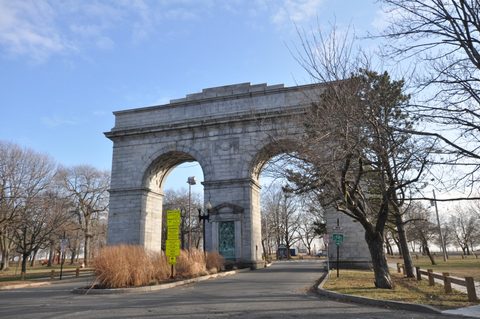
375 acres on Long Island Sound, with the Henry Bacon-designed 1918 Perry Memorial Arch.
-
A 1,447-seat hall, home to the Greater Bridgeport Symphony Orchestra and other resident companies.
-
sight
Free admission to roughly 7,000 artworks, including Picasso and Warhol. Closed weekends.
-
An award-winning outdoor concert venue with a packed touring season.
-
A car-and-passenger crossing of Long Island Sound to Port Jefferson, New York.
-
food
A downtown Italian institution since 1990, with Sunday Sauce family-style dining.
-
food
Connecticut-style beers brewed on site, thin-crust pizza and a guest tap list.
-
food
USDA Prime dry-aged beef; lunch daily, dinner nightly.
-
food
A Black Rock cafe, open daily 7-4, with a separate roastery on Main Street.
An industrial powerhouse, and Barnum's city
Bridgeport was settled in the mid-17th century as part of Stratford township. It became Connecticut's first borough in 1800, incorporated as a town in 1821, and was chartered as a city in 1836; the name comes from the Newfield, or Lottery, Bridge across the Pequonnock River, which connected wharves on the river's east and west banks. After the railroad arrived in 1840, Bridgeport grew into an industrial powerhouse producing "everything from sewing machines to ammunition": by the early 20th century it made 19.9% of the nation's corsets, and the Remington Arms plant employed 16,000 workers during World War I. Showman P. T. Barnum (1810-1891) served as Bridgeport's mayor, spearheading city improvements including Seaside Park and helping establish Bridgeport Hospital in 1878; he is buried in the city's Mountain Grove Cemetery. Bridgeport claims several firsts along the way: the world's first mutual telephone exchange (1877), the first dental hygiene school (1949), and the first Subway restaurant (1965, in the North End); the Frisbie Pie Company, whose pie tins inspired the Frisbee, also operated here. Bridgeport became Connecticut's largest city in 1974, when its population of 142,546 surpassed declining Hartford — a title it still holds today.
Getting there
Drivers reach Bridgeport on I-95 or the Route 8/25 expressway from Waterbury and Newtown. Train travelers use Bridgeport station (525 Water Street) on Metro-North's New Haven Line, also the transfer point for the Waterbury Branch — though Waterbury Branch trains are replaced by buses from July 20, 2026 through May 31, 2027 for station reconstruction — with limited weekday Shore Line East service and stops on Amtrak's Northeast Regional and Vermonter (Acela does not stop here). The Bridgeport & Port Jefferson Ferry crosses Long Island Sound to Port Jefferson, New York, from its terminal at 1 Ferry Access Road.
Barnum's park, a museum campus, and where to stay
Seaside Park, created on land P. T. Barnum and others donated starting in 1864 and designed by Frederick Law Olmsted's firm in 1867, now spans 375 acres with a bathing beach and the 1918 Perry Memorial Arch, designed by Henry Bacon, architect of the Lincoln Memorial; it has been listed on the National Register of Historic Places since 1982. Connecticut's Beardsley Zoo, AZA-accredited and also ArbNet-accredited as an arboretum, is open daily. The Housatonic Museum of Art offers free admission to roughly 7,000 artworks, including works by Picasso, Warhol, and Cindy Sherman. The Klein Memorial Auditorium and the Hartford HealthCare Amphitheater host the Greater Bridgeport Symphony and touring concerts, respectively. The Barnum Museum's landmark 1893 building remains closed to the public during restoration. No hotel, inn, or B&B inside Bridgeport city limits could be verified as currently operating; the nearest confirmed lodging is Hotel Marcel in New Haven, about 20 miles east, or in Fairfield or Stamford by Metro-North.
Frequently asked questions
- How do I get to Bridgeport?
- Drivers use I-95 or the Route 8/25 expressway. Bridgeport station (525 Water Street) is on Metro-North's New Haven Line and is the Waterbury Branch transfer point — though Waterbury Branch trains are replaced by buses from July 20, 2026 through May 31, 2027 for station reconstruction — with limited Shore Line East service and Amtrak Northeast Regional/Vermonter stops (not Acela). The Bridgeport & Port Jefferson Ferry departs from 1 Ferry Access Road.
- What happened to the Barnum Museum?
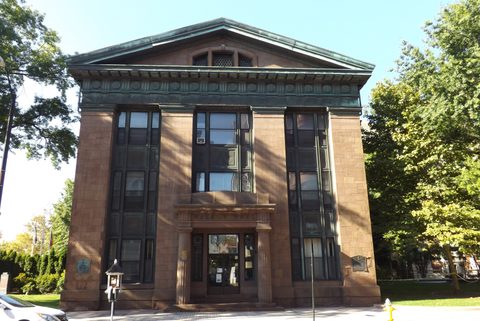
- Its landmark 1893 building at 820 Main Street is closed to the public while undergoing restoration; only the exterior can currently be viewed.
- What is Seaside Park's history?
- P. T. Barnum and other residents donated the land starting in 1864, and Frederick Law Olmsted's firm designed the park in 1867. Its 1918 Perry Memorial Arch was designed by Henry Bacon, architect of the Lincoln Memorial; the park has been on the National Register of Historic Places since 1982.
- What are Beardsley Zoo's hours?
- Open daily, 9 a.m. to 4 p.m. (last ticket 3 p.m.), at 1875 Noble Avenue.
- Where can I stay in Bridgeport?
- No hotel, inn, or B&B inside Bridgeport could be verified as currently operating. The nearest confirmed options are Hotel Marcel in New Haven, about 20 miles east, or in Fairfield or Stamford by Metro-North.
Foliage
Still green this week · most advanced Oct 21–27
This town never reaches full colour on the state's map — DEEP's eight weeks run out before it turns.
Derived from the Connecticut DEEP fall foliage map. DEEP's map is a climatological estimate last published in 2023; it describes a normal year, not this one. Stage names are ours. See the statewide forecast.
Connected pages
Nearby
- Fairfield, Connecticut: Burned in 1779, Rebuilt on the Green · Fairfield, Connecticut
-
Stratford, Connecticut: Birthplace of the American Helicopter
· Stratford, Connecticut
Stratford sits between Bridgeport and Milford; Stratford's original land grant included part of Bridgeport.
-
Trumbull, Connecticut: A Vanished Amusement Park and a Tungsten Mine
· Trumbull, Connecticut
Route 8 begins at I-95 in Bridgeport and has an interchange with the Merritt Parkway in Trumbull.
Same region
-
Milford, Connecticut: Oysters, a Tombolo, and Captain Kidd's Legend
· Milford, Connecticut
Neighbouring shoreline cities on I-95, with Stratford in between.
-
Shelton, Connecticut: Wiffle Balls and a Housatonic Waterfall
· Shelton, Connecticut
Route 8 begins at I-95 in Bridgeport and runs north to Shelton's business parks.
See also
-
Midtown, Manhattan: Terminal City and the Tallest Tower
· Midtown, New York
Metro-North's New Haven Line and Amtrak both stop at Bridgeport station, with direct trains to Grand Central Terminal.
What travelers think
Log in to react.
No reviews yet.