Fairfield, Connecticut: Burned in 1779, Rebuilt on the Green
Fairfield, Connecticut
Part of The Merritt Parkway
Pictures from Fairfield
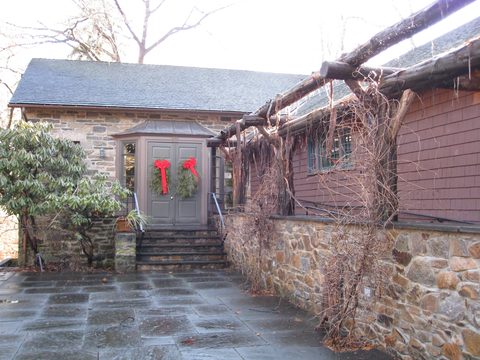
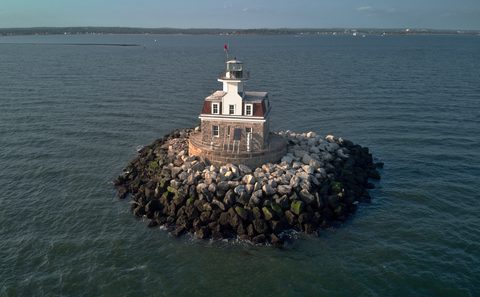
See all 3 photos →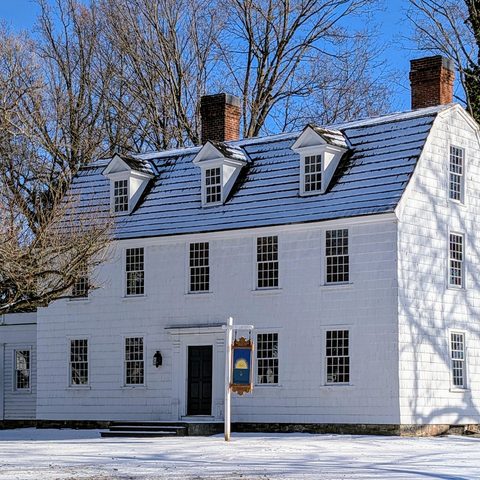
Roger Ludlow, a framer of Connecticut's Fundamental Orders, bought land from the Pequonnock Indians in 1639 and laid out four "squares" divided by five roadways — a plan that survives today as the Historic Town Green. English settlers called the coastal area, known to Native Americans as Uncoway, their "fair fields"; the Uncowas, Sasquas, Maxumux, and Pequonnocks, all Paugussett subdivisions, had lived along this shoreline before them, and in July 1637 the Great Swamp Fight — the Pequot War's final violent episode — took place in swampland near present-day Southport. The Revolution brought devastation: on July 8, 1779, British troops under General William Tryon burned more than two hundred buildings, and visiting a decade later, George Washington still noted "the chimneys of many burnt houses standing." Fairfield rebuilt, later ceding land to help form Westport, and in 1914 resident Mabel Osgood Wright founded the Birdcraft Sanctuary, one of the country's first private songbird refuges.
-
The town's history museum beside the Historic Town Green. Free admission through November 2026.
-
sight
A c. 1750 saltbox farmhouse, open Sunday afternoons June through September.
-
A National Historic Landmark songbird sanctuary founded in 1914, with 150-plus species recorded.
-
Live music on two indoor stages plus an outdoor stage, downtown.
-
walk
A Long Island Sound town beach; non-resident daily parking in season.
-
food
A hot dog institution since 1947, with celebrity fans.
-
The Fairfield outpost of an 1898 New Haven tavern, by the train station.
-
food
Modern Italian on the Post Road, with shared plates and handmade pasta.
-
stay
A boutique hotel in Southport's historic quarter, with a private spa.
-
A coastal-inspired hotel near the beaches, with free bike rentals for direct bookings.
Four squares, a swamp fight, and a burning
Fairfield's permanent settlement began in 1639, when Roger Ludlow — a framer of Connecticut's Fundamental Orders — purchased land from the Pequonnock Indians and laid out four "squares" divided by five roadways; that original center survives today as the Historic Town Green. The town's name comes from the "fair fields" English settlers found along the coast, an area Native Americans called Uncoway; the Uncowas, Sasquas, Maxumux, and Pequonnocks, subdivisions of the Paugussett people, inhabited the coastal areas before European settlement. In July 1637, the Great Swamp Fight — the final violent episode of the Pequot War — took place in swampland in the vicinity of Southport, now part of Fairfield. On July 8, 1779, British troops under General William Tryon landed and burned Fairfield; a rear guard of German mercenaries set fire to virtually all the buildings, including churches, destroying more than two hundred structures. Visiting in 1789, George Washington noted "the chimneys of many burnt houses standing" were still visible. Fairfield was one of the four earliest towns established in the Connecticut Colony, and portions of it were eventually annexed to form the town of Westport. In 1914, Fairfield writer and conservationist Mabel Osgood Wright, founder of the Connecticut Audubon Society, created the town's Birdcraft Sanctuary, one of the first private songbird sanctuaries in the United States and now a National Historic Landmark.
Getting there
Most visitors drive in on I-95 (Exit 22 for the historic town center) or the Merritt Parkway / Route 15 (Exit 44, Black Rock Turnpike), with US-1 (the Post Road) running through downtown. Metro-North's New Haven Line provides direct Grand Central-to-Fairfield service at three stations in town: Fairfield (165 Unquowa Road), Fairfield–Black Rock (formerly Fairfield Metro, 61 Constant Comment Way), and Southport (400 Center Street).
Beaches, a sanctuary, and a stage
Birdcraft Museum & Sanctuary, founded in 1914 by Mabel Osgood Wright, is one of the first private songbird sanctuaries in the United States and a National Historic Landmark, with more than 150 bird species recorded on its 5 acres; museum hours are Thursday, Saturday & Sunday, 10 a.m.-3 p.m., with trails open dawn to dusk year-round. Penfield Beach is one of Fairfield's town beaches on Long Island Sound, with non-resident daily parking during the beach season. The Fairfield Museum and History Center sits beside the Historic Town Green with free general admission through November 25, 2026, and its seasonal Ogden House & Gardens, a c. 1750 saltbox farmhouse, opens Sunday afternoons in summer. The Fairfield Theatre Company runs two indoor stages plus an outdoor stage for live music.
Frequently asked questions
- How do I get to Fairfield?
- Drivers use I-95 (Exit 22) or the Merritt Parkway/Route 15 (Exit 44), with US-1 through downtown. Metro-North's New Haven Line runs direct to Grand Central Terminal from three stations: Fairfield, Fairfield–Black Rock, and Southport.
- What is Birdcraft Sanctuary?
- Founded in 1914 by Mabel Osgood Wright, it is one of the first private songbird sanctuaries in the United States and a National Historic Landmark, with more than 150 species recorded on 5 acres. Free admission.
- How much is beach parking at Penfield Beach?
- During the season (Memorial Day Saturday to Labor Day), non-resident daily parking is $40 on weekdays and $50 on weekends and holidays.
- What happened to Fairfield in 1779?
- British troops under General William Tryon burned the town on July 8, 1779, destroying more than two hundred buildings; visiting a decade later, George Washington still noted the burnt chimneys standing.
- Where can I stay in Fairfield?
- Delamar Southport, a boutique hotel in Southport's historic quarter, and The Circle Hotel Fairfield, on the Post Road near the beaches, are both verified in-town options.
Foliage
Still green this week · most advanced Oct 28–Nov 3
This town never reaches full colour on the state's map — DEEP's eight weeks run out before it turns.
On the Scenic Fairfield foliage driving route.
Derived from the Connecticut DEEP fall foliage map. DEEP's map is a climatological estimate last published in 2023; it describes a normal year, not this one. Stage names are ours. See the statewide forecast.
Connected pages
Nearby
- Bridgeport, Connecticut: An Industrial Powerhouse, and Barnum's City · Bridgeport, Connecticut
-
Weston, Connecticut: Where a Meteorite Founded a Science
· Weston, Connecticut
The two towns share a border
-
Trumbull, Connecticut: A Vanished Amusement Park and a Tungsten Mine
· Trumbull, Connecticut
The two towns share a border
- Westport, Connecticut: From Onion Fields to an Arts Colony · Westport, Connecticut
-
Easton, Connecticut: Reservoirs, Farms and Two Famous Retirees
· Easton, Connecticut
Route 58 begins at US Route 1 in Fairfield and runs north through Easton.
Shared history
-
Westport, Connecticut: From Onion Fields to an Arts Colony
· Westport, Connecticut
Westport's 1835 incorporation carved land from Fairfield, its parent town, to form the new seaport community.
Same region
-
Westport, Connecticut: From Onion Fields to an Arts Colony
· Westport, Connecticut
Both on the Scenic Fairfield foliage route
-
Norwalk, Connecticut: Oyster Town and a Second Empire Mansion
· Norwalk, Connecticut
Both on the Scenic Fairfield foliage route
-
Easton, Connecticut: Reservoirs, Farms and Two Famous Retirees
· Easton, Connecticut
Both on the Scenic Fairfield foliage route
-
Redding, Connecticut: Connecticut's Valley Forge and Mark Twain's Library
· Redding, Connecticut
Both on the Scenic Fairfield foliage route
See also
-
Midtown, Manhattan: Terminal City and the Tallest Tower
· Midtown, New York
Metro-North's New Haven Line runs direct to Grand Central Terminal from three Fairfield stations.
What travelers think
Log in to react.
No reviews yet.