Trumbull, Connecticut: A Vanished Amusement Park and a Tungsten Mine
Trumbull, Connecticut
Part of The Merritt Parkway
Pictures from Trumbull
See all 3 photos →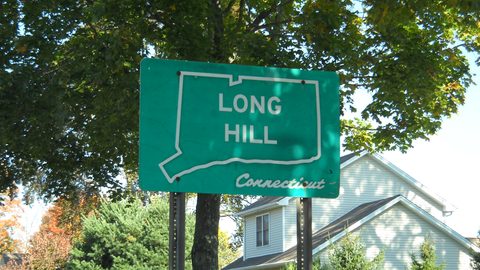
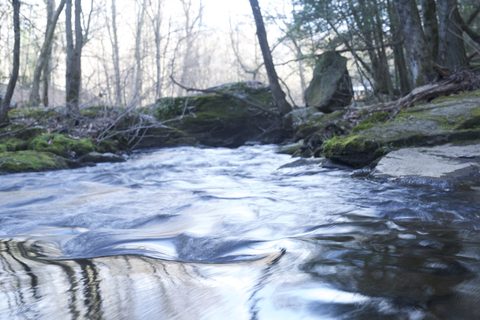
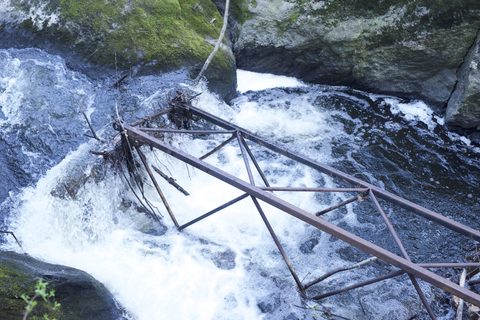
Trumbull was settled in 1639 as part of Stratford, known then as North Stratford, and was incorporated as its own town in 1797, taking its name from Jonathan Trumbull, Connecticut's Revolutionary War governor. Nero Hawley, an enslaved man in North Stratford, enlisted in the Continental Army in 1777, wintered at Valley Forge, was freed in 1782, and became a Trumbull brickmaker; he is buried in Riverside Cemetery and honored on the state's Freedom Trail. Parlor Rock Park, a 13-acre amusement ground reachable only by train, drew up to 3,000 visitors a day between 1878 and 1908, when it was dismantled. In the Long Hill section, Yale professor Benjamin Silliman identified tungsten around 1818, and the Hubbard Tungsten Mine later worked the site into the 20th century. Trumbull today comprises five villages: Nichols, Long Hill, Tashua, Daniels Farm and Trumbull Center.
-
A rail-trail corridor through a river valley.
-
sight
The former Hubbard Tungsten Mine workings.
-
Local history in a historic estate.
-
A Connecticut Freedom Trail site.
-
Town-owned public golf, 50 years in 2026.
-
sight
Home of the weekly Trumbull Farmer's Market.
-
Italian fine dining.
-
food
Family-owned Italian-American, 30-plus years.
-
food
Belgian-style double-fried fries.
-
House-made ice cream and gelato.
-
food
A casual Trumbull Center spot.
-
Trumbull's only hotel.
A vanished amusement park and a tungsten mine
Parlor Rock Park, bought by the Housatonic Railroad Company in 1877 and opened in 1878, offered a dance hall, a carousel, a roller-skating rink, rowboats and, from 1888, a toboggan slide; it was the first place in Trumbull with electricity. Only the namesake rock and a fountain's brick foundation survive today, on land the Pequonnock River Trail now crosses. The Old Mine Park Archeological Site, added to the National Register in 1990, preserves the Hubbard Tungsten Mine, worked under the Rare Minerals Company from 1898 and later the American Tungsten Mining and Milling Company until a 1916 fire, with a final wartime run in 1942-46.
Getting there
Trumbull is reached by the Route 8 and Route 25 expressways, the Merritt Parkway (Exits 49 and 50) and Route 111. There is no train station in Trumbull itself; the nearest Metro-North New Haven Line stops are Bridgeport (about 4.6 miles), Stratford (about 4.9 miles) and Fairfield-Black Rock (about 5.7 miles). Bridgeport station also connects to Amtrak Northeast Regional and Vermonter service and the Waterbury Branch, though Waterbury Branch trains are replaced by buses from July 20, 2026 through May 31, 2027 for station reconstruction. Greater Bridgeport Transit's Route 8 bus links downtown Bridgeport to the Westfield Trumbull mall via Main Street roughly every 20 minutes on weekdays and Saturdays (shorter Sunday hours).
Frequently asked questions
- How do I get to Trumbull?
- By car on Route 8, Route 25, the Merritt Parkway (Exits 49-50) or Route 111. There is no train station in Trumbull; the nearest is Bridgeport, about 4.6 miles away on the Metro-North New Haven Line.
- Is there a bus in Trumbull?
- Greater Bridgeport Transit's Route 8 links downtown Bridgeport to the Westfield Trumbull mall via Main Street, roughly every 20 minutes weekdays and Saturdays.
- Who was Nero Hawley?
- An enslaved man in North Stratford (Trumbull) who won his freedom serving in the Continental Army, wintering at Valley Forge in 1777-78. He later became a Trumbull brickmaker; his grave at Riverside Cemetery is a Connecticut Freedom Trail site.
- Is there a hotel in Trumbull?
- Yes — the Marriott off the Merritt Parkway at 180 Hawley Lane, Trumbull's only hotel, with about 323 rooms, indoor and outdoor pools and an on-site restaurant.
Foliage
Turning this week · estimated peak Oct 28–Nov 3
Derived from the Connecticut DEEP fall foliage map. DEEP's map is a climatological estimate last published in 2023; it describes a normal year, not this one. Stage names are ours. See the statewide forecast.
Connected pages
Nearby
-
Bridgeport, Connecticut: An Industrial Powerhouse, and Barnum's City
· Bridgeport, Connecticut
Route 8 begins at I-95 in Bridgeport and has an interchange with the Merritt Parkway in Trumbull.
-
Monroe, Connecticut: Ghost Hunters and a Dam-Made Lake
· Monroe, Connecticut
Route 111 runs from the Merritt Parkway in Trumbull to Route 34 in Monroe's Stevenson section.
-
Shelton, Connecticut: Wiffle Balls and a Housatonic Waterfall
· Shelton, Connecticut
Route 8 runs from Trumbull through Shelton on its way north.
-
Easton, Connecticut: Reservoirs, Farms and Two Famous Retirees
· Easton, Connecticut
The two towns share a border
-
Stratford, Connecticut: Birthplace of the American Helicopter
· Stratford, Connecticut
The two towns share a border
-
Fairfield, Connecticut: Burned in 1779, Rebuilt on the Green
· Fairfield, Connecticut
The two towns share a border
Shared history
-
Stratford, Connecticut: Birthplace of the American Helicopter
· Stratford, Connecticut
Trumbull was settled in 1639 as part of Stratford, then known as North Stratford.
Same region
-
Shelton, Connecticut: Wiffle Balls and a Housatonic Waterfall
· Shelton, Connecticut
Route 8 runs from Trumbull, briefly through Stratford, to Shelton.
What travelers think
Log in to react.
No reviews yet.