
Carnegie Hill, Manhattan: A Steel-Framed Mansion and Museum Mile's North End
Carnegie Hill, New York
Pictures from Carnegie Hill
See all 4 photos →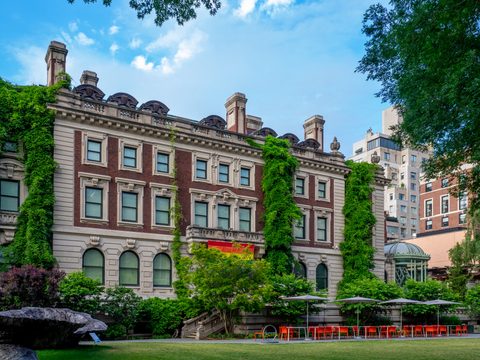
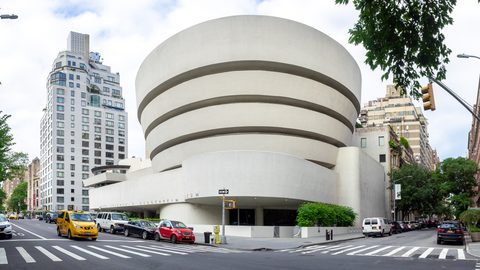
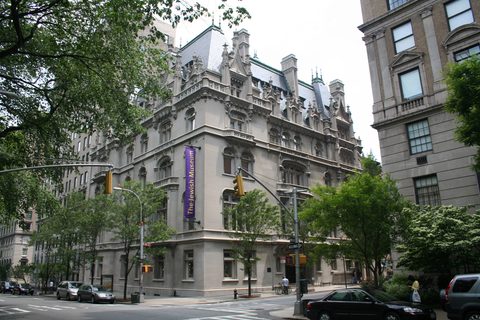
Andrew Carnegie bought land far north of his Fifth Avenue peers in 1898, wanting room for a proper private garden. The Georgian mansion architects Babb, Cook and Willard completed there in 1902 was an engineering landmark: the first private U.S. residence with a structural steel frame, one of New York's first residential Otis elevators, and central heating fed by a cellar coal car on miniature rails. Carnegie directed roughly 350 million dollars in philanthropy from the house; landmarked in 1974, it reopened in 1976 as the Smithsonian's Cooper Hewitt Design Museum, anchoring a historic district (designated 1974, expanded 1993) that drew Marjorie Merriweather Post and John Hay Whitney north of 90th Street. Two blocks south, the Jewish Museum opened in 1904 inside the landmarked Warburg Mansion, the first institution of its kind in the country. The Guggenheim, Frank Lloyd Wright's last major work, opened its Fifth Avenue rotunda in 1959.
-
Andrew Carnegie's 1902 mansion, an engineering landmark now devoted to design.
-
sight
The first Jewish museum in the United States, founded 1904 in the Warburg Mansion.
-
sight
A landmark cultural center for concerts, literary readings, and dance since 1874.
-
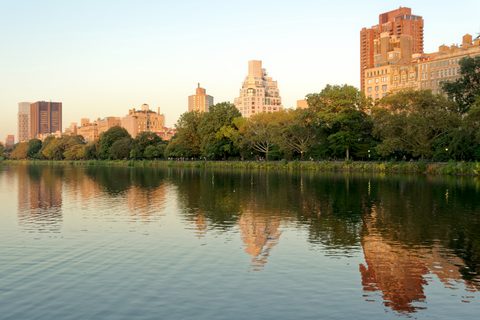
A 106-acre reservoir in Central Park ringed by a running track, directly across Fifth Avenue.
-
food
A Carnegie Hill Italian institution since 1983.
-
food
A neighborhood bakery-cafe favored by the nearby school corridor.
-
A kosher cafe serving house-cured salmon and bagels; no museum ticket required.
-
Coffee inside a historic Museum Mile church, opposite Central Park's Engineers' Gate.
An Industrialist's Estate Becomes a Design Museum
Carnegie's 64-room mansion at Fifth Avenue and 91st Street took architects Babb, Cook and Willard from 1899 to 1902 to complete in the style of an English Georgian country house. Beyond its engineering firsts, it served as headquarters for Carnegie's philanthropy before landmark designation in 1974 and its 1976 reopening as the Smithsonian's Cooper Hewitt, Smithsonian Design Museum, the only U.S. museum devoted exclusively to design. Two blocks south, the Jewish Museum has occupied the landmarked Warburg Mansion at Fifth Avenue and 92nd Street since 1904, the first Jewish museum in the United States, with a collection now approaching 30,000 works. On the district's western edge, the Solomon R. Guggenheim Museum — Frank Lloyd Wright's last major work, opened October 21, 1959 and a UNESCO World Heritage Site since 2019 — is documented in the neighboring Upper East Side guide.
Getting there by subway
Carnegie Hill sits between the Lexington Avenue 4/5/6 stop at 86th Street — the express station — and the 6 local at 96th Street; the Q on the Second Avenue Subway, which opened January 1, 2017, adds a 96th Street stop that covers the neighborhood's eastern edge. Most Museum Mile destinations, including Cooper Hewitt and the Jewish Museum, are a short crosstown walk from either Lexington or Second Avenue.
Where to stay
No hotel or bed-and-breakfast currently operates within Carnegie Hill itself. The nearest verified full-service option is The Carlyle, A Rosewood Hotel, about a mile south at 35 East 76th Street on the Upper East Side, documented in that neighborhood's guide.
Frequently asked questions
- How do I get to Carnegie Hill by subway?
- Take the 4/5/6 to 86th Street for the neighborhood's southern half, the 6 local to 96th Street for the north, or the Q on the Second Avenue Subway to 96th Street for the eastern edge.
- Why is it called Carnegie Hill?
- It's named for Andrew Carnegie's mansion at Fifth Avenue and 91st Street, completed in 1901-1902, which now houses the Cooper Hewitt, Smithsonian Design Museum.
- Is the Guggenheim in Carnegie Hill?
- Yes, the Solomon R. Guggenheim Museum sits on Fifth Avenue at the neighborhood's western edge; it's documented as a place in the neighboring Upper East Side guide.
- Where can I stay near Carnegie Hill?
- No hotel currently operates within Carnegie Hill itself. The Carlyle, A Rosewood Hotel, about a mile south at 35 East 76th Street, is the nearest verified option.
- What made the Carnegie Mansion an engineering landmark?
- It was the first private U.S. residence with a structural steel frame, one of New York's first residential Otis passenger elevators, and central heating fed by a cellar coal car running on miniature tracks.
Connected pages
Nearby
- East Harlem, Manhattan: Italian Harlem to El Barrio · East Harlem, New York
- Upper East Side, Manhattan: Farmland to Museum Mile · Upper East Side, New York
- Yorkville, Manhattan: Manhattan's Old Germantown · Yorkville, New York
Same region
-
Yorkville, Manhattan: Manhattan's Old Germantown
· Yorkville, New York
Another Manhattan neighborhood covered in this series.
See also
-
Upper East Side, Manhattan: Farmland to Museum Mile
· Upper East Side, New York
The Guggenheim, on the neighborhood's western edge, is documented in the neighboring Upper East Side guide.
What travelers think
Log in to react.
No reviews yet.