
Yorkville, Manhattan: Manhattan's Old Germantown
Yorkville, New York
Pictures from Yorkville
See all 3 photos →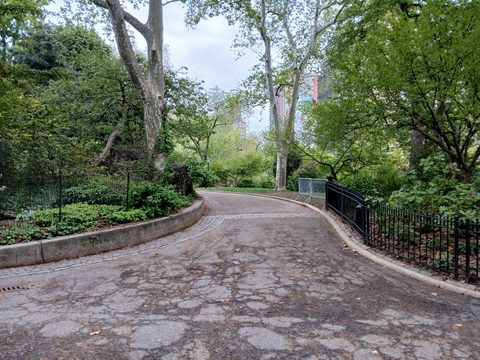
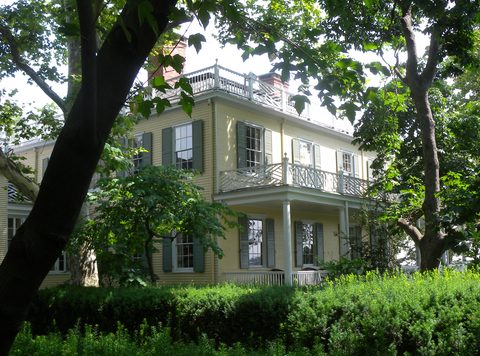
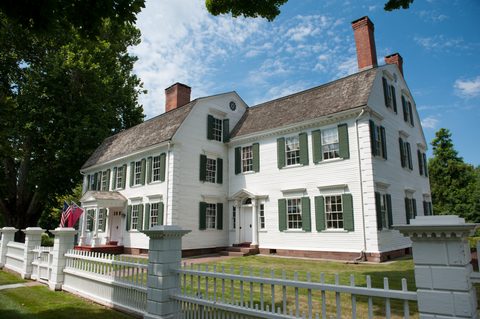
Yorkville began as a hamlet clustered around the 86th Street railroad station in the 1830s and '40s, known by that name before 1867, with its street grid laid out between 1839 and 1844. East 86th Street became the commercial heart of a German "Germantown" that defined the neighborhood through much of the 19th and 20th centuries, swelled after the 1904 General Slocum steamship fire killed an estimated 1,021 of the 1,342 people aboard — mostly German immigrants from the Lower East Side — and sent survivors uptown. Hungarian, Czech, Polish, and Irish immigrants settled alongside them, though a darker chapter arrived in 1936, when the German American Bund set up headquarters on East 85th Street. The riverfront park was renamed Carl Schurz Park around 1910-1911 for the German-born U.S. Interior Secretary, and it contains Gracie Mansion, built in 1799 and the mayor's official residence since 1942.
-
walk
A 14.9-acre riverfront park named for the German-born U.S. Interior Secretary.
-
sight
The 1799 mayoral residence inside Carl Schurz Park; tours currently paused.
-
24 surviving 1880s Queen Anne rowhouses, landmarked since 1969.
-
sight
A sports and recreation center in the former Municipal Asphalt Plant.
-
An Episcopal parish on this site since 1899, known for its stained glass.
-
food
A 1937 German butcher and specialty shop, a living remnant of old Germantown.
-
food
An Alsatian brasserie with a 130-plus beer list and an in-house cicerone.
-
food
A neighborhood gastropub steps from the Q train at 86th Street.
Germantown on East 86th Street
Yorkville grew from a hamlet around the 86th Street railroad station in the 1830s and 1840s, referred to by that name before 1867 and laid out on its street grid between 1839 and 1844. For much of the 19th and 20th centuries it was predominantly German, with East 86th Street as the commercial and cultural heart of "Germantown," lined with German shops, restaurants, and bakeries. The 1904 General Slocum steamship fire, which killed an estimated 1,021 of the 1,342 people aboard — mostly German immigrants from the Lower East Side — accelerated the community's move uptown to Yorkville, which went on to draw Hungarian, Czech, Polish, and Irish immigrants as well. A darker chapter: the German American Bund established its headquarters on East 85th Street in 1936 and staged its notorious rally at Madison Square Garden in 1939.
Carl Schurz Park and Gracie Mansion
The neighborhood's riverfront park was set aside in part as "East River Park" in 1876 and renamed Carl Schurz Park around 1910-1911 for German-born U.S. Interior Secretary Carl Schurz. Within it stands Gracie Mansion, built in 1799 for merchant Archibald Gracie at East End Avenue and 88th Street; it has been the official residence of the Mayor of New York City since 1942, when Fiorello H. La Guardia's family moved in, and was designated a New York City landmark on September 20, 1966.
Getting there by subway
Yorkville is served directly by the Second Avenue Subway (Q) at 86th and 96th Streets, with the Lexington Avenue 4/5/6 trains one block west at 77th, 86th, and 96th Streets — for most visitors, the Q or the 4/5/6 at 86th Street is the practical gateway into the neighborhood.
Frequently asked questions
- How do I get to Yorkville by subway?
- The Second Avenue Subway's Q train stops at 86th and 96th Streets, and the Lexington Avenue 4/5/6 trains stop one block west at 77th, 86th, and 96th Streets. The Q or the 4/5/6 at 86th Street is the practical gateway for most visitors.
- Why was Yorkville known as "Germantown"?
- East 86th Street was the commercial heart of a predominantly German enclave from 1880 onward, swelled further after the 1904 General Slocum steamship fire, which killed an estimated 1,021 of the 1,342 people aboard, mostly German immigrants from the Lower East Side, and accelerated the community's move uptown.
- Can I tour Gracie Mansion?
- Public tours are currently paused while the Conservancy plans its next era of programming, per the official site. The 1799 mansion's exterior remains viewable from within Carl Schurz Park.
- What is the Henderson Place Historic District?
- It's 24 surviving Queen Anne-style rowhouses built 1880-1882 by developer John C. Henderson, designated a New York City landmark district in 1969 and listed on the National Register in 1974.
- Where can I stay in Yorkville?
- No hotel or bed-and-breakfast inside Yorkville could be verified as currently operating; the nearest candidate is the Courtyard by Marriott New York Manhattan/Upper East Side on East 92nd Street, though its current operation should be confirmed directly before booking.
Connected pages
Nearby
- Carnegie Hill, Manhattan: A Steel-Framed Mansion and Museum Mile's North End · Carnegie Hill, New York
- East Harlem, Manhattan: Italian Harlem to El Barrio · East Harlem, New York
- Upper East Side, Manhattan: Farmland to Museum Mile · Upper East Side, New York
Shared history
-
Lower East Side, Manhattan: Tenements, Reform, and Reinvention
· Lower East Side, New York
The 1904 General Slocum fire killed mostly German immigrants from the Lower East Side and accelerated the community's move uptown to Yorkville.
-
Upper East Side, Manhattan: Farmland to Museum Mile
· Upper East Side, New York
Yorkville, the eastern section of the Upper East Side, became a predominantly German enclave from 1880 onward.
Same region
-
Carnegie Hill, Manhattan: A Steel-Framed Mansion and Museum Mile's North End
· Carnegie Hill, New York
Another Manhattan neighborhood covered in this series.
See also
-
Upper East Side, Manhattan: Farmland to Museum Mile
· Upper East Side, New York
This guide's nearest verified place to stay is the Courtyard by Marriott Manhattan/Upper East Side, on East 92nd Street.
What travelers think
Log in to react.
No reviews yet.