Naugatuck, Connecticut: Vulcanized Rubber and Naugahyde
Naugatuck, Connecticut
Pictures from Naugatuck
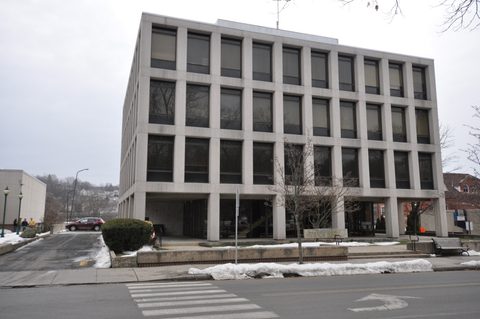
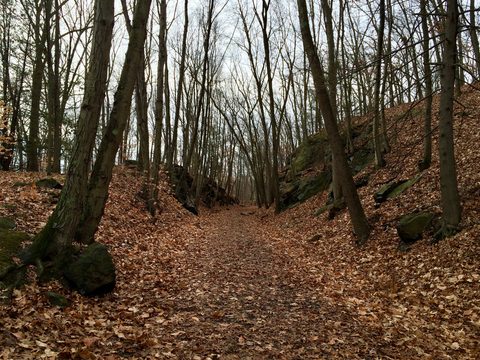
See all 3 photos →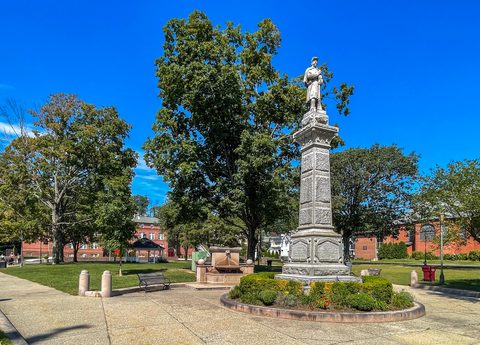
Naugatuck was settled around 1701 as a rural farming community, known first as Judds Meadow and then, from 1752, as Salem Bridge, before incorporating as a town in 1844 from portions of Waterbury, Bethany and Oxford. Its name comes from an Algonquian word generally translated as "lone tree by the fishing place." Naugatuck is the only consolidated borough and town in Connecticut — the Borough was established in 1893 and merged with the town in 1895. Charles Goodyear, born in New Haven and raised here, patented the vulcanization of rubber in 1844, a year after founding the Naugatuck India-Rubber Company; the industry it launched gave the town its main street, Rubber Avenue, and in 1892 nine rubber firms merged into the United States Rubber Company, organized in Naugatuck. That company introduced Naugahyde, the vinyl-coated fabric named for the town, in 1936.
-
A Victorian mansion holding exhibits on Naugatuck's industrial past.
-
Eleven McKim, Mead & White buildings around an 1831 green.
-
242 undeveloped acres across from Hop Brook Dam.
-
A 10.3-mile rail-trail with its eastern terminus in Naugatuck.
-
A 4,153-acre forest founded on land assembled by Harris Whittemore.
-
sight
A flood-control reservoir with a swimming beach and fishing.
-
A grinder institution operating since 1922.
-
Casual American cooking with a seafood bent.
-
food
A downtown tavern with a rotating craft beer list.
-
An independent coffee house on Church Street.
A green built by McKim, Mead & White
Industrialist John Howard Whittemore retained the architectural firm McKim, Mead & White to design no fewer than eleven civic and private buildings around the town green — including the Whittemore Library and the Spanish Revival railroad station and post office — and the resulting Naugatuck Center Historic District, an 80-acre district built around a green donated by an innkeeper in 1831, was listed on the National Register of Historic Places on July 30, 1999. Naugatuck State Forest, a 4,153-acre forest in five blocks, traces its founding to state forest commissioner Harris Whittemore's purchases beginning in 1921, with nearly 2,000 acres donated by his family in 1931; it offers blue-blazed hiking on the Naugatuck and Quinnipiac trails and mountain-bike singletrack in the Quillinan block. The Larkin State Park Trail, a 10.3-mile rail-trail through Southbury, Oxford, Middlebury and Naugatuck, has its eastern terminus in Naugatuck at North Church Street.
Getting there
Route 8 is the expressway spine down the Naugatuck Valley, with exits into downtown and a junction with I-84 at Waterbury's Mixmaster interchange about five miles north. Route 63 runs surface toward New Haven and Route 68 runs east toward Cheshire and Durham. Naugatuck has a Metro-North Waterbury Branch station at 195 Water Street, but buses replace rail service on the branch from July 20, 2026 through May 31, 2027 during construction of a $33.2 million replacement station roughly a third of a mile south, expected to finish by mid-2027. Shore Line East and the CTrail Hartford Line do not reach Naugatuck, and there is no Amtrak stop in town.
Frequently asked questions
- How do I get to Naugatuck?
- By car on Route 8, the Naugatuck Valley expressway. Naugatuck's Metro-North Waterbury Branch station at 195 Water Street is currently served by substitute buses, not trains, from July 20, 2026 through May 31, 2027 while a new station is built nearby.
- What is Naugahyde?
- A vinyl-coated fabric named for Naugatuck and introduced by U.S. Rubber in 1936. The company was formed in 1892 when nine rubber firms merged, following Charles Goodyear's 1844 patent for vulcanized rubber and his Naugatuck India-Rubber Company, founded here in 1843.
- What is the Naugatuck Center Historic District?
- An 80-acre National Register district (listed 1999) around the town green, with eleven McKim, Mead & White buildings commissioned by industrialist John Howard Whittemore, including the Whittemore Library and the Spanish Revival train station and post office. A self-guided walking tour is available from the Naugatuck Historical Society.
- Is there a hotel in Naugatuck?
- No hotel, inn, motel or B&B inside Naugatuck town limits could be verified. The nearest hotel cluster is in downtown Waterbury, about five miles north via Route 8.
Foliage
Turning this week · most advanced Oct 14–20
This town never reaches full colour on the state's map — DEEP's eight weeks run out before it turns.
Derived from the Connecticut DEEP fall foliage map. DEEP's map is a climatological estimate last published in 2023; it describes a normal year, not this one. Stage names are ours. See the statewide forecast.
Connected pages
Nearby
-
Waterbury, Connecticut: A Brass City Travel Guide
· Waterbury, Connecticut
Naugatuck was incorporated in 1844 from portions of Waterbury, and its Metro-North station is the next stop south of Waterbury on the Waterbury Branch.
-
Bethany, Connecticut: A Rural Airfield's Airmail Arrow
· Bethany, Connecticut
Naugatuck was incorporated in 1844 from portions of Bethany.
-
Oxford, Connecticut: A Turnpike Town on the Housatonic
· Oxford, Connecticut
Naugatuck was incorporated in 1844 from portions of Oxford, and the Larkin State Park Trail links the two towns.
-
Beacon Falls, Connecticut: Matches, Boots and a Signal Hill
· Beacon Falls, Connecticut
Beacon Falls was carved from parts of four neighboring towns in 1871, Naugatuck among them.
-
Middlebury, Connecticut: Quassy, the Greenway, and the Quiet Side of the Valley
· Middlebury, Connecticut
The two towns share a border
-
Prospect, Connecticut: The Highest Ground in New Haven County
· Prospect, Connecticut
Prospect's own town page lists Naugatuck among its four bordering towns.
Same region
-
Middlebury, Connecticut: Quassy, the Greenway, and the Quiet Side of the Valley
· Middlebury, Connecticut
Hop Brook Lake's recreation area spans Naugatuck, Middlebury and Waterbury.
-
Bethany, Connecticut: A Rural Airfield's Airmail Arrow
· Bethany, Connecticut
Bethany's Straitsville section was removed in 1844 to help form Naugatuck.
What travelers think
Log in to react.
No reviews yet.