North Haven, Connecticut: A Continent's First Brickyard
North Haven, Connecticut
Pictures from North Haven
See all 2 photos →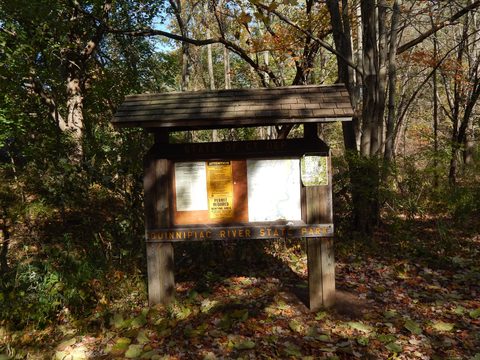
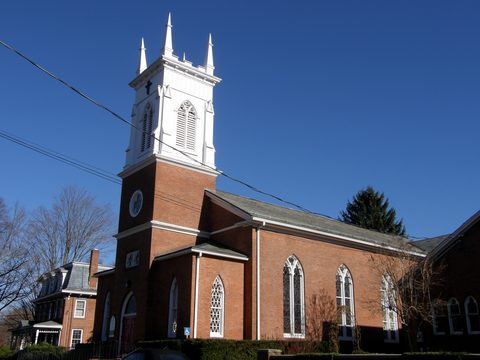
North Haven grew out of New Haven's colonial land "Divisions" — the Third, Fourth and Fifth Divisions eventually became the town. Settled in 1680, it remained mostly a farming community into the mid-1800s before industry arrived, and it was incorporated as a town separate from New Haven on October 19, 1786, with its first town meeting held that November in a meetinghouse bequeathed by Rev. James Pierpont. The town's own historical record claims the first brickyard on the continent stood here, after Theophilus Eaton found clay on his property on the west side of the Quinnipiac River; brickmaking became North Haven's defining industry, and by 1880 immigrants from Ireland, Germany, Italy and Poland had made the growing brick trade their home. Ezra Stiles, seventh president of Yale College and a co-founder of Brown University, was born in North Haven on December 10, 1727, son of the town's minister.
-
sight
The town's highest point, with a 360-degree Long Island Sound view.
-
323 riverside acres protecting six miles of the Quinnipiac River.
-
walk
Interpretive trails through tidal marsh on the Quinnipiac River.
-
A local history museum near the historic Town Green.
-
sight
A family tradition since 1942, each September.
-
food
New Haven-style apizza inside a gas station, opened 2025.
-
food
Nashville-style hot chicken, mainly takeout and delivery.
-
food
Family-owned sushi, sashimi and hibachi.
-
A full-service hotel just off I-91.
A traprock summit and a river state park
Peter's Rock, at 373 feet the town's highest point, is North Haven's largest open space at roughly 220 acres with about five miles of trails; local tradition names it for Revolutionary War veteran Peter Brockett, and stone ruins remain from a 1901 hunting lodge called The Hermitage. Quinnipiac River State Park, a 323-acre park created in 1948 from land left over after construction of the Wilbur Cross Parkway, protects about six miles of the Quinnipiac River across several riverside sections, with a trailhead on Banton Street. Brick Yard Point, a 57-acre tract of restored habitat on the Quinnipiac River, carries self-guided interpretive trails through tidal marsh and estuary — a direct link to the clay banks that made North Haven a brickmaking town. The North Haven Fair, a family tradition since 1942, is held each September at the North Haven Fairgrounds.
Getting there
North Haven is a drive-to town just north of New Haven, reached by I-91 (Exit 12, Washington Avenue), the Wilbur Cross Parkway/Route 15 (Exit 63), U.S. Route 5 and Route 17. There is no train station in town — a North Haven stop remains only a proposed future Hartford Line station with no completion date. Rail travelers use New Haven Union Station, served by Amtrak, Metro-North's New Haven Line and the CTrail Hartford Line, or Wallingford, the nearest Hartford Line station to the north.
Frequently asked questions
- How do I get to North Haven?
- By car via I-91 Exit 12 (Washington Avenue) or the Wilbur Cross Parkway (Route 15, Exit 63). There is no train station in North Haven; the nearest are New Haven Union Station to the south and Wallingford to the north.
- Is North Haven the same as New Haven?
- No — North Haven separated from New Haven and was incorporated as its own town on October 19, 1786. They remain neighboring but distinct towns.
- What is Peter's Rock Park?
- A traprock ridge at 373 feet, North Haven's highest point and largest open space at roughly 220 acres, with about five miles of trails and views over the Quinnipiac River estuary, New Haven Harbor and Long Island Sound. Trailheads are on Middletown Avenue (Route 17) and Hermitage Lane.
- Is there a hotel in North Haven?
- Yes — the Clarion Inn North Haven, on Washington Avenue near I-91, is the confirmed full-service hotel in town, with an indoor pool and 24-hour fitness center.
Foliage
Turning this week · estimated peak Oct 28–Nov 3
On the New Haven & Neighborhood foliage driving route.
Derived from the Connecticut DEEP fall foliage map. DEEP's map is a climatological estimate last published in 2023; it describes a normal year, not this one. Stage names are ours. See the statewide forecast.
Connected pages
Nearby
-
New Haven, Connecticut: A Grid, a Colony, and Coal-Fired Apizza
· New Haven, Connecticut
North Haven grew out of New Haven's colonial land divisions and separated as its own town in 1786.
-
Wallingford, Connecticut: A Silver Town Between Two Cities
· Wallingford, Connecticut
Quinnipiac River State Park spans North Haven and Wallingford, and Wallingford's Wharton Brook State Park sits on both towns' shared address.
-
North Branford, Connecticut: The Shredded Coconut Capital That Almost Was
· North Branford, Connecticut
Route 22 runs from North Haven through the Northford village of North Branford.
-
East Haven, Connecticut: Iron Works and a Century-Old Trolley Line
· East Haven, Connecticut
The two towns share a border
-
Hamden, Connecticut: An Armory, a Ridge, and a Sleeping Giant
· Hamden, Connecticut
A CTrail Hartford Line station is planned at the Hamden-North Haven border, near the Route 40 Connector.
Same region
-
Hamden, Connecticut: An Armory, a Ridge, and a Sleeping Giant
· Hamden, Connecticut
Both on the New Haven & Neighborhood foliage route
-
New Haven, Connecticut: A Grid, a Colony, and Coal-Fired Apizza
· New Haven, Connecticut
Both on the New Haven & Neighborhood foliage route
-
East Haven, Connecticut: Iron Works and a Century-Old Trolley Line
· East Haven, Connecticut
Both on the New Haven & Neighborhood foliage route
What travelers think
Log in to react.
No reviews yet.