
NoMad, Manhattan: North of Madison Square
NoMad, New York
Pictures from NoMad
See all 3 photos →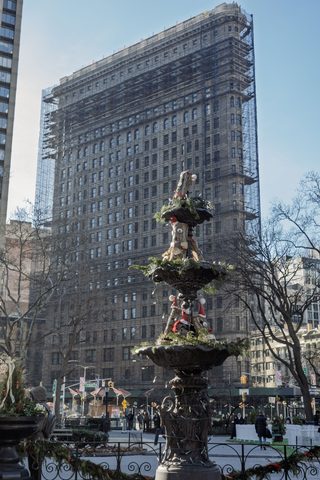
NoMad — North of Madison Square, a name in use since 1999 — occupies land that has served as public space since 1686, first as a military parade ground and later a potter's field, before mid-19th-century brownstones drew prominent families like Leonard and Clara Jerome, grandparents of Winston Churchill. The district's Gilded Age glamour centered on the Fifth Avenue Hotel, opened in 1859 as the first American hotel with an elevator and private bathrooms, and on Delmonico's, whose guests included Mark Twain, Oscar Wilde, and Charles Dickens. From about 1885, West 28th Street became Tin Pan Alley, the country's music-publishing capital, its surviving buildings landmarked in 2019. The 69th Regiment Armory hosted the pivotal 1913 Armory Show, a landmark event in American modern art. After decline, the 2001 restoration of Madison Square Park sparked the wave of hotels and restaurants that define NoMad today.
-
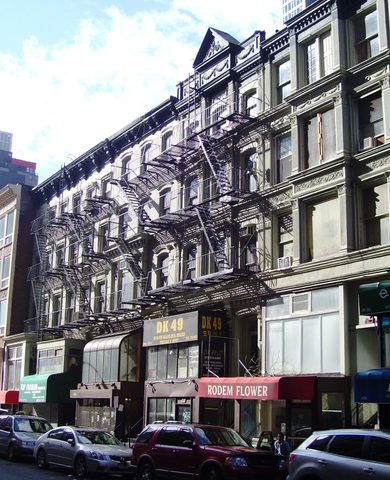
The landmarked block where American sheet-music publishing took root around 1885.
-
sight
An 1851-1854 marble-clad landmark and one of NoMad's signature buildings.
-
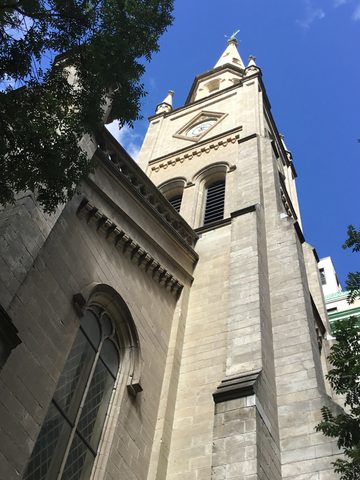
"The Little Church Around the Corner," an 1848 parish tied to the theater world.
-
food
A two-Michelin-star Korean tasting counter ranked #1 on North America's 50 Best in 2025.
-
The original NoMad location of this house-made-pasta Italian restaurant.
-
food
An all-day American brasserie with a weekday Martini Hour.
-
stay
A hotel and members' club inside the landmarked 1902-03 Johnston Building.
-
stay
A 160-room boutique hotel nodding to NoMad's Tin Pan Alley music heritage.
Gilded Age Glamour Around Madison Square
NoMad takes its name from its position just north of Madison Square Park, though the abbreviation itself only came into use in 1999. The land had been public space since 1686, used first as a military parade ground and later a potter's field, before mid-1800s brownstones brought in prominent families — including Leonard and Clara Jerome, grandparents of Winston Churchill. By the Gilded Age the district was a meeting ground for New York's elite: the Fifth Avenue Hotel, opened in 1859, was the first American hotel with an elevator and private bathrooms, while Delmonico's restaurant hosted guests such as Mark Twain, Oscar Wilde, and Charles Dickens. The 69th Regiment Armory, built in 1906 on Lexington Avenue, hosted the seminal 1913 Armory Show that introduced American audiences to modern art, and Stanford White's Madison Square Garden stood in the district from 1890 to 1925.
Tin Pan Alley's Music Row
From about 1885, the block of West 28th Street between Fifth and Sixth Avenues became known as Tin Pan Alley, the center of American commercial sheet-music publishing — a name popularly credited to writer Monroe H. Rosenfeld, said to evoke the tinny clatter of cheap upright pianos, and firmly attached to the block by the fall of 1905. Five surviving buildings at 47-55 West 28th Street were designated New York City landmarks on December 10, 2019, and in 2022 the city co-named the block "Tin Pan Alley." After a mid-20th-century decline, the neighborhood's modern revival followed the 2001 restoration of Madison Square Park, which spurred the hotels and restaurants that define NoMad today.
Getting there by subway
The N/R/W stations on Broadway serve NoMad at 28th Street and 23rd Street, though only the R runs there at all times except late nights and the W on weekdays — the N stops only on weekends and late nights. The 6 train serves parallel stations at 28th Street and 23rd Street on Park Avenue South at all times, making the east side of the neighborhood equally well covered.
Frequently asked questions
- How do I get to NoMad by subway?
- The R (all times except late nights) and W (weekdays) stop at 28th Street and 23rd Street on Broadway; the N serves the same stations only on weekends and late nights. The 6 train stops at 28th Street and 23rd Street on Park Avenue South at all times.
- Where does the name "NoMad" come from?
- It stands for "North of Madison Square" — a reference to Madison Square Park just south of the neighborhood — and has been in use since 1999.
- What is Tin Pan Alley, and can I still see it?
- Tin Pan Alley was the center of American sheet-music publishing from about 1885, centered on West 28th Street between Fifth and Sixth Avenues. Five of its buildings, at 47-55 West 28th Street, were designated New York City landmarks in December 2019, and the block was co-named "Tin Pan Alley" in 2022.
- What happened to the original NoMad Hotel?
- The NoMad Hotel at 1170 Broadway closed permanently in March 2021 during the COVID-19 pandemic, along with its Michelin-starred restaurant. The Beaux-Arts Johnston Building now houses The Ned NoMad, a hotel and members' club.
- Where can I stay in NoMad?
- The Ned NoMad occupies the landmarked 1902-03 Johnston Building at 1170 Broadway, while The Evelyn Hotel, a 160-room boutique property on East 27th Street, nods to the neighborhood's Tin Pan Alley music heritage with live jazz at its Brass brasserie.
Connected pages
Nearby
- Midtown, Manhattan: Terminal City and the Tallest Tower · Midtown, New York
- Murray Hill, Manhattan: Tea, Timing, and a Private Library · Murray Hill, New York
- Flatiron District, Manhattan: A Skyscraper Named the Area · Flatiron District, New York
- Koreatown, Manhattan: Thirty-Two Blocks Called Korea Way · Koreatown, New York
Same region
-
Murray Hill, Manhattan: Tea, Timing, and a Private Library
· Murray Hill, New York
Another Manhattan neighborhood covered in this series.
-
Flatiron District, Manhattan: A Skyscraper Named the Area
· Flatiron District, New York
Another Manhattan neighborhood covered in this series.
See also
-
Flatiron District, Manhattan: A Skyscraper Named the Area
· Flatiron District, New York
From Madison Square at NoMad's southern edge, the view across the park takes in the Flatiron Building beyond.
What travelers think
Log in to react.
No reviews yet.