Simsbury, Connecticut: Copper Coins, Safety Fuses, and a Hilltop Tower
Simsbury, Connecticut
Part of The Burys of Connecticut
Pictures from Simsbury
See all 3 photos →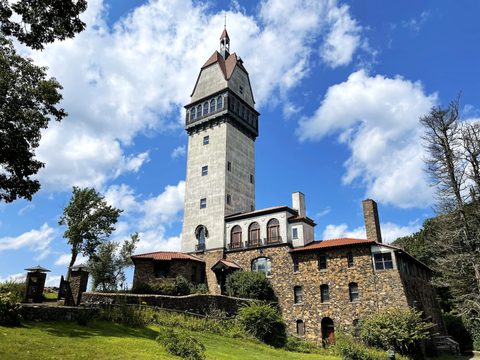
Simsbury was settled as "the Windsor plantation at Massacoe" and incorporated as a town in 1670, one of Connecticut's oldest. In March 1676, during King Philip's War, the town was pillaged and burned to the ground; residents sheltered in Windsor before returning to rebuild in the spring of 1677. The name's origin is uncertain — it may come from the English town of Symondsbury, or from early settler Simon Wolcott, known familiarly as "Sim." Simsbury claims a string of industrial firsts: the nation's earliest steel-making venture in 1728, the Colonies' first copper coins, minted in 1737 by Dr. Samuel Higley with ore from his Copper Hill Mine, and America's first safety fuses for blasting in 1836, a business that evolved into an aerospace and defense company still headquartered nearby. Gifford Pinchot, first chief of the U.S. Forest Service and founder of the Yale School of Forestry, was born here in 1865.
-
A 1914 hilltop tower with views spanning roughly 1,200 square miles.
-
A dozen-plus historic buildings centered on the 1771 Phelps Tavern.
-
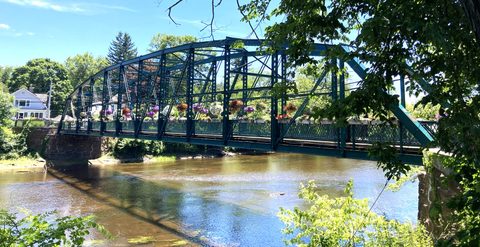
An 1892 bridge over the Farmington River, restored with flower boxes.
-
sight
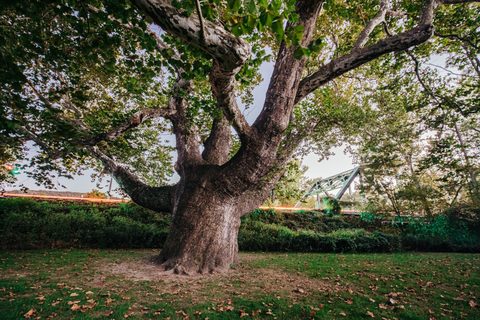
Connecticut's largest known tree, beside the Farmington River.
-
Destination fine dining from chef Tyler Anderson.
-
food
Farmland ice cream windows dating to the 1700s.
-
food
Chef-driven seasonal menus in the Tariffville village.
-
stay
Full-service New England inn near Heublein Tower.
-
stay
An 1820 country inn with on-site restaurant Soma Grille.
Massacoe to the Learned Blacksmith's neighbor
Simsbury was settled as 'the Windsor plantation at Massacoe' and incorporated in 1670, one of Connecticut's oldest towns. In March 1676, during King Philip's War, it was pillaged and burned to the ground; residents sheltered in Windsor and returned to rebuild in spring 1677. The town's name is of uncertain origin — the English town of Symondsbury, or early settler Simon Wolcott, known familiarly as 'Sim,' are the two candidates. Simsbury strung together a remarkable run of industrial firsts: the nation's earliest steel-making venture in 1728, the Colonies' first copper coins in 1737 (minted by Dr. Samuel Higley from his own Copper Hill Mine ore), the first carpet factory in 1825, and America's first safety fuses for blasting in 1836, a business that grew into an aerospace and defense company still headquartered nearby. Gifford Pinchot, first chief of the U.S. Forest Service and founder of the Yale School of Forestry, was born in Simsbury in 1865; under his leadership, federal forest holdings grew from 56 million acres in 1905 to 172 million acres across 150 national forests by 1910.
Getting there
Simsbury is a Farmington Valley town in northern Hartford County, reached by car northwest of Hartford. There is no passenger rail station in Simsbury; the nearest CTrail Hartford Line and Amtrak service is at Hartford Union Station or Windsor.
A tower, a flower bridge, and the state's biggest tree
Heublein Tower, a 165-foot structure built in 1914 as Gilbert Heublein's summer home, stands 1,000 feet above the Farmington River Valley in Talcott Mountain State Park, reached by the moderate 2.5-mile Tower Trail; Republican leaders reportedly urged Eisenhower to run for president at a gathering here in the early 1950s. The Old Drake Hill Flower Bridge, an 1892 span restored as a pedestrian crossing in 1995, is decorated with more than 60 volunteer-tended flower boxes over the Farmington River. Also on the Farmington River is the Pinchot Sycamore — the largest known tree in Connecticut, dedicated to native son Gifford Pinchot. Millwright's Restaurant and Present Company, in the Tariffville village, anchor the dining scene, with Tulmeadow Farm Store for ice cream; The Simsbury Inn and the Simsbury 1820 House are the town's two lodging options.
Frequently asked questions
- How do I get to Simsbury?
- Simsbury is reached by car, northwest of Hartford in the Farmington Valley. There is no passenger rail station in town; the nearest CTrail Hartford Line and Amtrak service is at Hartford Union Station or Windsor.
- What is Heublein Tower?
- A 165-foot tower built in 1914 as Gilbert Heublein's summer home atop Talcott Mountain, 1,000 feet above the Farmington River Valley with views spanning roughly 1,200 square miles. The 2.5-mile Tower Trail leads to it; the tower is open Friday-Monday, May through early November.
- What industrial firsts happened in Simsbury?
- The nation's earliest steel-making venture in 1728, the Colonies' first copper coins in 1737, the first carpet factory in 1825, and America's first safety fuses for blasting in 1836 — a business that grew into an aerospace and defense company still headquartered nearby.
- Who was Gifford Pinchot?
- The first chief of the U.S. Forest Service and founder of the Yale School of Forestry, born in Simsbury in 1865. The Pinchot Sycamore, Connecticut's largest known tree, stands beside the Farmington River in his honor.
- Where can I eat and stay in Simsbury?
- Millwright's Restaurant is the destination fine-dining room; Present Company serves seasonal menus in the Tariffville village; Tulmeadow Farm Store is the local ice cream stop. The Simsbury Inn and the Simsbury 1820 House are the town's two lodging options.
Foliage
Turning this week · estimated peak Oct 14–20
Derived from the Connecticut DEEP fall foliage map. DEEP's map is a climatological estimate last published in 2023; it describes a normal year, not this one. Stage names are ours. See the statewide forecast.
Connected pages
Nearby
-
Avon, Connecticut: A Canal Town Turned Farmington Valley Suburb
· Avon, Connecticut
Simsbury borders Avon to the south, linked by Route 10/US 202 (Simsbury Road) through the Farmington Valley.
-
Granby, Connecticut: Cider Distilling and a Notch on the Massachusetts Line
· Granby, Connecticut
Granby was incorporated in 1786 from a section of Simsbury and borders it to the south.
-
Bloomfield, Connecticut: Wintonbury Parish and a Helicopter Pioneer
· Bloomfield, Connecticut
Bloomfield borders Simsbury, one of the three parent towns of the 1736 Wintonbury parish.
-
Canton, Connecticut: The World's Leading Axe Maker at Collinsville
· Canton, Connecticut
Canton borders Simsbury to the northeast.
-
East Granby, Connecticut: A Copper Mine Turned Colonial Prison
· East Granby, Connecticut
East Granby borders Simsbury; both were settled as part of Simsbury before East Granby's 1858 incorporation.
Shared history
-
Windsor, Connecticut: The State's First English Settlement
· Windsor, Connecticut
Simsbury was settled as the Windsor plantation at Massacoe; its residents sheltered in Windsor after King Philip's War burned the town in 1676.
-
Granby, Connecticut: Cider Distilling and a Notch on the Massachusetts Line
· Granby, Connecticut
Granby was incorporated in 1786 from a section of Simsbury; the 4,400-acre McLean Game Refuge still spans both towns.
Same region
-
West Hartford, Connecticut: From West Division to Webster's Birthplace
· West Hartford, Connecticut
Both are Farmington Valley towns in northern Hartford County.
-
Farmington, Connecticut: Grand Central Station of the Underground Railroad
· Farmington, Connecticut
Both are Farmington Valley towns in Hartford County.
What travelers think
Log in to react.
No reviews yet.