West Hartford, Connecticut: From West Division to Webster's Birthplace
West Hartford, Connecticut
Pictures from West Hartford
See all 3 photos →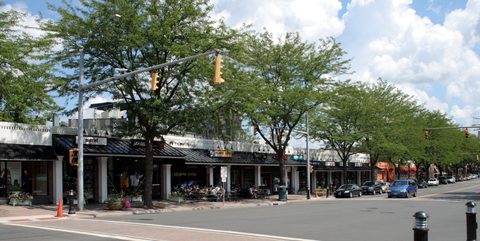
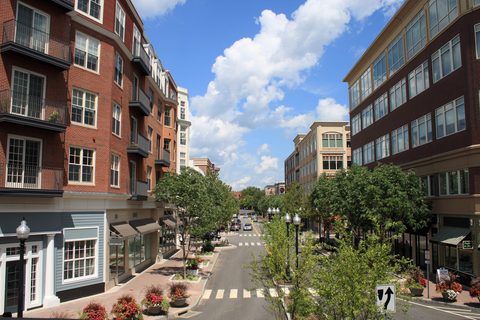
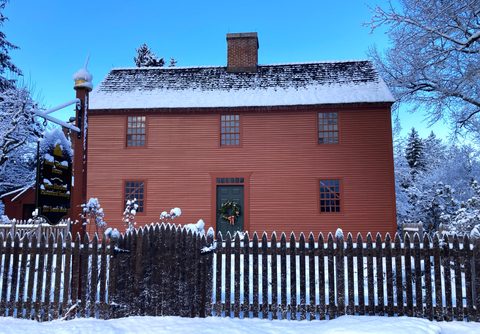
West Hartford began in 1672 as the "West Division" of Hartford, a name that stuck until 1806, when the Connecticut General Assembly began calling it the Society of West Hartford; area residents petitioned for separate incorporation in 1854, and West Hartford became its own town on May 3 of that year. Lexicographer Noah Webster, creator of the first American dictionary, was born here in 1758; his birthplace survives as the Noah Webster House museum on South Main Street. In 1817, the American School for the Deaf opened on North Main Street as the first permanent school for the deaf in the United States, and it still teaches deaf and hard-of-hearing students today. Originally farmland, West Hartford grew mills, tanneries, and blacksmith shops into a thriving industrial area by the late nineteenth century, before becoming an educational hub home to the University of Hartford and the University of Saint Joseph.
-
The birthplace museum of dictionary-maker Noah Webster.
-
sight
A 162-acre farm and education center with trails and animals.
-
sight
Greater Hartford's intimate professional theater on Park Road.
-
food
IPAs and sour ales with sourdough pizza, founded 2015.
-
food
West Hartford Center's raw-bar and chop-house institution.
-
Scratch-made breads and pastries, open daily from 7 a.m.
-
A LEED Gold boutique hotel on Blue Back Square.
From West Division to college town
In 1672, the Proprietors of Hartford ordered a Division created to the west, and 'West Division' remained the area's official name until 1806, when the Connecticut General Assembly began calling it the Society of West Hartford; area delegates petitioned for a separate town, and it incorporated on May 3, 1854. Lexicographer Noah Webster was born here in 1758, and his birthplace survives as the Noah Webster House on South Main Street. In 1817, the American School for the Deaf opened on North Main Street as the first permanent school for the deaf in the United States and still serves students today. An early farming area, West Hartford had mills, tanneries, and blacksmith shops, and was a thriving industrial area by the late nineteenth century before turning into an educational hub home to the University of Hartford and the University of Saint Joseph.
Getting there
West Hartford is a drive-first destination, reached via I-84, which passes through town, and US Routes 6 and 44, plus CT Routes 4 and 218. There is no rail station in West Hartford itself; the nearest CTrail Hartford Line and Amtrak stop is Hartford Union Station in adjacent Hartford. CTfastrak bus rapid transit serves the town at its Elmwood and Flatbush Avenue stations, connecting to downtown Hartford and New Britain; a Flatbush Avenue rail station has secured funding but remains unbuilt.
Blue Back Square and Westmoor Park
West Hartford Center and the adjoining Blue Back Square anchor the town's shopping and dining, built around Max's Oyster Bar, Hartford Baking Company, and a run of independent storefronts. Westmoor Park, a 162-acre town-run environmental and agricultural education center, keeps a working demonstration farm with cows, llamas, goats, sheep, donkeys, and poultry alongside wildflower meadows and woodland trails; it earned Level II Arboretum accreditation in 2024. Playhouse on Park, on Park Road, is Greater Hartford's intimate professional theater, with no seat more than four rows from the stage. For a place to stay, the Delamar West Hartford sits right on Blue Back Square, Connecticut's only hotel named to Travel + Leisure's 2026 T+L 500.
Frequently asked questions
- How do I get to West Hartford?
- Drivers use I-84, US Routes 6 and 44, and CT Routes 4 and 218. There's no rail station in town; the nearest CTrail Hartford Line and Amtrak stop is Hartford Union Station. CTfastrak buses connect West Hartford's Elmwood and Flatbush Avenue stations to Hartford and New Britain.
- What is West Hartford's connection to Noah Webster?
- Noah Webster, creator of the first American dictionary, was born in West Hartford in 1758. His birthplace survives as the Noah Webster House & West Hartford History Center on South Main Street.
- What is the American School for the Deaf?
- Founded in 1817 on North Main Street, it was the first permanent school for the deaf in the United States and still serves deaf and hard-of-hearing students today.
- Where should I eat and drink in West Hartford?
- New Park Brewing pours house IPAs and sour ales with sourdough pizza; Max's Oyster Bar is the West Hartford Center raw-bar institution; Hartford Baking Company serves scratch-made breads and pastries daily from 7 a.m.
- Where can I stay in West Hartford?
- The Delamar West Hartford, a LEED Gold boutique hotel adjacent to Blue Back Square, is the town's marquee option, with an on-site spa and Artisan Restaurant.
Foliage
Turning this week · estimated peak Oct 21–27
On the Hartford West foliage driving route.
Derived from the Connecticut DEEP fall foliage map. DEEP's map is a climatological estimate last published in 2023; it describes a normal year, not this one. Stage names are ours. See the statewide forecast.
Connected pages
Nearby
-
Farmington, Connecticut: Grand Central Station of the Underground Railroad
· Farmington, Connecticut
Both sit along I-84 and Route 4, just west of Hartford.
-
Newington, Connecticut: World Headquarters of Amateur Radio
· Newington, Connecticut
Newington borders West Hartford to the north.
-
Hartford, Connecticut: The Constitution State's Capital
· Hartford, Connecticut
West Hartford began as Hartford's outlying West Division parish before incorporating separately in 1854.
-
Bloomfield, Connecticut: Wintonbury Parish and a Helicopter Pioneer
· Bloomfield, Connecticut
Bloomfield borders West Hartford to the south.
-
Avon, Connecticut: A Canal Town Turned Farmington Valley Suburb
· Avon, Connecticut
Avon borders West Hartford to the east.
Same region
-
Simsbury, Connecticut: Copper Coins, Safety Fuses, and a Hilltop Tower
· Simsbury, Connecticut
Both are Farmington Valley towns in northern Hartford County.
-
Avon, Connecticut: A Canal Town Turned Farmington Valley Suburb
· Avon, Connecticut
Both on the Hartford West foliage route
-
Canton, Connecticut: The World's Leading Axe Maker at Collinsville
· Canton, Connecticut
Both on the Hartford West foliage route
-
Windsor, Connecticut: The State's First English Settlement
· Windsor, Connecticut
Both on the Hartford West foliage route
-
Hartford, Connecticut: The Constitution State's Capital
· Hartford, Connecticut
Both on the Hartford West foliage route
What travelers think
Log in to react.
No reviews yet.