Windsor, Connecticut: The State's First English Settlement
Windsor, Connecticut
Pictures from Windsor
See all 3 photos →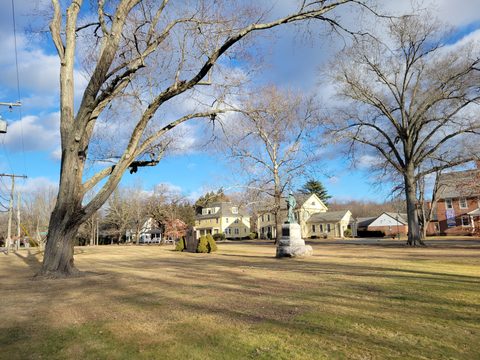
Windsor is Connecticut's first English settlement: a party of Plymouth Colony settlers under William Holmes arrived on September 26, 1633 to found a trading post, first called Dorchester after the Massachusetts town its second wave of settlers came from. The colony's General Court renamed it Windsor, after Windsor in Berkshire, England, on February 21, 1637. Palisado Green takes its name from a palisade hastily erected that year during the Pequot War, when settlers inside gave up their home lots to shelter families from outside it. Colonial Windsor ran a working river port in the West Indies trade, and tobacco has been grown here since 1640; the first shade-grown tobacco in the United States was raised on a half-acre plot in Windsor's Poquonock village in 1900, under cloth tents that mimicked Sumatran growing conditions. Oliver Ellsworth, a framer of the U.S. Constitution and the third Chief Justice of the United States, lived on Palisado Avenue.
-
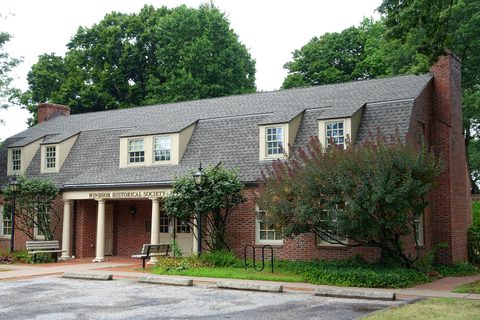
Two restored colonial houses interpreting 400 years of history.
-
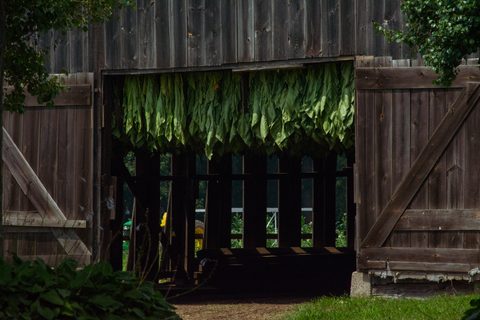
A restored curing shed preserving Windsor's tobacco heritage.
-
473 acres of former tobacco farmland with 12 miles of trails.
-
The home of a Constitution framer and Chief Justice.
-
sight
A gallery in a restored freight house near the train station.
-
Steaks, seafood and pizza in a 100-year-old building.
-
food
A kosher Mediterranean restaurant, market and bakery.
A trading post that outlasted its palisade
The Hooker and Chaffee mercantile firm kept a store and packing houses just off Palisado Green, shipping timber, wheat, livestock and tobacco to the West Indies and importing sugar, molasses, salt and British textiles and hardware; by the mid-1700s flaxseed had become one of the valley's most important exports. Shade tobacco reshaped the town's population in the 20th century: after World War I immigration restrictions cut the supply of European labor, growers recruited college students and workers from the American South, and beginning in 1947 Puerto Rican and Jamaican laborers came to Connecticut by the thousands, with many settling permanently in the area. Regional shade-tobacco acreage fell from about 30,000 acres in the 1930s to under 2,000 by 2006. The Luddy/Taylor Connecticut Valley Tobacco Museum, in Northwest Park, preserves that heritage in a restored curing shed.
Getting there
Windsor sits just north of Hartford on I-91, and unusually for a Connecticut town of its size it has real passenger rail: CTrail Hartford Line and Amtrak Northeast Regional and Valley Flyer trains both stop at the 1870 depot at 41 Central Street in the middle of downtown, with 22 free parking spaces available 24/7. Connecticut Route 75 (Poquonock Avenue) runs north toward Bradley International Airport, which borders the town, and Route 159 (Palisado Avenue) is the historic spine past Palisado Green.
Where to eat and stay
Bart's Drive-In on Palisado Avenue is a longtime local name for chili dogs, fried clams and soft serve — call ahead to confirm current hours. Tunxis Grill & Pizzeria, in a 100-year-old downtown building with brick booths, has served steaks, seafood and pizza since 2008. Yosi Kitchen on Hayden Station Road runs a Mediterranean and Middle Eastern kosher restaurant, market and bakery under one roof. For lodging, the Hartford/Windsor Marriott Airport on Day Hill Road runs a complimentary shuttle to Bradley International Airport, with the Hyatt House and a Residence Inn nearby.
Frequently asked questions
- How do I get to Windsor?
- By car via I-91, or by train — CTrail Hartford Line and Amtrak both stop at Windsor station, 41 Central Street, in the middle of downtown.
- Is there a train to Windsor?
- Yes. Windsor station is a scheduled stop on the CTrail Hartford Line, with Amtrak Northeast Regional and Valley Flyer trains also serving it, and 22 free parking spaces.
- What is the Windsor Historical Society?
- Founded in 1921, the society interprets nearly 400 years of Windsor history at 96 Palisado Avenue, with guided tours of two restored colonial houses — the 1758 Strong-Howard House and the 1767 Dr. Hezekiah Chaffee House. Call (860) 688-3813 to confirm current hours and admission before visiting.
- What is Oliver Ellsworth Homestead?
- The home of Oliver Ellsworth, a framer of the U.S. Constitution and third Chief Justice of the United States, on Palisado Avenue. Run as a museum by the Connecticut Daughters of the American Revolution, open for tours May through the end of October.
- Is there a hotel in Windsor?
- Yes — the Hartford/Windsor Marriott Airport, the Hyatt House Hartford North/Windsor and a Residence Inn by Marriott all cluster in the Day Hill Road corporate corridor, with shuttle service toward Bradley International Airport.
Foliage
Turning this week · estimated peak Oct 14–20
On the Hartford West foliage driving route.
Derived from the Connecticut DEEP fall foliage map. DEEP's map is a climatological estimate last published in 2023; it describes a normal year, not this one. Stage names are ours. See the statewide forecast.
Connected pages
Nearby
-
Bloomfield, Connecticut: Wintonbury Parish and a Helicopter Pioneer
· Bloomfield, Connecticut
Windsor borders Bloomfield, part of the 1736 Wintonbury parish coined from Windsor, Farmington and Simsbury.
-
Hartford, Connecticut: The Constitution State's Capital
· Hartford, Connecticut
Windsor borders Hartford to the south.
-
Windsor Locks, Connecticut: A Canal Town That Became an Airport
· Windsor Locks, Connecticut
Windsor Locks separated from Windsor in 1854 and borders it to the north.
-
East Granby, Connecticut: A Copper Mine Turned Colonial Prison
· East Granby, Connecticut
Windsor borders East Granby to the north.
-
South Windsor, Connecticut: An Indigenous Village Museum on the Old Ferry Road
· South Windsor, Connecticut
Windsor faces South Windsor across the Connecticut River.
-
East Windsor, Connecticut: Trolleys, Clockmakers and Five Villages
· East Windsor, Connecticut
East Windsor separated from Windsor in 1768 and borders it across the Connecticut River.
Shared history
-
Windsor Locks, Connecticut: A Canal Town That Became an Airport
· Windsor Locks, Connecticut
Windsor Locks, named for the canal locks built around Enfield Falls, was set off from Windsor in 1854.
-
East Windsor, Connecticut: Trolleys, Clockmakers and Five Villages
· East Windsor, Connecticut
East Windsor was incorporated as a separate town out of Windsor in 1768.
-
Simsbury, Connecticut: Copper Coins, Safety Fuses, and a Hilltop Tower
· Simsbury, Connecticut
Simsbury was settled as the Windsor plantation at Massacoe; its residents sheltered in Windsor after King Philip's War burned the town in 1676.
Same region
-
West Hartford, Connecticut: From West Division to Webster's Birthplace
· West Hartford, Connecticut
Both on the Hartford West foliage route
-
Hartford, Connecticut: The Constitution State's Capital
· Hartford, Connecticut
Both on the Hartford West foliage route
-
Windsor Locks, Connecticut: A Canal Town That Became an Airport
· Windsor Locks, Connecticut
Both on the Hartford West foliage route
-
East Granby, Connecticut: A Copper Mine Turned Colonial Prison
· East Granby, Connecticut
Both on the Hartford West foliage route
What travelers think
Log in to react.
No reviews yet.