Torrington, Connecticut: John Brown's Birthplace and a Brass City Cousin
Torrington, Connecticut
Pictures from Torrington
See all 3 photos →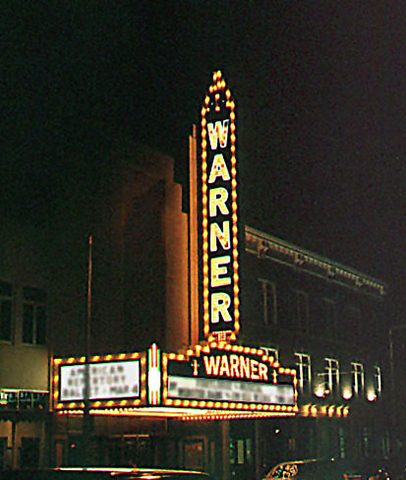
Torrington was first settled in 1735 by Ebenezer Lyman Jr., incorporated as a town in October 1740, and chartered as a city in 1923; the area was originally called "Mast Swamp" for the pines harvested there as ship masts, later renamed for Torrington in Devon, England. The town grew into an industrial center on the Naugatuck River for brass, needles and woolen cloth — Frederick Wolcott built a woolen mill in 1813, Israel Coe and Erastus Hodges began a brass mill in 1834, and the railroad arrived in 1849. Abolitionist John Brown was born in Torrington in 1800; his restored birthplace burned in 1918, and a granite monument has marked the site since 1932. Gail Borden Jr. built his condensed-milk factory, vital to the Union Army, at what is now Burr Pond State Park in 1857. Torringford, a section of Torrington, served as an Underground Railroad transportation hub before the Civil War.
-
sight
A 1931 Art Deco theater built by Warner Bros. Studios.
-
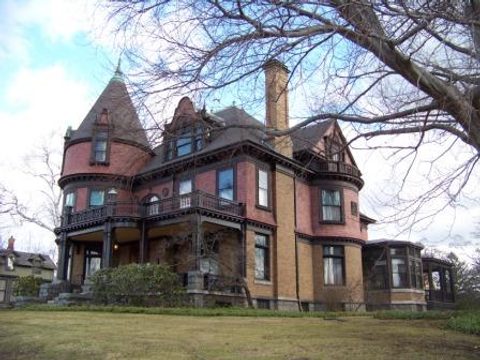
A Victorian mansion and a free city-history exhibit.
-
A 40-acre homestead and Connecticut Freedom Trail stop.
-
sight
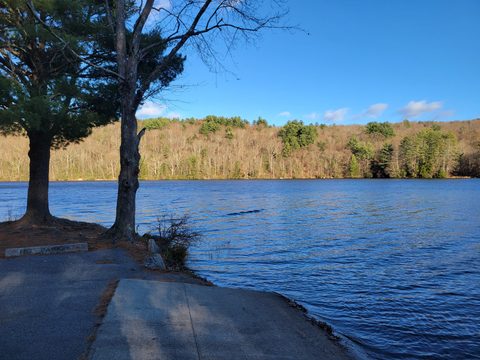
A sandy beach on the site of Gail Borden's 1857 milk factory.
-
Interactive exhibits modeled on the city itself.
-
Small-batch beer out of a converted 1901 firehouse.
-
Family-owned breakfast and lunch since 1976.
-
A long-standing neighborhood pizzeria.
-
The Torrington outpost of a long-running grinder shop.
-
A budget property just off Route 8.
-
A pet-friendly budget hotel near downtown.
Brass, an abolitionist and a theater
Torrington's mills — woolen cloth from 1813, brass from 1834 — grew alongside the 1849 arrival of the railroad, cementing the town's place in the Naugatuck Valley's industrial belt. John Brown's birthplace, restored in 1901 as one of Connecticut's first house museums, burned in 1918; the 40-acre homestead, now a Connecticut Archaeological Preserve and stop on the Connecticut Freedom Trail, offers a 2/3-mile nature trail with a newly opened wetland boardwalk. The Warner Theatre opened August 19, 1931, built by Warner Bros. Studios to a design by architect Thomas W. Lamb; closed and slated for demolition in the early 1980s, it was rescued by the nonprofit Northwest Connecticut Association for the Arts and reopened May 22, 1983.
Getting there
Torrington is a drive-to destination in the Litchfield Hills: Route 8, Route 4 and US Route 202 all meet in downtown Torrington. There is no passenger rail station in the city — the only rail service is freight, operated by the Naugatuck Railroad up the Waterbury Branch — and the nearest passenger rail is Waterbury station, the branch's terminus; Metro-North passenger service north of Waterbury ended in 1958. Waterbury station itself is currently served by buses, not trains, from July 20, 2026 through May 31, 2027 while the branch's Ansonia platform is rebuilt. Local buses run through the Northwestern Connecticut Transit District, with connections to Waterbury.
Two museums and a state park
The Torrington Historical Society runs both the Hotchkiss-Fyler House Museum, a Queen Anne Victorian mansion commissioned in 1897, and the Torrington History Museum's "No Place Like Home" exhibit, both seasonal, April 15 through October 31. Burr Pond State Park, on the site of Gail Borden's 1857 condensed-milk factory, has a sandy beach, canoe rentals and the 2.5-mile Walcott Trail loop. KidsPlay Children's Museum runs a Torrington-themed Town Center exhibit for younger visitors, and Bad Dog Brewing Company pours out of a converted 1901 firehouse on Water Street.
Frequently asked questions
- How do I get to Torrington?
- By car — Route 8, Route 4 and US Route 202 all meet downtown. There's no passenger rail station in Torrington; the only rail service is Naugatuck Railroad freight, and the nearest passenger station is Waterbury, on Metro-North's Waterbury Branch — though Waterbury station is currently served by buses, not trains, from July 20, 2026 through May 31, 2027 while the branch's Ansonia platform is rebuilt.
- Can I visit John Brown's birthplace?
- Yes — the 40-acre homestead is open and accessible as a quiet, contemplative site, with a 2/3-mile nature trail and a newly opened wetland boardwalk at the trailhead. The house itself burned in 1918; a 1932 granite monument marks the spot.
- Is the Warner Theatre still open?
- Yes — it runs more than 160 performances a year. Built by Warner Bros. Studios and opened in 1931, it was rescued from demolition and reopened in 1983 by the Northwest Connecticut Association for the Arts.
- What are the Torrington Historical Society's museums?
- The Hotchkiss-Fyler House, an 1897-1900 Queen Anne Victorian mansion with guided tours, and the Torrington History Museum's "No Place Like Home" exhibit, both at 192 Main Street. Both run seasonally, April 15 through October 31, Thursday-Saturday.
- Where can I eat and stay in Torrington?
- Bad Dog Brewing Company pours out of a converted 1901 firehouse, with LaMonica's for breakfast and Frank's Pizza and Nardelli's Grinder Shoppe for a casual meal. Days Inn by Wyndham and Americas Best Value Inn are Torrington's two verified hotels.
Foliage
Near peak this week · estimated peak Oct 14–20
On the Traditional New England foliage driving route.
Derived from the Connecticut DEEP fall foliage map. DEEP's map is a climatological estimate last published in 2023; it describes a normal year, not this one. Stage names are ours. See the statewide forecast.
Connected pages
Nearby
- Litchfield, Connecticut: The First Law School and a Quiet Green · Litchfield, Connecticut
- Goshen, Connecticut: The Birthplace of Pineapple Cheese · Goshen, Connecticut
- Harwinton, Connecticut: A Portmanteau Town Since 1737 · Harwinton, Connecticut
- New Hartford, Connecticut: Ovation Guitars and Satan's Kingdom · New Hartford, Connecticut
-
Winchester, Connecticut: Winsted, a Museum of Torts, and a Flood
· Winchester, Connecticut
Northwestern Connecticut Transit District buses connect Torrington and Winsted.
-
Ski Sundown: From Satan's Ridge to Channing Murdock, and a Near-Miss with Powder Ridge
· Town of New Hartford, CT
The two towns share a border
Same region
-
Harwinton, Connecticut: A Portmanteau Town Since 1737
· Harwinton, Connecticut
Both on the Traditional New England foliage route
-
Litchfield, Connecticut: The First Law School and a Quiet Green
· Litchfield, Connecticut
Both on the Traditional New England foliage route
-
Winchester, Connecticut: Winsted, a Museum of Torts, and a Flood
· Winchester, Connecticut
Both on the Traditional New England foliage route
-
Colebrook, Connecticut: A Mizner Mansion in the Green Woods
· Colebrook, Connecticut
Both on the Traditional New England foliage route
What travelers think
Log in to react.
No reviews yet.