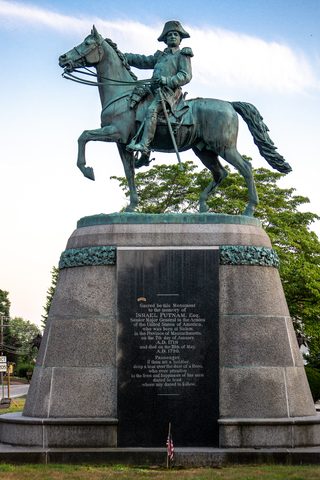

Carroll Gardens, Brooklyn: Front Yards Written Into Law
Carroll Gardens, New York
Pictures from Carroll Gardens
See all 3 photos →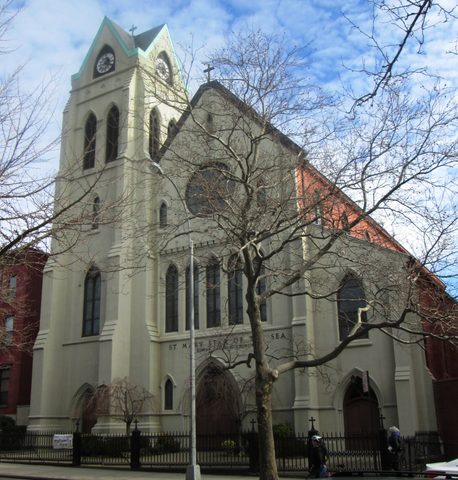
Carroll Gardens is named for Charles Carroll, the only Roman Catholic signer of the Declaration of Independence, and for the front gardens of its brownstone blocks. Those gardens exist because of a law passed in 1846, tied to surveyor Richard Butt's plan, which required 33 feet 5.25 inches between the building and the street. The area was originally considered part of what was once known as South Brooklyn, and more specifically part of Red Hook; it started to have its own identity in the 1960s, after Robert Moses's Brooklyn-Queens Expressway and Gowanus Expressway hardened the separation. Irish immigrants arrived in the nineteenth century and Italian immigrants followed from the late nineteenth century through the 1950s. The Carroll Gardens Association formed in 1964, and the Landmarks Preservation Commission designated the historic district on September 25, 1973.
-
Two blocks of 1860s-1880s rowhouses set back behind the yards the 1846 law required. The whole point of the neighborhood is visible from the sidewalk.
-
walk
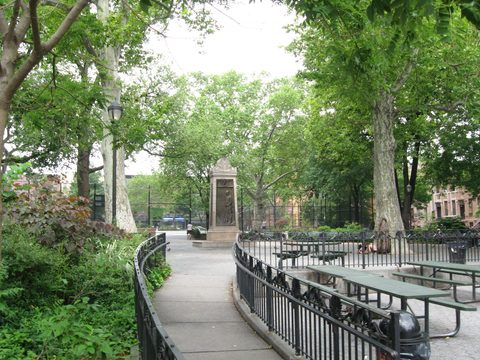
A garden set aside in the late 1840s and bought by the city in 1853, now a block of playgrounds and shaded walks between Court and Smith Streets.
-
sight
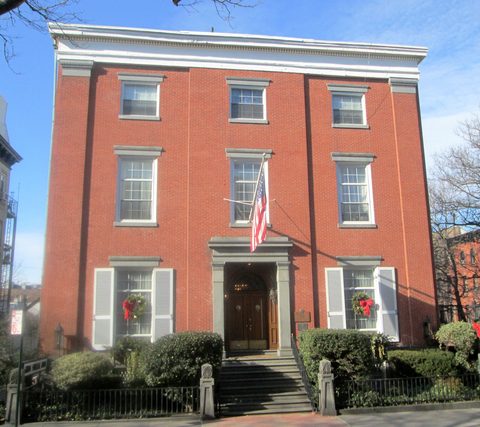
A Greek Revival house of about 1840, landmarked in 1970. It is a working funeral home, so the visit is an exterior one.
-
Built 1867-1884 by Richard Upjohn & Son with later work by Ralph Adams Cram, and still an active parish on Clinton Street.
-
sight
An active Diocese of Brooklyn parish on Court Street, and the church where Mae Coughlin married Al Capone in December 1918.
-
Converted to apartments and offices in the 1980s but landmarked twice over in 1982; the exterior at Court and President Streets is the draw.
-
An Italian kitchen on Court Street that has been serving lunch and dinner since 2004.
-
food
Mark Iacono's Henry Street pizzeria, open since 2006. Cash only, and no reservations.
The 1846 setback, and the district it produced
The deep front yards along President and Carroll Streets are not an accident of taste. A law passed in 1846, tied to Richard Butt's plan for the street grid, required 33 feet 5.25 inches between the building and the street. The Landmarks Preservation Commission's designation report records a Butt-planned setback of 33.5 feet, later modified to a range of 25 to 39 feet.
The Carroll Gardens Historic District was designated on September 25, 1973. The LPC report counts over 160 buildings, built from the late 1860s to the early 1880s, in what it calls late Italianate, French neo-Grec and even Victorian Gothic styles.
Carroll Park is older than the rowhouses around it. It began as a private garden set aside in the late 1840s and was purchased by the City of New York in 1853. Wikipedia describes it as Brooklyn's third-oldest park.
The neighborhood's separate identity is a twentieth-century product. Robert Moses's construction of the Brooklyn-Queens Expressway and the Gowanus Expressway, beginning in the late 1940s, hardened the split from Red Hook; a church was lost in 1941 to the BQE. The Carroll Gardens Association formed in 1964 in response to gentrification pressures.
Churches on Clinton and Court
St. Paul's Episcopal Church, at 423 Clinton Street, comes from a parish founded on Christmas Day 1849. The church itself was built between 1867 and 1884 by Richard Upjohn & Son, with later work by Ralph Adams Cram, and was listed on the National Register of Historic Places on December 21, 1989. It remains an active parish.
St. Mary Star of the Sea, at 467 Court Street, is listed in the Diocese of Brooklyn's current parish directory as an active parish. Mae Coughlin married Al Capone there on December 30, 1918.
South Congregational Church, at Court and President Streets, is no longer a congregation: the interior of the church complex was converted to apartments and offices in the 1980s. It holds both a New York City landmark designation and a National Register listing from 1982, and is worth seeing from the sidewalk.
The John Rankin House at 440 Clinton Street was built around 1840 in the Greek Revival style, designated a New York City Landmark on July 14, 1970 and listed on the National Register on November 16, 1978. It operates today as the F.G. Guido Funeral Home.
Getting there
Carroll Street is located in Carroll Gardens, at Carroll and Smith Streets, and is served by the F and G. Its entrances are at President Street, Second Street and Second Place along Smith Street rather than on Carroll Street itself.
Smith-Ninth Streets, also on the F and G, is located over the Gowanus Canal near the intersection of Smith and Ninth Streets, in Gowanus rather than in Carroll Gardens.
Frequently asked questions
- How do I get to Carroll Gardens?
- Take the F or G to Carroll Street, which sits in Carroll Gardens at Carroll and Smith Streets. Its entrances are along Smith Street at President Street, Second Street and Second Place, not on Carroll Street. Smith-Ninth Streets, also on the F and G, is in Gowanus.
- Where does the name Carroll Gardens come from?
- From Charles Carroll, the only Roman Catholic signer of the Declaration of Independence. The name also reflects the front gardens of the brownstones in what became the historic district.
- Why do the houses have such deep front yards?
- A law passed in 1846, tied to surveyor Richard Butt's plan for the grid, required 33 feet 5.25 inches between the building and the street. The Landmarks Preservation Commission's report describes the Butt-planned setback as 33.5 feet, later modified to between 25 and 39 feet.
- Can visitors go inside the John Rankin House?
- No. The house is privately owned and operates as the F.G. Guido Funeral Home. It is a New York City Landmark and a National Register listing, and can be viewed from the exterior at 440 Clinton Street.
- Is South Congregational Church still a church?
- No. The interior of the complex was converted to apartments and offices in the 1980s. It remains a New York City Landmark and a National Register listing from 1982, viewable from the exterior at Court and President Streets.
- Where can I stay in Carroll Gardens?
- No hotel, inn or bed-and-breakfast is listed here, which is consistent with the neighborhood's low-rise rowhouse character. Lodging is listed nearby in Downtown Brooklyn.
Connected pages
Nearby
-
Columbia Street Waterfront District, Brooklyn: Twenty-Two Blocks by the Bay
· Columbia Street Waterfront District, New York
The Columbia Street corridor was cut off from Carroll Gardens in 1957, when the newly built Brooklyn-Queens Expressway separated it.
Shared history
-
Red Hook, Brooklyn: Basins, Barges, and No Subway
· Red Hook, New York
Carroll Gardens was originally considered part of South Brooklyn and more specifically Red Hook, until expressway construction hardened the split.
Same region
-
Gowanus, Brooklyn: A Canal, a Cleanup, a Power Station
· Gowanus, New York
Smith-Ninth Streets, the F and G station over the Gowanus Canal, is in Gowanus rather than in Carroll Gardens.
-
Downtown Brooklyn, Brooklyn: Borough Hall and the Fulton Mall
· Downtown Brooklyn, New York
Downtown Brooklyn is where this guide lists lodging near Carroll Gardens.
-
Park Slope, Brooklyn: The Slope Up to Prospect Park
· Park Slope, New York
Union Street on the R, at Fourth Avenue and Union Street, serves Park Slope along with Gowanus and Carroll Gardens.
What travelers think
Log in to react.
No reviews yet.