
Park Slope, Brooklyn: The Slope Up to Prospect Park
Park Slope, New York
Pictures from Park Slope
See all 4 photos →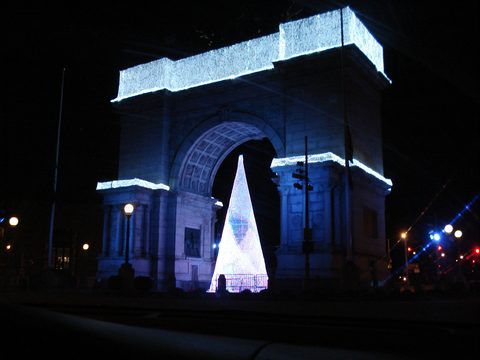
Park Slope was settled by the Lenape before Europeans arrived, and the ground was mostly farms and woods until the early nineteenth century. On August 27, 1776 the area served as the backdrop for the beginning of the Battle of Long Island. The name describes the western slope leading up to Prospect Park; residents tried Prospect Heights, Prospect Hill and Park Hill Side before settling on Park Slope. Development accelerated after Prospect Park, designed by Frederick Law Olmsted and Calvert Vaux, opened on October 19, 1867 and was substantially complete by 1873. The 1890 census showed Park Slope to be the richest community in the United States. It declined to a working-class area by the middle of the twentieth century, then gentrified from the late 1960s as a brownstone-renovation trend took hold.
-
walk
526 acres by Olmsted and Vaux, open since October 1867. Prospect Park West runs the length of the neighborhood beside it.
-
About 2,575 buildings after two expansions, almost all of them townhouses. The way to see it is to walk the cross streets off Seventh Avenue.
-
sight
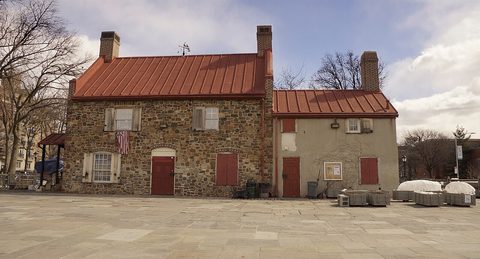
A reconstructed Dutch farmhouse on Battle of Brooklyn ground, open Friday to Sunday afternoons and by appointment.
-
walk
The park around the Old Stone House, also known historically as Washington Park.
-
sight
An 1850s mansion inside Prospect Park, restored in 2008 and used today as the Brooklyn borough headquarters of NYC Parks.
-
sight
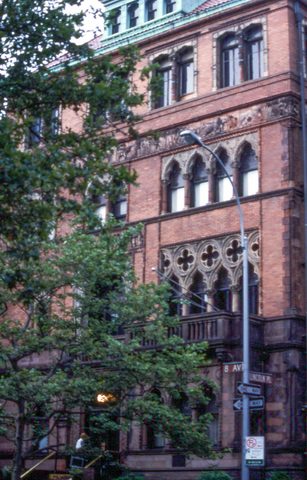
Francis H. Kimball's clubhouse of 1889-1891 on Eighth Avenue, still a private club and best seen from the pavement.
-
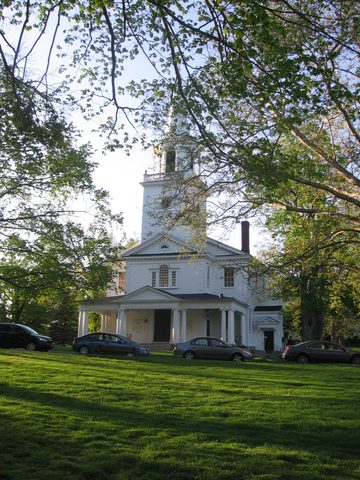
A congregation founded in 1654 under Peter Stuyvesant, in an 1888-1893 building by George L. Morse with a 212-foot spire.
-
Founded in 1897 and settled since 1944 into an 1881 Victorian Gothic building on Seventh Avenue.
-
food
A Fifth Avenue kitchen with a standing brunch menu and weekend hours.
Mansions, money, and the city's largest landmarked district by building count
The grand houses along Prospect Park West went up on manufacturing money: chewing gum, India ink, baking powder. One of them was built in 1900 to designs by the architect William Tubby and sold in 1948 to the Brooklyn Society for Ethical Culture. The Society's current address is 269 4th Avenue, so the mansion's present occupant should not be assumed.
The Park Slope Historic District was designated by the New York City Landmarks Preservation Commission on July 7, 1973 and listed on the National Register of Historic Places on November 21, 1980. Its original boundaries run roughly along Prospect Park West, Berkeley Place, 15th Street and Sixth, Seventh and Flatbush Avenues, covering about 150 acres and roughly 40 city blocks. A 2012 expansion brought the city-designated district to 2,575 buildings, and a second northern expansion followed in 2016. Wikipedia describes it as New York's largest landmarked neighborhood in terms of the number of buildings. Contributing buildings date from 1862 to approximately 1920.
The neighborhood is part of Brooklyn Community District 6 and is informally divided into North Slope, Center Slope and South Slope. Its edges are described as running along Prospect Park and Prospect Park West on the east, Fourth Avenue on the west, Flatbush Avenue on the north and the Prospect Expressway on the south, but those descriptions are informal rather than official.
The reconstructed Old Stone House stands at 336 3rd Street on ground where Revolutionary War fighting took place during the Battle of Brooklyn, inside the park known as JJ Byrne Playground and, historically, as Washington Park.
Getting there
Three IND Culver Line stations carry the F and G. Seventh Avenue is at Seventh Avenue and Ninth Street in Park Slope. Fourth Avenue is at Ninth Street and Fourth Avenue, an intersection Park Slope shares with Gowanus. 15th Street-Prospect Park is at 15th Street near Prospect Park West, on ground Park Slope shares with Windsor Terrace.
On the BMT Fourth Avenue Line, Fourth Avenue-Ninth Street is served by the D, N, R and W. The R runs there at all times; D, N and W trains serve it only late nights or on limited reverse-peak rush hours, so a traveller counting on frequent D, N or W service would be misled. The R also stops at Union Street, at Fourth Avenue and Union Street, serving Park Slope along with Gowanus and Carroll Gardens, and at Prospect Avenue, at Prospect Avenue and Fourth Avenue, at the convergence of Gowanus, Greenwood Heights, Park Slope and South Park Slope.
The B and Q call at Seventh Avenue on the BMT Brighton Line, at Seventh Avenue, Park Place and Flatbush Avenue, on ground shared with Prospect Heights.
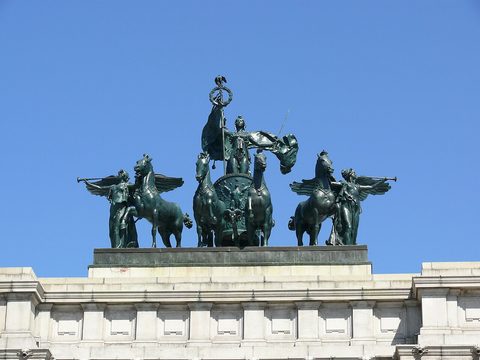
Two more stations sit at the neighborhood's northern end without being inside it. The 2 and 3 stop at Grand Army Plaza, at the plaza itself, which sits at the boundary of Park Slope, Prospect Heights and Crown Heights rather than in any one of them. Atlantic Avenue-Barclays Center, at Flatbush and Fourth Avenues with Atlantic Avenue and Pacific Street, serves Boerum Hill, Fort Greene, Park Slope and Prospect Heights as a regional hub.
Frequently asked questions
- How do I get to Park Slope?
- The F and G serve Seventh Avenue at Seventh Avenue and Ninth Street, Fourth Avenue at Ninth Street and Fourth Avenue, and 15th Street-Prospect Park at 15th Street near Prospect Park West. The R serves Union Street and Prospect Avenue on Fourth Avenue, and the B and Q serve Seventh Avenue on the Brighton Line at Park Place and Flatbush Avenue.
- Where did the name Park Slope come from?
- From the neighborhood's position on the western slope leading up to Prospect Park. Earlier colloquial names for the same ground included Prospect Heights, Prospect Hill and Park Hill Side before Park Slope became standard.
- How big is Prospect Park?
- 526 acres. It was designed by Frederick Law Olmsted and Calvert Vaux, opened on October 19, 1867 and was substantially complete by 1873. Prospect Park West runs along it and forms Park Slope's eastern edge.
- What is the Park Slope Historic District?
- An almost entirely residential district of nineteenth- and early-twentieth-century townhouses, designated by the Landmarks Preservation Commission on July 7, 1973 and listed on the National Register on November 21, 1980. Expansions in 2012 and 2016 brought it to about 2,575 buildings.
- Can visitors go inside the Montauk Club?
- No. It is a private social club with an active membership, so a visitor sees the exterior at 25 Eighth Avenue. The clubhouse was built between 1889 and 1891 by the architect Francis H. Kimball.
- Where can I stay in Park Slope?
- The research behind this page could not identify a hotel inside Park Slope, but it also could not confirm that none exists: the lodging-inventory sources it tried would not load. No hotel is listed here for that reason rather than as a claim that the neighborhood has none.
Connected pages
Nearby
-
Windsor Terrace, Brooklyn: Forty-Nine Pleasant Cottage Lots
· Windsor Terrace, New York
The 15th Street-Prospect Park station, at 15th Street near Prospect Park West, sits on ground Park Slope shares with Windsor Terrace.
-
Prospect Heights, Brooklyn: Museum, Garden, and Arena
· Prospect Heights, New York
Bergen Street sits on the border of Park Slope and Prospect Heights, and Seventh Avenue is placed by its source in both.
-
Gowanus, Brooklyn: A Canal, a Cleanup, a Power Station
· Gowanus, New York
The Fourth Avenue-Ninth Street station, at Fourth Avenue and Ninth Street, straddles both Park Slope and Gowanus.
Same region
-
Carroll Gardens, Brooklyn: Front Yards Written Into Law
· Carroll Gardens, New York
Union Street on the R, at Fourth Avenue and Union Street, serves Park Slope along with Gowanus and Carroll Gardens.
-
Greenwood, Brooklyn: The Cemetery That Named It
· Greenwood, New York
Prospect Avenue on the R sits at the convergence of Gowanus, Greenwood Heights, Park Slope and South Park Slope.
-
Boerum Hill, Brooklyn: A Name Coined in 1964
· Boerum Hill, New York
Atlantic Avenue-Barclays Center serves Boerum Hill, Fort Greene, Park Slope and Prospect Heights as a regional hub rather than sitting inside any one of them.
-
Fort Greene, Brooklyn: The Martyrs' Monument and BAM
· Fort Greene, New York
Atlantic Avenue-Barclays Center is a shared hub for Fort Greene and Park Slope, at Flatbush and Fourth Avenues with Atlantic Avenue and Pacific Street.
What travelers think
Log in to react.
No reviews yet.