
Gowanus, Brooklyn: A Canal, a Cleanup, a Power Station
Gowanus, New York
Pictures from Gowanus
See all 2 photos →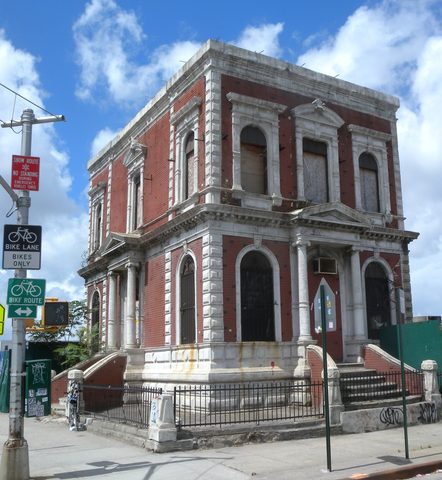
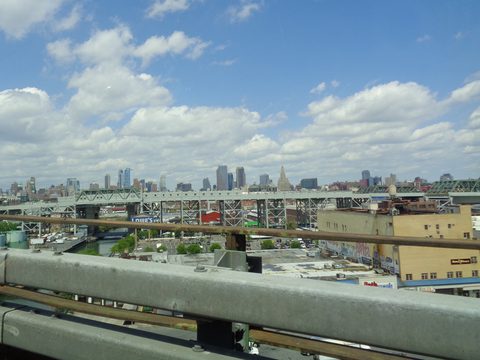
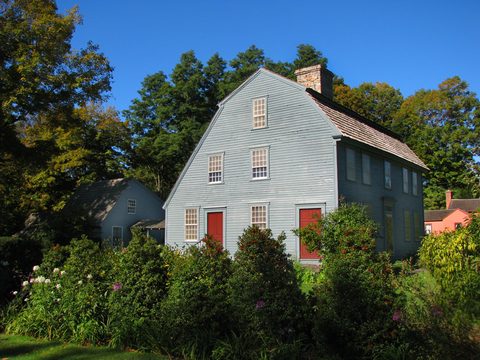
Gowanus and its canal are named for Gauwane, a Canarsee leader whose name meant the sleeper. In 1636 Gowanus Bay became the site of the first settlement by Dutch farmers in what is now Brooklyn, and in 1645 Adam Brouwer built and operated the first tide-water gristmill patented in New York, on land at Gowanus deeded to him that July. A state law of 1774 set out to widen the creek into a canal; an 1849 decree deepened it for commerce, dredging was completed in 1860, further deepening was authorised in 1867, and the work was essentially complete by 1869 under Major David Bates Douglass of the Army Corps of Engineers. At its peak the canal handled as many as 100 ships a day, with 22 coal plants along its banks, and an 1889 state commission called the waterway a disgrace to Brooklyn.
-
sight
A 1901-1904 subway power station that spent two decades empty as the Gowanus Batcave, reopened in May 2023 as a production centre for artists.
-
Opened in 1889, landmarked in 1987, shut in 2021 for canal repairs and back since June 2026 for people on foot and on bikes.
-
walk
A Scherzer rolling-lift bascule of 1905 that still lifts for the canal and still carries Union Street across it.
-
New York City's oldest remaining concrete building, empty and for sale, restored on the outside between 2014 and 2016.
-
food
A Third Avenue restaurant that carried a Michelin star from 2019 through 2023.
-
food
Bakery and restaurant at 285 Third Avenue, open and posting weekly hours in 2026.
-
food
The brewery's original Gowanus location on Douglass Street, with a Ninth Street Espresso counter inside.
-
food
A Butler Street venue with a standing weekly programme, dark on Mondays and Tuesdays.
-
food
Korean barbecue and karaoke on Douglass Street, with the staff grilling at the table. Closed Mondays and Tuesdays.
A working canal, then a Superfund site
The Butler Street Pumping Station and its flushing tunnel opened on June 21, 1911 to move water through a channel that had become notorious. It did not last. The Army Corps dredged for the last time in 1955; the flushing tunnel's intake fan broke and the tunnel closed in 1963; the Verrazzano-Narrows Bridge opened the following year and removed much of the remaining need for canal shipping. The canal sat derelict for close to three decades.
The federal cleanup is the defining fact of modern Gowanus. The EPA proposed Superfund listing in March 2009 and placed the canal on the National Priorities List on March 4, 2010. A $506 million cleanup plan was approved on September 27, 2013, work began in October 2017, and on June 27, 2024 the EPA amended its order to start a second phase under a $369 million contract.
The neighborhood around it is changing on a parallel schedule. In November 2021 the city rezoned Gowanus to permit roughly 8,500 new apartments, about 3,000 of them designated affordable. Earlier housing arrived by demolition: NYCHA announced clearance for the Gowanus Houses in 1944, the site was cleared by 1946, ground was broken in January 1948, and the sixteen towers, designed by William T. McCarthy, Rosario Candela and Ely Jacques Kahn, were finished by June 1949.
An area north of the canal was known as Little Caughnawaga, a Mohawk community that peaked at roughly 700 residents in the 1950s. Many of the men were ironworkers with Brooklyn Local 361, and the Doray Tavern on Nevins Street, known as the Wigwam, was a gathering place.
Two bridges and a power station
The Carroll Street Bridge over the canal opened in 1889 at a cost of $29,600, designed by chief engineer Robert Van Buren with George Ingram as engineer-in-charge. The Landmarks Preservation Commission designated it a city landmark in 1987. A 1971 city attempt to close it permanently was reversed within weeks after resident protests. It closed indefinitely in 2021 for cleanup-related repairs and reopened on June 15, 2026, restricted now to pedestrians, bicycles and emergency vehicles.
The Union Street Bridge is a double-leaf Scherzer rolling-lift bascule that opened on March 4, 1905 at a cost of $85,206.85. It still carries two lanes of Union Street traffic plus pedestrians and cyclists, toll-free, maintained by the city's Department of Transportation.
The building now called Powerhouse Arts went up between 1901 and 1904 as the Central Power Station of the Brooklyn Rapid Transit Company, feeding the subway's Fourth Avenue Line until it stopped operating in 1972. It stood empty for two decades and, from around 2001, was known as the Gowanus Batcave, an informal home for homeless and runaway youth. Philanthropist Joshua Rechnitz bought it for $7 million in 2012, and a $180 million renovation by Herzog & de Meuron opened it as Powerhouse Arts in May 2023.
Gowanus had an art scene well before that. In 1981 and 1982 the artist-organised Gowanus Memorial Artyard, founded by Michael Keene, Frank Shifreen and George Moore, staged shows at a former nineteenth-century munitions factory at 230 3rd Street. The Monumental Show opened on May 16, 1981 and drew over 4,000 visitors its first weekend, with 150 artists including Carl Andre and Keith Haring.
Getting there
Smith-Ninth Streets is located in Gowanus, at the intersection of Smith and Ninth Streets over the canal, and is served by the F and G.
Fourth Avenue-Ninth Street, at Fourth Avenue and Ninth Street, is served by the D, N, R and W. The R runs there at all times; D, N and W service is limited.
Frequently asked questions
- How do I get to Gowanus?
- Two stations serve the neighborhood. Smith-Ninth Streets, on the F and G, sits in Gowanus at Smith and Ninth Streets, directly over the canal. Fourth Avenue-Ninth Street, at Fourth Avenue and Ninth Street, is served by the D, N, R and W, with the R running at all times and D, N and W service limited.
- Where does the name Gowanus come from?
- From Gauwane, a Canarsee leader whose name meant the sleeper. His people farmed the shores of the tidal inlet that became Gowanus Creek, and both the creek and the neighborhood carry the name.
- Is the Gowanus Canal still being cleaned up?
- Yes. The EPA placed the canal on the National Priorities List on March 4, 2010, approved a $506 million cleanup plan on September 27, 2013, and began work in October 2017. On June 27, 2024 the agency amended its order to start a second phase under a $369 million contract.
- Can you walk across the Carroll Street Bridge?
- Yes. It reopened on June 15, 2026 after closing indefinitely in 2021 for cleanup-related repairs, and now carries pedestrians, bicycles and emergency vehicles only rather than general traffic.
- Where can I stay in Gowanus?
- No hotel is listed here, and lodging should be treated as unavailable inside Gowanus — the neighborhood's Wikipedia article, which covers the 2021 rezoning, names none. No hotel from a neighboring neighborhood is named in its place.
Connected pages
Nearby
-
Park Slope, Brooklyn: The Slope Up to Prospect Park
· Park Slope, New York
The Fourth Avenue-Ninth Street station, at Fourth Avenue and Ninth Street, straddles both Park Slope and Gowanus.
Shared history
-
Red Hook, Brooklyn: Basins, Barges, and No Subway
· Red Hook, New York
The legislature funded converting Gowanus Creek into a commercial canal in 1848, to link Erie Canal grain barges to Red Hook's Erie Basin.
Same region
-
Boerum Hill, Brooklyn: A Name Coined in 1964
· Boerum Hill, New York
The MTA voted in January 2014 to add three stops in Gowanus and Boerum Hill on the B103, effective that April.
-
Greenwood, Brooklyn: The Cemetery That Named It
· Greenwood, New York
The Prospect Avenue station sits at the convergence of the Gowanus, Greenwood Heights, Park Slope and South Park Slope neighborhoods.
-
Korean BBQ in Brooklyn: Gowanus, Downtown Brooklyn, Williamsburg and Surf Avenue
· Brooklyn Korean BBQ, New York
Insa, at 328 Douglass Street, is a Gowanus address.
-
Carroll Gardens, Brooklyn: Front Yards Written Into Law
· Carroll Gardens, New York
Smith-Ninth Streets, the F and G station over the Gowanus Canal, is in Gowanus rather than in Carroll Gardens.
-
Windsor Terrace, Brooklyn: Forty-Nine Pleasant Cottage Lots
· Windsor Terrace, New York
The B61 serves Windsor Terrace, Park Slope, Gowanus, Red Hook, Cobble Hill, Boerum Hill and Downtown Brooklyn.
What travelers think
Log in to react.
No reviews yet.