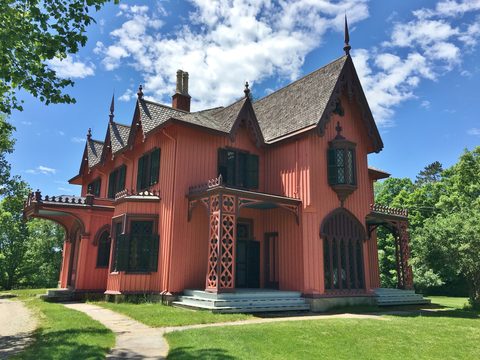

East Village, Manhattan: From Kleindeutschland to CBGB
East Village, New York
Pictures from East Village
See all 4 photos →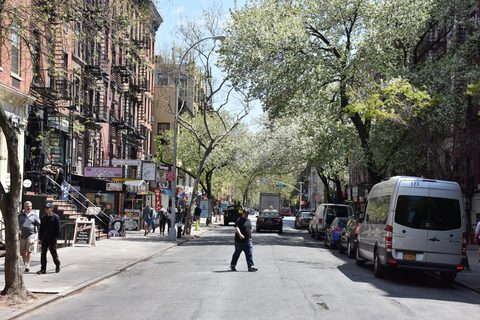
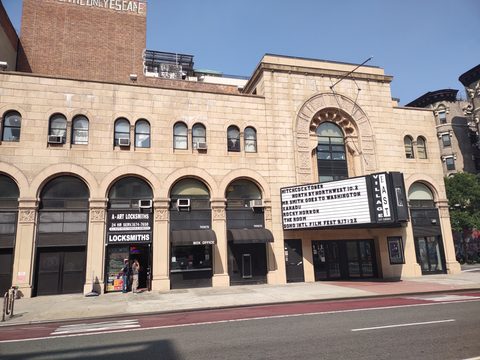
"East Village" is a 1950s-60s rebranding: the area was simply part of the Lower East Side until real-estate brokers and Greenwich Village transplants adopted the new name to shed the slum image, and the term stuck by the mid-1960s, with The East Village Other newspaper launching in 1966. Long before that, 17th-century Dutch settlers divided the area into farms called "boweries," and Director-General Peter Stuyvesant built a family chapel around 1660 on the site of today's St. Mark's Church in-the-Bowery, where he was interred after his death in 1672. Mid-1800s German immigration made the neighborhood "Kleindeutschland" — Little Germany — until the 1904 General Slocum steamboat disaster killed over 1,000 German-American residents and reshaped its demographics. From the 1950s on it became a counterculture capital: CBGB launched punk acts like Patti Smith and Talking Heads, and by the mid-1980s more than 100 art galleries operated in the neighborhood.
-
walk
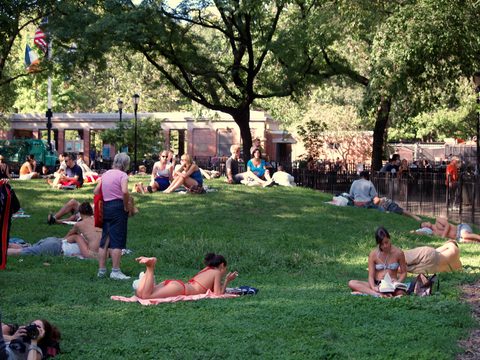
A 10.5-acre park at the neighborhood's heart, site of the 1988 riot and the Hare Krishna Tree.
-
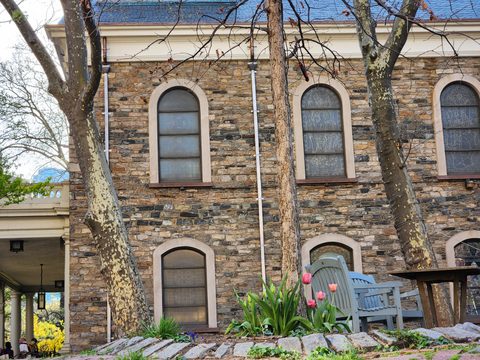
The city's oldest site of continuous religious practice, built on the site of Stuyvesant's own chapel.
-
Ellen Stewart's Off-Off-Broadway cornerstone, still producing experimental theater after six decades.
-
sight
A museum of Ukrainian art and culture in the heart of Little Ukraine.
-
food
A three-generation Ukrainian diner since 1954, famous for pierogi and borscht.
-
Italian pastries and espresso from an 1894 East 11th Street institution.
-
A cash-only, first-come saloon serving only its own light and dark ale.
-
A red-sauce Italian institution on East 12th Street since 1908.
-
stay
The verified in-neighborhood hotel, open since 2007 with Gemma restaurant on site.
Kleindeutschland to Counterculture
German immigration made the East Village the heart of Kleindeutschland by the mid-1800s, giving it the third-largest urban population of Germans outside Vienna and Berlin. That community was devastated on June 15, 1904, when the steamboat General Slocum caught fire and sank, killing more than a thousand German-American residents and hastening the neighborhood's demographic turnover toward Irish, Italian, Eastern European Jewish, Polish, and Ukrainian communities. From the 1950s onward, displaced Greenwich Village artists moved in and the neighborhood became a counterculture capital: CBGB launched punk acts like Patti Smith and Talking Heads, the Pyramid Club hosted drag performers from 1979, and over 100 art galleries operated here by the mid-1980s. Tompkins Square Park became a flashpoint of that era's tensions in August 1988, when a police attempt to clear the park of homeless people erupted into a riot that injured 38 people. And in November 1971, a Poetry Project reading at St. Mark's Church in-the-Bowery — completed in 1799 on the site of Stuyvesant's own chapel, and the city's oldest site of continuous religious practice — launched the rock and roll careers of Patti Smith and Lenny Kaye.
Getting there by subway
The 6 train serves Astor Place on the neighborhood's western edge, with peak-hour <6> express service and the 4 running late nights. The L train stops at First Avenue and Third Avenue along 14th Street — First Avenue's Avenue A entrances, rebuilt in 2019-2020, are the best way into the Alphabet City side of the neighborhood. Much of the deeper East Village is a 10-to-15-minute walk from any station.
Frequently asked questions
- How do I get to the East Village by subway?
- The 6 train stops at Astor Place on the western edge (with <6> peak express and 4 late nights), and the L train stops at First Avenue and Third Avenue along 14th Street — the First Avenue entrances on Avenue A are the best route into the neighborhood's eastern blocks.
- Why is the East Village called that if it was part of the Lower East Side?
- "East Village" is a 1950s-60s rebranding: the area was considered part of the Lower East Side until real-estate brokers and Greenwich Village transplants promoted the new name to shed the slum image. It had stuck by the mid-1960s, when The East Village Other newspaper launched in 1966.
- What happened at Tompkins Square Park in 1988?
- In August 1988, a police attempt to clear homeless encampments from the park erupted into a riot that injured 38 people, becoming a defining flashpoint in the neighborhood's gentrification battles.
- Is CBGB still open?
- No — the storied punk club at 315 Bowery, which launched acts like Patti Smith and Talking Heads, closed in 2006 and is discussed only in past tense in neighborhood histories.
- Where can I stay in the East Village?
- The Bowery Hotel, at 335 Bowery, is the one verified in-neighborhood hotel — it opened in February 2007 with the Italian restaurant Gemma providing room service.
Connected pages
Nearby
- Gramercy, Manhattan: The Private Park and Its Keys · Gramercy, New York
- Alphabet City, Manhattan: Loisaida's Community Gardens · Alphabet City, New York
- Union Square, Manhattan: Where Protest Meets Produce · Union Square, New York
- Lower East Side, Manhattan: Tenements, Reform, and Reinvention · Lower East Side, New York
- NoHo, Manhattan: Astor's Row, Reborn in Lofts · NoHo, New York
- Greenwich Village, Manhattan: Bohemia Since the 1910s · Greenwich Village, New York
Shared history
-
Lower East Side, Manhattan: Tenements, Reform, and Reinvention
· Lower East Side, New York
The area was simply part of the Lower East Side until brokers and Village transplants coined "East Village" in the 1950s-60s.
Same region
-
Union Square, Manhattan: Where Protest Meets Produce
· Union Square, New York
Another Manhattan neighborhood covered in this series.
See also
-
Alphabet City, Manhattan: Loisaida's Community Gardens
· Alphabet City, New York
The First Avenue L entrances on Avenue A are the best way into the Alphabet City side of this neighborhood.
-
NoHo, Manhattan: Astor's Row, Reborn in Lofts
· NoHo, New York
The Bowery Hotel at 335 Bowery is just across NoHo's eastern edge in the East Village.
-
Murray Hill, Manhattan: Tea, Timing, and a Private Library
· Murray Hill, New York
The 2nd Ave Deli listed here, serving NY since 1954, relocated from its original East Village home.
What travelers think
Log in to react.
No reviews yet.