Easton, Connecticut: Reservoirs, Farms and Two Famous Retirees
Easton, Connecticut
Pictures from Easton
See all 3 photos →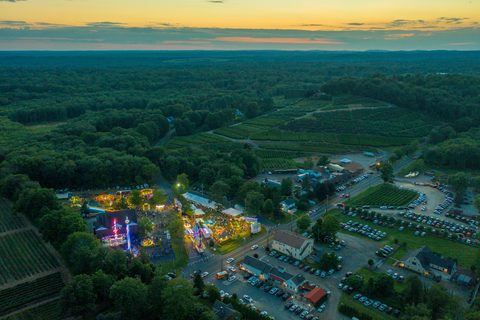
Easton was first settled in 1757 out of a congregation called the North Fairfield Society, established in 1762, but it was not until 1845 that the town separated from Weston to become its own place; hilly terrain along the Aspetuck River had made early development difficult, and Easton has stayed rural and residential ever since. Today the town covers about 28.6 square miles with a 2020 population of 7,605. Roughly half of Easton's land is owned by the Aquarion Water Company, and the town calls itself "a proud guardian of the region's drinking water supply," with four reservoirs, trout streams and more than twenty working farms. Muckraking journalist Ida Tarbell retired to a farm here in 1924, and Helen Keller died at her Easton home, Arcan Ridge, on June 1, 1968.
-
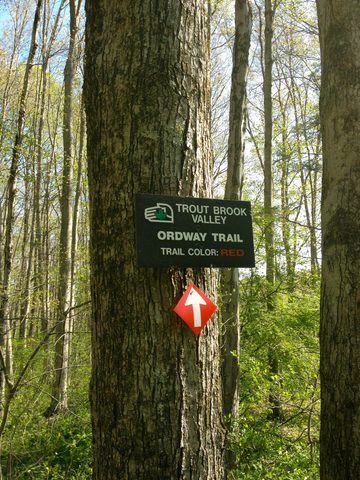
1,009 acres of trails straddling Easton and Weston.
-
sight
A town park with fishing and a little league field.
-
sight
Easton's oldest cemetery, with 1761 gravestones.
-
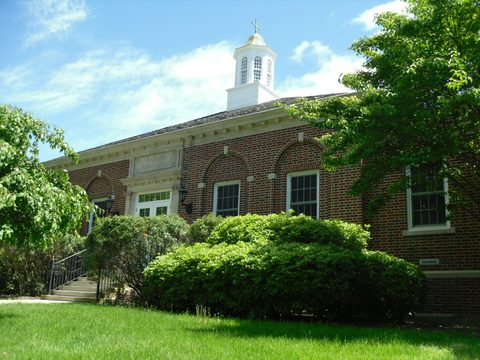
Easton's oldest public building, from 1795.
-
Breakfast and lunch since 1919.
-
A cafe and market since 1926.
Water, farms and two famous retirees
Ida Tarbell, author of the 1904 exposé "The History of the Standard Oil Company," used her royalties to buy the Easton farm she called "Twin Oaks" in 1906 and retired there in 1924; the house became a National Historic Landmark in 1993 but remains a private residence, viewable only from the road. Helen Keller spent her final decades at Arcan Ridge, also private property; the town's middle school carries her name. Union Cemetery, with gravestones dating to 1761, is Easton's oldest burial ground and, by local reputation, one of the most-visited "haunted" sites in the country. The New Academy on Westport Road, built in 1795, is Easton's oldest public building, next to an 1836 Congregational church.
Getting there
Easton has no train station and no interstate of its own. Route 58 (Black Rock Turnpike) runs 18.58 miles north from US Route 1 in Fairfield, through Easton, Redding and on to Bethel, crossing the Merritt Parkway along the way; Route 136 and Route 59 (over the Mill River) fill out the local grid. The nearest Metro-North New Haven Line stations are Fairfield-Black Rock, Fairfield, Southport and Bridgeport, all south of town; the nearest Danbury Branch station to the north is Redding. Amtrak Northeast Regional and Vermonter trains do stop at Bridgeport, so an intercity arrival there is possible, though Acela does not; neither Shore Line East nor the CTrail Hartford Line comes near Easton.
Frequently asked questions
- How do I get to Easton?
- By car only — Route 58 (Black Rock Turnpike) runs north from Fairfield through Easton toward Redding and Bethel. The nearest Metro-North stations are Fairfield, Southport and Bridgeport to the south.
- Is there a train to Easton?
- No station exists in Easton. The closest options are Fairfield-area New Haven Line stations to the south or Redding on the Danbury Branch to the north.
- What is Trout Brook Valley Preserve?
- A 1,009-acre Aspetuck Land Trust preserve straddling Easton and Weston, with nearly 14 miles of trails through meadows, woods and a working orchard. Trailhead parking is on Bradley, Black Rock, Freeborn and Wells Hill Roads.
- Is there a hotel in Easton?
- No hotel, inn or B&B operating in Easton could be verified. The nearest option is the Delamar Southport, south of Easton center via Route 58 and US 1.
Foliage
Turning this week · estimated peak Oct 28–Nov 3
On the Scenic Fairfield foliage driving route.
Derived from the Connecticut DEEP fall foliage map. DEEP's map is a climatological estimate last published in 2023; it describes a normal year, not this one. Stage names are ours. See the statewide forecast.
Connected pages
Nearby
-
Newtown, Connecticut: Scrabble, a Flagpole and a Cultural District
· Newtown, Connecticut
The two towns share a border
-
Trumbull, Connecticut: A Vanished Amusement Park and a Tungsten Mine
· Trumbull, Connecticut
The two towns share a border
-
Weston, Connecticut: Where a Meteorite Founded a Science
· Weston, Connecticut
The two towns share a border
-
Monroe, Connecticut: Ghost Hunters and a Dam-Made Lake
· Monroe, Connecticut
The two towns share a border
-
Redding, Connecticut: Connecticut's Valley Forge and Mark Twain's Library
· Redding, Connecticut
Route 58 runs north from Easton through Redding to Bethel.
-
Fairfield, Connecticut: Burned in 1779, Rebuilt on the Green
· Fairfield, Connecticut
Route 58 begins at US Route 1 in Fairfield and runs north through Easton.
Shared history
-
Weston, Connecticut: Where a Meteorite Founded a Science
· Weston, Connecticut
Easton separated from Weston in 1845 to become its own town.
Same region
-
Fairfield, Connecticut: Burned in 1779, Rebuilt on the Green
· Fairfield, Connecticut
Both on the Scenic Fairfield foliage route
-
Westport, Connecticut: From Onion Fields to an Arts Colony
· Westport, Connecticut
Both on the Scenic Fairfield foliage route
-
Bethel, Connecticut: Barnum's Birthplace and a Vodka First
· Bethel, Connecticut
Both on the Scenic Fairfield foliage route
-
Redding, Connecticut: Connecticut's Valley Forge and Mark Twain's Library
· Redding, Connecticut
Both on the Scenic Fairfield foliage route
What travelers think
Log in to react.
No reviews yet.