Redding, Connecticut: Connecticut's Valley Forge and Mark Twain's Library
Redding, Connecticut
Pictures from Redding
See all 3 photos →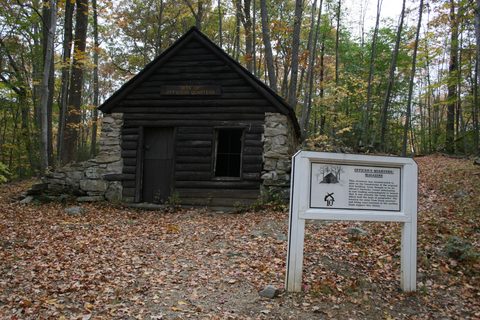
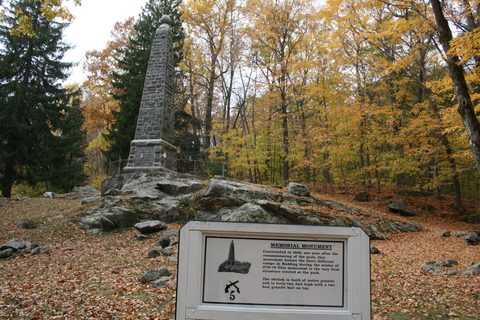
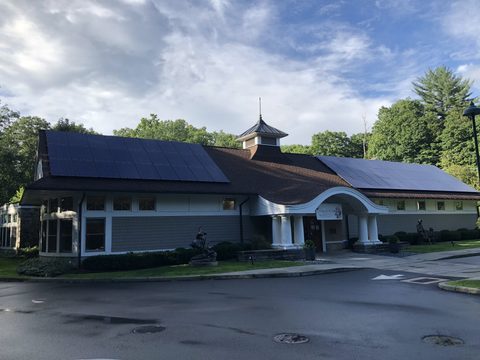
Redding was incorporated in 1767, separated from Fairfield; its name comes from John Read, an early landholder, and the town was originally spelled "Reading" until the U.S. Postal Service formalized "Redding" in 1844. During the winter of 1778-79, General Israel Putnam and three Continental Army brigades — about 3,000 soldiers — held a strategic winter encampment here guarding the Hudson Valley and Long Island Sound, a site still known as "Connecticut's Valley Forge." Redding's early economy rested on quarrying and, in the Georgetown section, wire-screen manufacturing at the Gilbert & Bennett mill, founded in 1834. Mark Twain moved to Redding in 1908, built his last home, and shortly after founded the Mark Twain Library Association. The Umpawaug Schoolhouse, built around 1789, is the town's only surviving one-room brick schoolhouse.
-
1,017 acres of trails and Huntington bronzes, based in Redding.
-
"Connecticut's Valley Forge" encampment site.
-
sight
Founded by Samuel Clemens in 1908.
-
Redding's only surviving one-room brick schoolhouse.
-
Smokehouse barbecue in the old wire-mill district.
-
A market/cafe and dinner saloon in one.
-
Small-batch coffee roasted in Georgetown.
Connecticut's Valley Forge
The Redding encampment ground is preserved as Putnam Memorial State Park, Connecticut's first State Archaeological Preserve and a National Register site, with reconstructed log buildings, a museum of excavated tools, buttons and ammunition, and a 44-foot granite monument built in 1888. Gilbert & Bennett, founded in 1834 in Georgetown, made wire mesh that supplied both World Wars before the mill site later became an EPA Superfund cleanup. Collis P. Huntington State Park, 1,017 acres with about ten miles of trails guarded by Anna Hyatt Huntington's bronze bears and wolves, is based in Redding and reaches into the neighboring corners of Bethel and Newtown.
Getting there
Redding is a back-roads town: US Route 7 runs along its western edge, Route 107 connects Georgetown to Redding Center, and Route 53, a designated state scenic road for a stretch starting at the Weston town line, runs north to I-84 in Danbury. Redding is one of the few small Connecticut towns with its own commuter rail stop — the Metro-North Danbury Branch station at 3 Long Ridge Road, opened in 1852 as an original Danbury and Norwalk Railroad station. Some weekday trains run through to Stamford and Grand Central, while others require a change at South Norwalk; there is no fixed-route local bus service in Redding.
Frequently asked questions
- How do I get to Redding?
- By car on US Route 7, Route 107 or Route 53. Redding also has its own Metro-North Danbury Branch station at 3 Long Ridge Road — some weekday trains run through to Stamford and Grand Central, others require a change at South Norwalk.
- What is Putnam Memorial State Park?
- The site of the Continental Army's 1778-79 winter encampment under General Israel Putnam, known as "Connecticut's Valley Forge." Park open daily 8 a.m.-sunset; museum/visitor center open Memorial Day-Veterans Day, Friday-Monday, 10 a.m.-5 p.m.
- Is Collis P. Huntington State Park in Redding?
- Yes — Redding is its base, though the 1,017-acre park's grounds also reach into neighboring Bethel and Newtown. About ten miles of trails, five ponds and bronze bear and wolf sculptures by Anna Hyatt Huntington at the entrance. Open daily 8 a.m. to sunset, free admission, leashed pets allowed.
- Is there a hotel in Redding?
- No hotel, inn or B&B could be verified in Redding. The nearest option is a Days Inn on the Route 7 corridor in neighboring Ridgefield.
Foliage
Turning this week · estimated peak Oct 28–Nov 3
On the Scenic Fairfield foliage driving route.
Derived from the Connecticut DEEP fall foliage map. DEEP's map is a climatological estimate last published in 2023; it describes a normal year, not this one. Stage names are ours. See the statewide forecast.
Connected pages
Nearby
-
Bethel, Connecticut: Barnum's Birthplace and a Vodka First
· Bethel, Connecticut
Redding borders Bethel; Putnam Memorial State Park sits just over the line from Bethel.
-
Easton, Connecticut: Reservoirs, Farms and Two Famous Retirees
· Easton, Connecticut
Route 58 runs north from Easton through Redding to Bethel.
-
Wilton, Connecticut: An Impressionist's Farm on Two Rail Stops
· Wilton, Connecticut
The village of Georgetown straddles Redding and Wilton.
-
Weston, Connecticut: Where a Meteorite Founded a Science
· Weston, Connecticut
Route 53's designated scenic stretch in Redding begins at the Weston town line.
-
Newtown, Connecticut: Scrabble, a Flagpole and a Cultural District
· Newtown, Connecticut
Collis P. Huntington State Park spans Redding, Bethel and Newtown.
-
Ridgefield, Connecticut: Connecticut's Only Inland Battle
· Ridgefield, Connecticut
The two towns share a border
-
Danbury, Connecticut: Hat City History, Rail Heritage, and Where to Eat
· Danbury, Connecticut
The two towns share a border
Same region
-
Fairfield, Connecticut: Burned in 1779, Rebuilt on the Green
· Fairfield, Connecticut
Both on the Scenic Fairfield foliage route
-
Easton, Connecticut: Reservoirs, Farms and Two Famous Retirees
· Easton, Connecticut
Both on the Scenic Fairfield foliage route
-
Newtown, Connecticut: Scrabble, a Flagpole and a Cultural District
· Newtown, Connecticut
Both on the Scenic Fairfield foliage route
-
Bethel, Connecticut: Barnum's Birthplace and a Vodka First
· Bethel, Connecticut
Both on the Scenic Fairfield foliage route
What travelers think
Log in to react.
No reviews yet.