Essex, Connecticut: Shipyards, a British Raid, and Ivory Row
Essex, Connecticut
Pictures from Essex
See all 3 photos →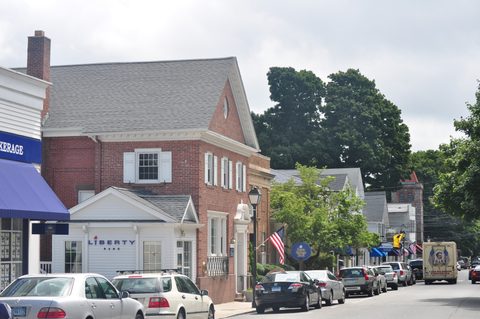
Essex began as the Potapaug Quarter of Saybrook, separating into its own town in 1852 and taking the name Essex in 1854; the villages of Ivoryton and Centerbrook joined it in 1859, and Essex served as Saybrook's main port until 1871. Its shipyards built the Oliver Cromwell, Connecticut's first warship of the Revolutionary era, and in April 1814 British forces rowed six miles up the Connecticut River to the village then called Pettipaug and burned twenty-eight ships in the harbor. Essex's economy later turned to ivory: Ivoryton's Comstock, Cheney & Company and Deep River's Pratt, Read & Company processed up to ninety percent of the ivory imported into the United States, chiefly for piano keys, merging in 1936 and consolidating production in Ivoryton. The Ivoryton Playhouse, built in 1911 as a recreation hall for ivory-works employees, opened as a theater in 1930, with Katharine Hepburn among its early performers.
-
sight
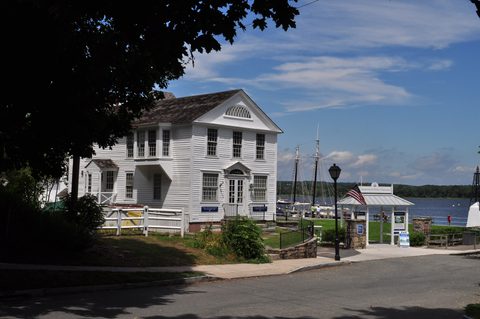
A Turtle submarine replica and exhibits on the 1814 British Raid at Steamboat Dock.
-
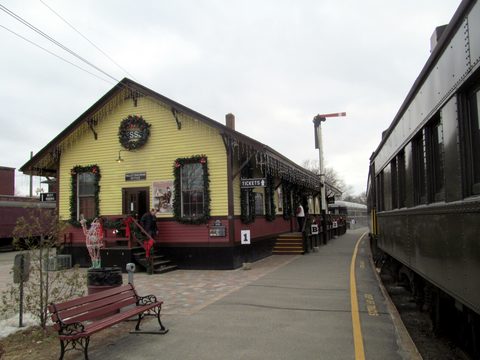
Vintage steam train and riverboat excursions since 1971.
-
sight
A 274-seat theater in a former ivory-company recreation hall.
-
Walking tours and exhibits on Essex, Centerbrook, and Ivoryton.
-
Nautical-themed pub fare and seafood on Main Street.
-
Tavern fare and live music at the 1776 Griswold Inn.
-
food
An American tavern with a fire-pit courtyard and live music.
-
stay
Historic 1776 inn with 34 rooms across a campus of buildings.
-
stay
An 18-room country inn in Ivoryton with an award-winning restaurant.
From Potapaug to ivory row
Essex began as the Potapaug Quarter of Saybrook, separating into its own town in 1852 and taking the name Essex in 1854; the villages of Ivoryton and Centerbrook joined it in 1859, and Essex served as Saybrook's main port until 1871. Its shipyards built the Oliver Cromwell, Connecticut's first warship of the Revolutionary era. In April 1814, during the War of 1812, British forces rowed six miles up the Connecticut River to the village then called Pettipaug and burned twenty-eight ships in the harbor. Essex's economy later turned to ivory: Ivoryton's Comstock, Cheney & Company and neighboring Pratt, Read & Company of Deep River processed up to ninety percent of the ivory imported into the United States at their peak, chiefly for piano keys, merging in 1936 and consolidating production in Ivoryton. The Ivoryton Playhouse building was constructed in 1911 as a recreation hall for Comstock & Cheney employees and opened as a theater on June 17, 1930, with Katharine Hepburn among its early performers.
Getting there
Essex is a driving destination reached from Route 9 Exit 3 — via I-95 Exit 69 (Route 9 North) from the shoreline or I-91 Exit 22S (Route 9 South) from Hartford. There is no passenger rail station in Essex itself; the nearest Shore Line East commuter stops are Old Saybrook (Boston Post Road) and Westbrook (Norris Ave).
Three villages: Essex, Ivoryton, and Centerbrook
The Connecticut River Museum at Steamboat Dock covers the river's 410-mile course with a replica of the Turtle, the world's first combat submarine, and exhibits on the 1814 British Raid; it also runs seasonal river cruises May through October. The Essex Steam Train & Riverboat, run by the Valley Railroad Company since 1971, offers vintage excursions including dinner trains and a holiday North Pole Express. In Ivoryton, the 274-seat Ivoryton Playhouse produces seven shows a year, and the Copper Beech Inn offers about 18 rooms across three historic buildings with an award-winning restaurant. Back in Essex village, the Griswold Inn — open since 1776 and among the oldest continuously operating inns in the country — serves tavern fare and live music in its Tap Room alongside 34 guest rooms; Black Seal Seafood Grille and Scotch Plains Tavern round out the dining options.
Frequently asked questions
- How do I get to Essex?
- Drivers use Route 9 Exit 3, reached via I-95 Exit 69 (Route 9 North) from the shoreline or I-91 Exit 22S (Route 9 South) from Hartford. Essex has no rail station; the nearest Shore Line East stops are Old Saybrook and Westbrook.
- What is the Connecticut River Museum?
- A waterfront museum at Steamboat Dock covering the river's 410-mile course, with a replica of the Turtle submarine and exhibits on the 1814 British Raid. Open Tuesday-Sunday, 10 a.m.-5 p.m.; seasonal river cruises run May through October.
- What is the Essex Steam Train & Riverboat?
- Vintage steam train and riverboat excursions run by the Valley Railroad Company, serving the lower Connecticut River Valley since 1971, with dinner trains and a North Pole Express during the holidays.
- What is the Ivoryton Playhouse?
- A 274-seat professional theater in the village of Ivoryton, producing seven shows a year. Built in 1911 as an ivory-company recreation hall, it hosted Katharine Hepburn, Marlon Brando, and Mae West in its summer-stock heyday.
- Where can I stay in Essex?
- The Griswold Inn on Main Street, open since 1776 with 34 rooms, and the Copper Beech Inn in Ivoryton, with about 18 rooms and an award-winning restaurant, are both verified in-town options.
Foliage
Still green this week · estimated peak Oct 28–Nov 3
On the Connecticut River Gateway foliage driving route.
Derived from the Connecticut DEEP fall foliage map. DEEP's map is a climatological estimate last published in 2023; it describes a normal year, not this one. Stage names are ours. See the statewide forecast.
Connected pages
Nearby
- Old Saybrook, Connecticut: The Colony at the River's Mouth · Old Saybrook, Connecticut
-
Lyme, Connecticut: A River Town That Split in Two
· Lyme, Connecticut
The two towns share a border
-
Westbrook, Connecticut: Birthplace of the Submarine
· Westbrook, Connecticut
The two towns share a border
-
Deep River, Connecticut: Ivory, Combs and a Steam Train Landing
· Deep River, Connecticut
Deep River shares a border with Essex; the nearest verified lodging to Deep River is in Essex, about four miles away.
Same region
-
Chester, Connecticut: A Mill Village on the River
· Chester, Connecticut
Both on the Connecticut River Gateway foliage route
-
Deep River, Connecticut: Ivory, Combs and a Steam Train Landing
· Deep River, Connecticut
Both on the Connecticut River Gateway foliage route
-
Old Lyme, Connecticut: Where American Impressionism Boarded
· Old Lyme, Connecticut
Both on the Connecticut River Gateway foliage route
-
Old Saybrook, Connecticut: The Colony at the River's Mouth
· Old Saybrook, Connecticut
Both on the Connecticut River Gateway foliage route
What travelers think
Log in to react.
No reviews yet.