Chester, Connecticut: A Mill Village on the River
Chester, Connecticut
Pictures from Chester
See all 3 photos →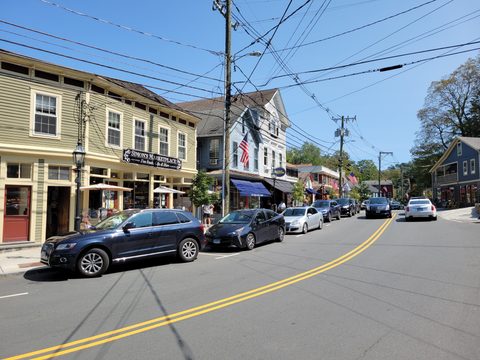
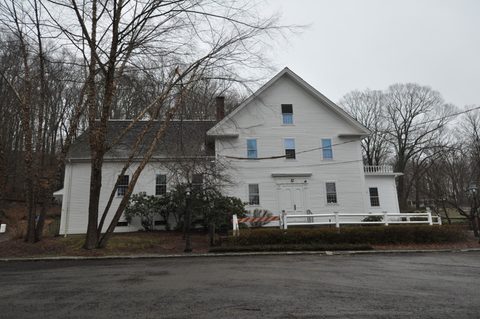
Chester was settled in 1692 on land of the Wangunks, formed from the northern quarter of Saybrook, and incorporated as its own town in 1836. Originally called Pattaconk, a term the town describes as referring to a wigwam-shaped hill, it was renamed for Chester, England; Jonah Dibble was its first English settler, arriving in 1692. The Chester-Hadlyme Ferry across the Connecticut River began operating in 1769 under Jonathan Warner and became the second-oldest continuously operating ferry service in Connecticut. Chester's economy grew on water power: forges operated here from 1790 to 1818, and later mills included the Russell Jennings Company's carpenter tools and the Middlesex Handle Company and Rogers Brush Shop, both powered by West Stream. Two nationally significant figures later made Chester home — civil rights lawyer and judge Constance Baker Motley and conceptual artist Sol LeWitt — while the Chester Library, established in 1875, moved into its present building in 1907.
-
sight
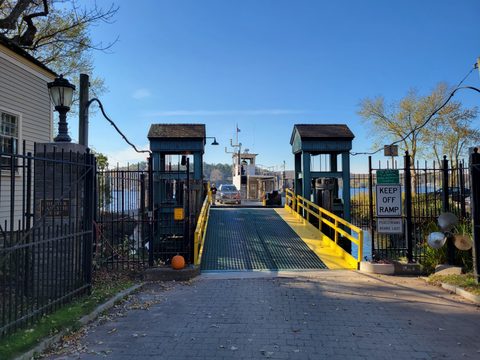
Connecticut's second-oldest continuously operating ferry, crossing near Gillette Castle.
-
Local history exhibits in a historic 19th-century mill building.
-
sight
Goodspeed Musicals' second stage for developing new work.
-
sight
Connecticut's second-largest state forest, with 100+ miles of trails.
-
food
Italian scratch kitchen with house-milled pasta.
-
Downtown taproom in an 1836 building.
-
food
A village breakfast-and-lunch counter with a gift shop.
Pattaconk to Chester
Chester was settled in 1692 on land of the Wangunks, formed from the northern quarter of Saybrook, and incorporated as its own town in 1836. The area was originally called Pattaconk, a term the town describes as referring to a wigwam-shaped hill, before being renamed for Chester, England; Jonah Dibble was its first English settler, arriving in 1692. The Chester-Hadlyme Ferry across the Connecticut River began operating in 1769 under Jonathan Warner and became the second-oldest continuously operating ferry service in Connecticut. Chester's economy grew on water power — forges operated here from 1790 to 1818, and later mills included the Russell Jennings Company's carpenter tools and the Middlesex Handle Company and Rogers Brush Shop, both powered by West Stream. Two nationally significant figures later made Chester home: civil rights lawyer and judge Constance Baker Motley (1921-2005) and conceptual artist Sol LeWitt (1928-2007).
Getting there
Chester is a drive-to town on Route 9 in the lower Connecticut River Valley, with local access via Routes 148 and 154 and the seasonal Route 148 Chester-Hadlyme Ferry crossing. There is no rail station in Chester itself: River Valley Transit (formerly 9 Town Transit / Estuary Transit District) Route 642 connects the village with the Old Saybrook train station, served by Amtrak and Shore Line East. Neither the CTrail Hartford Line nor Metro-North reaches the lower Connecticut River valley.
A village of mills, a museum, and a ferry
Chester Museum at The Mill, run by the Chester Historical Society, occupies a historic 19th-century mill site on a mill dam near the town center, with free weekend admission June through October. The Terris Theatre is Goodspeed Musicals' second stage, used to develop new musicals alongside the company's East Haddam main stage. Just outside the village, Cockaponset State Forest — at over 17,000 acres, Connecticut's second-largest — offers more than 100 miles of hiking trails and swimming at Pattaconk Lake. Downtown, Grano Arso mills its own grains for pasta and bread, Little House Brewing Company pours in an 1836 building, and Simon's Marketplace anchors the breakfast-and-lunch counter. No hotel, inn, or B&B in Chester itself could be verified as operating in 2026; the nearest option is the Griswold Inn in Essex.
Frequently asked questions
- How do I get to Chester?
- Chester is reached by Route 9, with local access via Routes 148 and 154. There is no rail station in town; River Valley Transit Route 642 connects Chester to the Old Saybrook train station (Amtrak and Shore Line East).
- What is the Chester-Hadlyme Ferry?
- Connecticut's second-oldest continuously operating ferry, running since 1769. The vessel Selden III carries 8-9 cars across the Connecticut River near Gillette Castle State Park. Seasonal operation April 1-November 30; $4-$5 per vehicle.
- What is The Terris Theatre?
- Goodspeed Musicals' second stage in Chester, at 33 N Main Street, used for developing new musicals alongside the company's East Haddam main stage.
- What is Cockaponset State Forest?
- At over 17,000 acres across Chester, Haddam, and nine other towns, it's Connecticut's second-largest state forest, with more than 100 miles of hiking trails and swimming and kayaking at Pattaconk Lake.
- Where can I stay in Chester?
- No hotel, inn, or B&B physically in Chester could be verified as operating in 2026. The nearest option is the Griswold Inn in Essex (established 1776, 34 rooms).
- What is Chester Museum at The Mill?
- The Chester Historical Society's museum, housed in a historic 19th-century mill building on a mill dam near the town center. Open free of charge on weekends, June through October, or by appointment.
Foliage
Turning this week · estimated peak Oct 28–Nov 3
On the Connecticut River Gateway foliage driving route.
Derived from the Connecticut DEEP fall foliage map. DEEP's map is a climatological estimate last published in 2023; it describes a normal year, not this one. Stage names are ours. See the statewide forecast.
Connected pages
Nearby
-
Lyme, Connecticut: A River Town That Split in Two
· Lyme, Connecticut
The two towns share a border
-
Killingworth, Connecticut: A Farmer's Folk-Art Automata
· Killingworth, Connecticut
The two towns share a border
-
East Haddam, Connecticut: A Castle, an Opera House, and a Schoolhouse
· East Haddam, Connecticut
The seasonal Chester-Hadlyme Ferry (Route 148) crosses the Connecticut River between the two villages, near Gillette Castle State Park.
-
Deep River, Connecticut: Ivory, Combs and a Steam Train Landing
· Deep River, Connecticut
Deep River shares a border with Chester along the Route 9 corridor.
-
Haddam, Connecticut: The Town the River Splits in Two
· Haddam, Connecticut
Route 9 runs sequentially from Essex through Deep River, Chester and Haddam to Middletown, with Chester directly south of Haddam.
Shared history
-
East Haddam, Connecticut: A Castle, an Opera House, and a Schoolhouse
· East Haddam, Connecticut
Goodspeed Musicals, based at the 1876 Goodspeed Opera House in East Haddam, develops new musicals at Chester's Terris Theatre.
Same region
-
Haddam, Connecticut: The Town the River Splits in Two
· Haddam, Connecticut
Both on the Connecticut River Gateway foliage route
-
Middletown, Connecticut: A River Port Turned College City
· Middletown, Connecticut
Both are Connecticut River valley towns on Route 9, connected via the river corridor.
-
Deep River, Connecticut: Ivory, Combs and a Steam Train Landing
· Deep River, Connecticut
Both on the Connecticut River Gateway foliage route
-
Essex, Connecticut: Shipyards, a British Raid, and Ivory Row
· Essex, Connecticut
Both on the Connecticut River Gateway foliage route
What travelers think
Log in to react.
No reviews yet.