Westbrook, Connecticut: Birthplace of the Submarine
Westbrook, Connecticut
Pictures from Westbrook
See all 3 photos →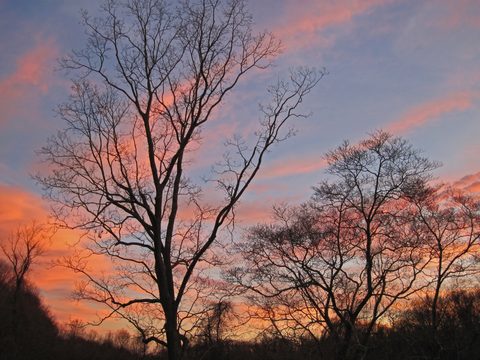
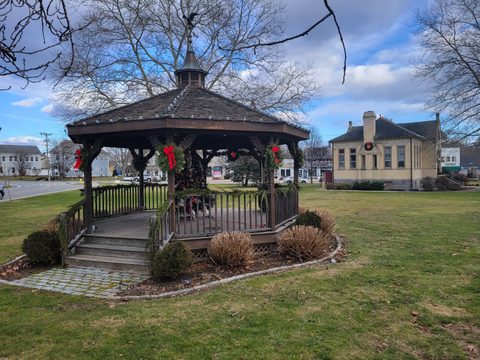
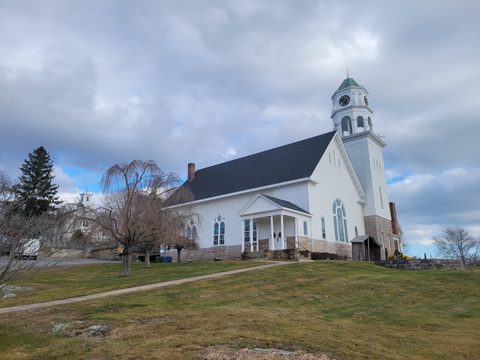
Westbrook was first settled about 1648 as the Oyster River Quarter of Old Saybrook, gaining independence in 1724 when a petition set it aside as West Parish with its own church. Before 1810 the community was known as Pochoug, an Indian word the town translates as "at the confluence of two rivers"; it was renamed Westbrook that year and incorporated as its own town in 1840. Timber from local white oak and chestnut forests sustained a shipbuilding industry that flourished for nearly a century. David Bushnell, inventor of the Turtle submarine, was born in 1740 in what is now Westbrook; he launched it in fall 1776, and Ezra Lee piloted it against a British warship in New York Harbor that year. By the 1870s Westbrook was a popular summer resort, a character it still retains, and it hosted Eleanor Roosevelt at Esther Lape's estate, whose 1972 gift created Connecticut's first national wildlife refuge.
-
The founding core of Connecticut's first national wildlife refuge.
-
sight
A 1680–1720 house standing as a memorial to submarine inventor David Bushnell.
-
The town's history museum, open Wednesday mornings.
-
sight
A free fife-and-drum muster by the 1910 Westbrook Drum Corps.
-
sight
The town-run shoreline beach, open to non-residents by pass.
-
sight
Established 1895, on Goodspeed Drive since 2008.
-
food
Family-owned seafood shack beside the Singing Bridge since 1978.
-
food
A contemporary French bistro and lounge.
-
Mediterranean small plates on Boston Post Road.
-
An 1872 sea captain's house, an inn since 1902.
-
An 1876 house run as a ten-room inn.
The submarine's birthplace
David Bushnell enrolled at Yale in 1771 at age 31 and launched the Turtle, his hand-cranked wooden submarine, in the fall of 1776; Ezra Lee piloted it against HMS Eagle in New York Harbor that same year, and Thomas Jefferson's 1798 account helped establish Bushnell as "the Father of Submarine Warfare." The Bushnell House on Boston Post Road, built between 1680 and 1720, stands as a memorial to him — though he never lived there himself, having lived about a mile away on the road to Essex. Esther Everett Lape donated 150 acres in Westbrook in 1972 to establish Salt Meadow National Wildlife Refuge, Connecticut's first; Congress renamed it for Congressman Stewart B. McKinney in 1987, and it now spans ten units over 70 miles of Connecticut coastline. Eleanor Roosevelt was a frequent guest at Lape's estate, the site of which is now the refuge.
Getting there
Most visitors drive: Westbrook sits on the I-95 shoreline corridor with U.S. Route 1 (Boston Post Road) running through the center of town, and Route 9 also reaches Town Hall. Westbrook is also one of the rare small shoreline towns with its own rail stop — a CTrail Shore Line East station at 101 Norris Avenue, with free daily commuter parking seven days a week and a pedestrian bridge between its two tracks. No Amtrak or Metro-North train stops in Westbrook itself; the nearest Amtrak stop is Old Saybrook, about five miles east, and the nearest Shore Line East stops either side are Clinton and Old Saybrook.
The shoreline town today
The town-run beach is open to non-residents by pass — a $40 daily parking pass at the gate or a $150 seasonal pass from the First Selectman's Office, cash or check only; residents enter free with ID. The Westbrook Drum Corps, established in 1910, holds its Ancient fife-and-drum Muster free and open to the public on the fourth weekend of August at Ted Lane Field, drawing 40-plus invited corps.
Frequently asked questions
- How do I get to Westbrook?
- By car via I-95 or Route 1 (Boston Post Road), or by train — Westbrook has its own CTrail Shore Line East station at 101 Norris Avenue, with free daily commuter parking. No Amtrak or Metro-North serve Westbrook directly; the nearest Amtrak stop is Old Saybrook, about five miles east.
- Who was David Bushnell?
- Born in Westbrook (then part of Saybrook) in 1740, Bushnell invented the Turtle, the world's first submarine, launching it in 1776; Ezra Lee piloted it against a British warship in New York Harbor that year. The Bushnell House on Boston Post Road, an antique house museum, stands as a memorial to him.
- What is the Stewart B. McKinney National Wildlife Refuge?
- Connecticut's first national wildlife refuge, created from a 150-acre 1972 gift by Esther Everett Lape in Westbrook. Renamed for Congressman Stewart B. McKinney in 1987, it now spans ten units over 70 miles of coastline, with headquarters and the 1.72-mile Salt Meadow Trail still in Westbrook.
- Is there a parking pass required at Westbrook's beach?
- Yes for non-residents — a $40 daily pass purchased at the gate, or a $150 seasonal pass from the First Selectman's Office (cash or check only). Residents enter free with ID.
- Is there a hotel in Westbrook?
- Yes — the Captain Stannard House and Westbrook Inn are both verified bed-and-breakfasts in 19th-century houses on Boston Post Road. A larger resort, Water's Edge Resort & Spa, is also listed on Long Island Sound, though its current 2026 operating details could not be independently confirmed — call ahead.
Foliage
Still green this week · estimated peak Nov 4–10
Derived from the Connecticut DEEP fall foliage map. DEEP's map is a climatological estimate last published in 2023; it describes a normal year, not this one. Stage names are ours. See the statewide forecast.
Connected pages
Nearby
-
Clinton, Connecticut: Brownstoners, Witch Hazel, and a Harbor
· Clinton, Connecticut
Westbrook sits on the shoreline between Clinton and Old Saybrook, bordering both.
-
Old Saybrook, Connecticut: The Colony at the River's Mouth
· Old Saybrook, Connecticut
Westbrook sits on the shoreline between Clinton and Old Saybrook, bordering both.
-
Killingworth, Connecticut: A Farmer's Folk-Art Automata
· Killingworth, Connecticut
The two towns share a border
-
Essex, Connecticut: Shipyards, a British Raid, and Ivory Row
· Essex, Connecticut
The two towns share a border
-
Deep River, Connecticut: Ivory, Combs and a Steam Train Landing
· Deep River, Connecticut
The two towns share a border
Shared history
-
Old Saybrook, Connecticut: The Colony at the River's Mouth
· Old Saybrook, Connecticut
Westbrook was first settled as the Oyster River Quarter of the town of Old Saybrook, and the two still share a border on the shoreline.
What travelers think
Log in to react.
No reviews yet.