Hampton, Connecticut: A Naturalist's Farm in the Quiet Corner
Hampton, Connecticut
Pictures from Hampton
See all 3 photos →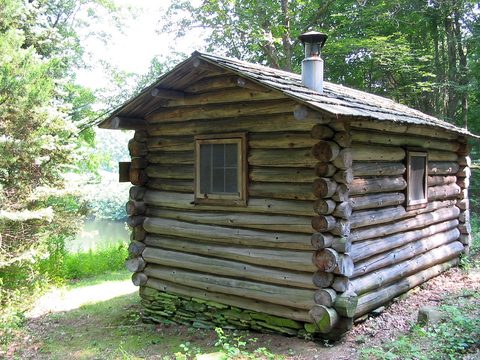
Hampton was incorporated in 1786 from portions of five surrounding towns — Pomfret, Brooklyn, Canterbury, Mansfield and Windham — having been settled in the early 18th century as an agricultural community originally called "Windham Village." European settlement began about 1712, largely by families from the Massachusetts Bay Colony, in territory that lay within the Nipmuck people's homeland. Hampton was an early mill town, with mills along the Little River as early as 1718 making cider, shingles and cotton. In 1872, a railroad station built through the efforts of former Governor Chauncey Cleveland let farmers ship perishables to distant markets, and the town eventually grew into a summer colony. Pulitzer Prize-winning naturalist Edwin Way Teale and his wife Nellie moved to their Hampton farm, Trail Wood, in 1959; Teale wrote ten of his 27 books there before his death in 1980, and Nellie donated the property to the Connecticut Audubon Society in 1981.
-
The naturalist's former farm, now a 168-acre Audubon sanctuary.
-
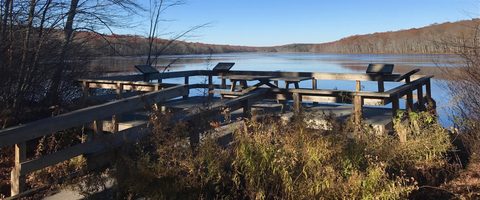
2,000-plus acres centered on Pine Acres Lake.
-
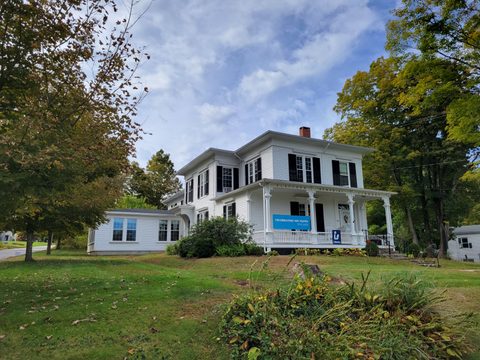
An Italian Victorian building serving as Hampton's library since 1924.
-
62 contributing buildings along a tree-lined stretch of Route 97.
-
food
Farm winery tasting room with visiting food trucks.
-
stay
Self-catering vacation rental near Pine Acres Lake.
A summer colony and a naturalist's farm
Hampton was incorporated in 1786 from portions of five surrounding towns — Pomfret, Brooklyn, Canterbury, Mansfield and Windham — settled from about 1712 mostly by families from the Massachusetts Bay Colony. Mills operated along the Little River as early as 1718, and the town later supported a tannery and factories making pins, buttons, rakes, spectacles, hats and silver spoons. In 1872, a railroad station built through the efforts of former Governor Chauncey Cleveland — who had practiced law in Hampton since 1819 and served as the state's 31st governor — let farmers ship perishables to distant markets, and Hampton eventually grew into a summer colony. Pulitzer Prize-winning naturalist Edwin Way Teale and his wife Nellie moved to their Hampton farm, Trail Wood, in 1959; Teale wrote ten of his 27 books there before his death in 1980, and Nellie donated the property to the Connecticut Audubon Society in 1981. The Hampton Hill Historic District, listed on the National Register in 1982, survives largely intact because industry and the railroads bypassed it.
Getting there
Hampton has no rail or transit of its own. US Route 6 runs east-west through town on the Willimantic-to-Brooklyn/Danielson corridor, and Connecticut Route 97 crosses it north-south as the tree-lined boulevard through the historic village center, continuing toward Pomfret and Scotland. The nearest interstate interchange is I-395 in Killingly to the east. There is no passenger rail station in Hampton or anywhere in Windham County; the practical rail options are Amtrak at New London to the south or Amtrak/CTrail at Hartford to the west.
Frequently asked questions
- How do I get to Hampton?
- By car — US Route 6 runs east-west through town, and Route 97 crosses it north-south through the village center. There is no passenger rail station in Hampton or anywhere in Windham County.
- Is there a train to Hampton?
- No. The practical rail options are Amtrak at New London to the south or Amtrak/CTrail at Hartford to the west.
- What is Trail Wood?
- The former farm of Pulitzer Prize-winning naturalist Edwin Way Teale, now a 168-acre Connecticut Audubon Society sanctuary with nearly 4 miles of trails, open dawn to dusk with a suggested $2 donation. The historic house is shown by appointment only.
- Is there a restaurant in Hampton?
- No restaurant, cafe, diner or bakery could be verified operating in Hampton. Quiet Corner Winery pours wine with visiting food trucks rather than serving full meals; plan meals in a neighboring town along US 6 or Route 97.
- Is there a hotel in Hampton?
- No hotel, motel or staffed inn could be verified inside Hampton. The one confirmed lodging option is Quiet Corner Cottage, a self-catering vacation rental near Pine Acres Lake.
Foliage
Near peak this week · estimated peak Oct 14–20
On the Yankee Roots foliage driving route.
Derived from the Connecticut DEEP fall foliage map. DEEP's map is a climatological estimate last published in 2023; it describes a normal year, not this one. Stage names are ours. See the statewide forecast.
Connected pages
Nearby
-
Pomfret, Connecticut: The Wolf Den and a Hilltop Vineyard
· Pomfret, Connecticut
The two towns share a border
-
Scotland, Connecticut: A Signer's Birthplace
· Scotland, Connecticut
The two towns share a border
-
Canterbury, Connecticut: Prudence Crandall's School
· Canterbury, Connecticut
The two towns share a border
-
Eastford, Connecticut: A Forest Town Split from Ashford
· Eastford, Connecticut
The two towns share a border
-
Brooklyn, Connecticut: A General's Grave and America's Oldest Fair
· Brooklyn, Connecticut
The two towns share a border
-
Chaplin, Connecticut: A Deacon's Bequest and a Bypassed Village
· Chaplin, Connecticut
The two towns share a border
Shared history
-
Brooklyn, Connecticut: A General's Grave and America's Oldest Fair
· Brooklyn, Connecticut
Hampton was incorporated in 1786 from portions of Brooklyn, Pomfret, Canterbury, Mansfield and Windham.
-
Windham, Connecticut: Thread City and the Frog Fight
· Windham, Connecticut
Hampton was also incorporated in part from Windham in 1786.
-
Chaplin, Connecticut: A Deacon's Bequest and a Bypassed Village
· Chaplin, Connecticut
Natchaug State Forest spans six towns including Hampton and Chaplin, and US Route 6 links the two.
Same region
-
Chaplin, Connecticut: A Deacon's Bequest and a Bypassed Village
· Chaplin, Connecticut
Both on the Yankee Roots foliage route
-
Windham, Connecticut: Thread City and the Frog Fight
· Windham, Connecticut
Both on the Yankee Roots foliage route
-
Pomfret, Connecticut: The Wolf Den and a Hilltop Vineyard
· Pomfret, Connecticut
Route 97 runs north from Hampton's village center toward Pomfret.
-
Scotland, Connecticut: A Signer's Birthplace
· Scotland, Connecticut
CT Route 97 connects Hampton's village center toward Scotland.
-
Brooklyn, Connecticut: A General's Grave and America's Oldest Fair
· Brooklyn, Connecticut
Both on the Yankee Roots foliage route
What travelers think
Log in to react.
No reviews yet.