Brooklyn, Connecticut: A General's Grave and America's Oldest Fair
Brooklyn, Connecticut
Pictures from Brooklyn
See all 3 photos →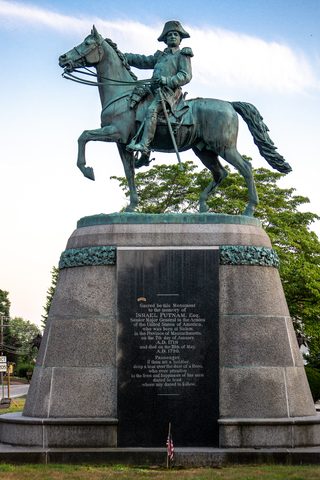
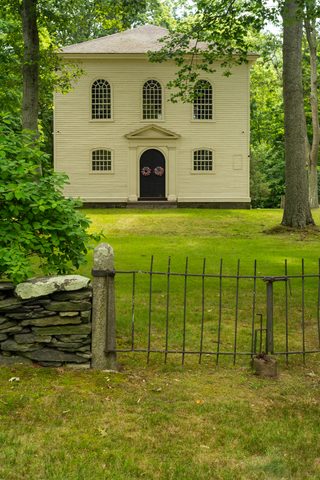
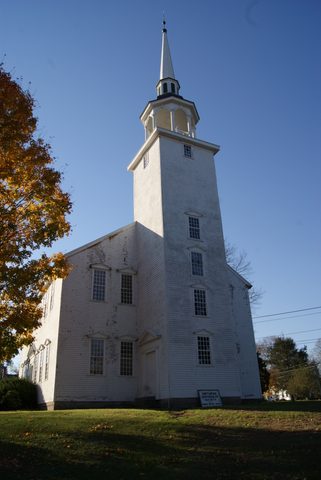
Brooklyn was settled in the late 17th century in territory then known as Mortlake, and incorporated as a town separate from Canterbury and Pomfret in May 1786; its name is thought to derive from the Quinebaug River, or "Brook Line," which forms its eastern boundary. Revolutionary War general Israel Putnam kept a farm in Brooklyn and died there in 1790; in 1888 his remains were reinterred beneath a bronze equestrian statue by sculptor Karl Gerhardt on Canterbury Road. Brooklyn served as an early Windham County seat and hosted the 1833 trial of schoolteacher Prudence Crandall, charged with educating Black students; Rev. Samuel J. May, who became the first Unitarian pastor of Brooklyn's 1771 meeting house in 1822, publicly defended her and helped found the American Anti-Slavery Society. In 1871, Celia Burleigh became minister of Brooklyn's Unitarian congregation. The Brooklyn Fair, tracing to 1809, is described by Connecticut Humanities as America's oldest continuously operating agricultural fair.
-
Free local-history museums with a General Putnam Gallery.
-
An 1888 bronze equestrian statue marking Putnam's grave.
-
sight
Connecticut's oldest Episcopal church building, completed 1771.
-
sight
An 1771 meeting house and Connecticut Freedom Trail site.
-
sight
A working bison farm with a farm store.
-
sight
Home to America's oldest continuously operating agricultural fair.
-
food
A Quiet Corner home-style institution since 1971.
-
food
Corporate home shop of a regional coffee-and-bakery chain.
-
Family restaurant serving Brooklyn since 1981.
-
food
Ticketed farm dinners on the former Golden Lamb Buttery property.
A general's grave and a schoolteacher's trial
Brooklyn was settled in the late 17th century in territory then known as Mortlake, and incorporated separate from Canterbury and Pomfret in May 1786. Revolutionary War general Israel Putnam kept a farm in Brooklyn and died there in 1790; in 1888 his remains were reinterred beneath a bronze equestrian statue by sculptor Karl Gerhardt on Canterbury Road. Brooklyn served as an early Windham County seat and hosted the 1833 trial of schoolteacher Prudence Crandall, charged with educating Black students. Rev. Samuel J. May, the first Unitarian pastor of Brooklyn's 1771 meeting house from 1822, organized the Windham County Peace Society, helped found the American Anti-Slavery Society, and publicly defended Crandall at a Canterbury town meeting. In 1871, lifelong activist Celia Burleigh became minister of Brooklyn's Unitarian congregation. The Brooklyn Fair, run by the Windham County Agricultural Society and tracing to 1809, is described by Connecticut Humanities as America's oldest continuously operating agricultural fair.
Getting there
Brooklyn sits where US Route 6 crosses Route 169, reached most easily from Interstate 395 Exit 37 at Danielson and then west on US 6. Route 169 bisects the town north-south and is part of a 32-mile stretch, from Lisbon to the Massachusetts line, designated a National Scenic Byway; Route 205 intersects it in town. There is no passenger rail station in Brooklyn, and no CTrail Hartford Line, Shore Line East or Metro-North service reaches the town; the nearest Amtrak station is New London Union Station, about 30 miles south.
Frequently asked questions
- How do I get to Brooklyn?
- By car — Brooklyn sits where US Route 6 crosses Route 169, reached from Interstate 395 Exit 37 at Danielson and west on US 6. There is no passenger rail station in Brooklyn; the nearest is New London Union Station, about 30 miles south.
- Is there a train to Brooklyn?
- No. No CTrail Hartford Line, Shore Line East or Metro-North service reaches Brooklyn. The nearest Amtrak station is New London Union Station, about 30 miles south.
- What is the Brooklyn Fair?
- An agricultural fair run by the Windham County Agricultural Society, tracing to 1809 and described as America's oldest continuously operating agricultural fair. The 176th annual fair runs August 27-30, 2026 at 15 Fairgrounds Road.
- Can I tour Creamery Brook Bison?
- The farm store is open Thursday and Friday 2-6 p.m. and Saturday 9 a.m.-1 p.m. Wagon tours of the bison herd are by private group booking only ($150 per group), not a walk-up experience — call ahead.
- Is there a hotel in Brooklyn?
- No hotel, inn or B&B could be verified operating inside Brooklyn. The nearest confirmed option is The Inn at Woodstock Hill, about 11 miles north, though its restaurant is open for private events only.
Foliage
Near peak this week · estimated peak Oct 14–20
On the Yankee Roots foliage driving route.
Derived from the Connecticut DEEP fall foliage map. DEEP's map is a climatological estimate last published in 2023; it describes a normal year, not this one. Stage names are ours. See the statewide forecast.
Connected pages
Nearby
-
Hampton, Connecticut: A Naturalist's Farm in the Quiet Corner
· Hampton, Connecticut
The two towns share a border
-
Plainfield, Connecticut: Four Villages and a Fish Hatchery
· Plainfield, Connecticut
The two towns share a border
-
Canterbury, Connecticut: Prudence Crandall's School
· Canterbury, Connecticut
The two towns share a border
-
Killingly, Connecticut: Cotton Mills, a Diner, and a Tiffany Birthplace
· Killingly, Connecticut
The two towns share a border
-
Pomfret, Connecticut: The Wolf Den and a Hilltop Vineyard
· Pomfret, Connecticut
The two towns share a border
Shared history
-
Canterbury, Connecticut: Prudence Crandall's School
· Canterbury, Connecticut
Brooklyn was incorporated separate from Canterbury and Pomfret in May 1786.
-
Pomfret, Connecticut: The Wolf Den and a Hilltop Vineyard
· Pomfret, Connecticut
Brooklyn was also incorporated separate from Pomfret in 1786.
-
Hampton, Connecticut: A Naturalist's Farm in the Quiet Corner
· Hampton, Connecticut
Hampton was incorporated in 1786 in part from Brooklyn.
Same region
-
Killingly, Connecticut: Cotton Mills, a Diner, and a Tiffany Birthplace
· Killingly, Connecticut
Interstate 395 Exit 41 for Route 12/101 serves Dayville in Killingly, near Brooklyn.
-
Chaplin, Connecticut: A Deacon's Bequest and a Bypassed Village
· Chaplin, Connecticut
Both on the Yankee Roots foliage route
-
Hampton, Connecticut: A Naturalist's Farm in the Quiet Corner
· Hampton, Connecticut
Both on the Yankee Roots foliage route
-
Woodstock, Connecticut: A Pink Cottage on Route 169
· Woodstock, Connecticut
Both on the Yankee Roots foliage route
-
Pomfret, Connecticut: The Wolf Den and a Hilltop Vineyard
· Pomfret, Connecticut
Both on the Yankee Roots foliage route
What travelers think
Log in to react.
No reviews yet.