Pomfret, Connecticut: The Wolf Den and a Hilltop Vineyard
Pomfret, Connecticut
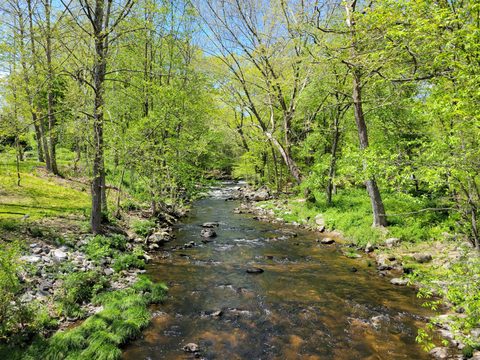
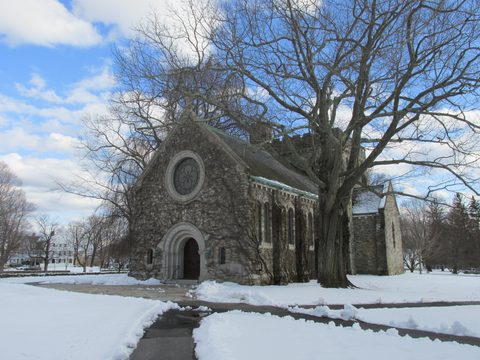
Pictures from Pomfret
See all 3 photos →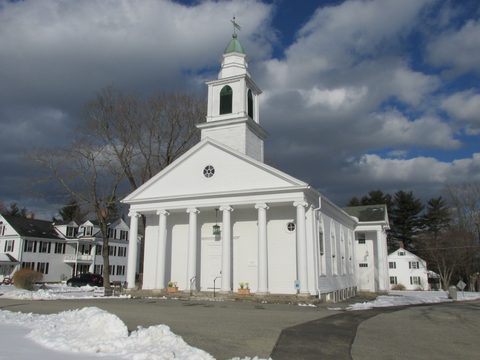
The land that became Pomfret was recognized as English property in 1686 and incorporated as a town in 1713, taking its name from Pontefract, in Yorkshire, England. That 1686 transaction — the Wabbaquasset Purchase — saw Major James Fitch sell roughly 15,000 acres to twelve settlers for thirty pounds; Pomfret School's campus sits on that land today. Pomfret's best-known story dates to 1742, when young farmer Israel Putnam tracked a wolf that had killed seventy of his sheep and goats to a den about three miles from his farm and crawled in with a torch to shoot it — traditionally regarded as the last wolf in Connecticut. The Wolf Den, a 19th-century tourist draw, still sits inside Mashamoquet Brook State Park. Painter James Abbott McNeill Whistler lived in Pomfret from 1849 to 1851, and Pomfret School, founded in 1894, hired U.S. Naval Academy architect Ernest Flagg to design its campus starting in 1905.
-
1,000+ acres, 6.5 miles of trails past the Wolf Den.
-
700-acre Bafflin Sanctuary, an Important Bird Area.
-
walk
150-acre preserve with nearly 8 miles of trails.
-
A rail-trail running roughly 50 miles across eastern Connecticut.
-
sight
Pick-your-own blueberries, apples, and pumpkins in season.
-
Family-owned since 1989 in a restored barn.
-
food
Family-farm ice cream since 1990.
-
stay
1761 colonial-revival estate with six guest rooms.
Wolf Putnam and a Wabbaquasset farm
In 1686, Major James Fitch — who had received title to the land from the sachem Owaneco two years earlier — sold roughly 15,000 acres to twelve settlers for thirty pounds, in what Pomfret School calls the Wabbaquasset Purchase; the town incorporated in 1713, naming itself for Pontefract in Yorkshire, England. In 1742 a young Pomfret farmer named Israel Putnam tracked a wolf that had killed seventy of his sheep and goats to a den about three miles from his farm, crawled in with a torch, and shot it — an exploit that earned him the nickname 'Wolf Putnam' and is traditionally regarded as the last wolf killed in Connecticut. The Wolf Den became a popular 19th-century tourist attraction and still sits inside Mashamoquet Brook State Park. Painter James Abbott McNeill Whistler lived in Pomfret from 1849 to 1851 after his father's death, finishing his childhood schooling there. Pomfret School was founded in 1894 by William E. Peck, a former St. Mark's headmaster, who bought the Charles Grosvenor Inn as the school's first building; in 1905 the school hired Ernest Flagg, architect of the U.S. Naval Academy, to master-plan its campus.
Getting there
Pomfret is a car destination in the Quiet Corner, reached via US Route 44 or Route 169, with I-395 east via the Putnam or Danielson exits. There is no passenger rail station in Pomfret or anywhere nearby: the nearest Connecticut station is Hartford Union Station, about 38 miles west, and the closest rail service overall is out of state, in Worcester, Massachusetts, or Providence, Rhode Island. Neither Metro-North's New Haven Line nor Shore Line East reaches Windham County.
Parks, an orchard, and a hilltop vineyard
Mashamoquet Brook State Park merges three former parks into more than 1,000 acres, with 6.5 miles of trails past the Wolf Den and rock formations called Table Rock and the Indian Chair. The Connecticut Audubon Society's Bafflin Sanctuary carries seven miles of trails across 700 acres, recognized as an Important Bird Area for grassland species like Eastern Meadowlarks and Bobolinks. Pomfret Forest and the Air Line State Park Trail, a rail-trail running roughly 50 miles across eastern Connecticut, add more hiking and biking. Lapsley Orchard's farm stand sells pick-your-own blueberries, apples, and pumpkins in season, and Gwyn Careg Inn, a 1761 colonial-revival estate with six guest rooms, is the town's own verified lodging.
Frequently asked questions
- How do I get to Pomfret?
- By car — US Route 44 or Route 169, with I-395 east via the Putnam or Danielson exits. There is no passenger rail station in Pomfret; the nearest Connecticut station is Hartford Union Station, about 38 miles west.
- What is the Wolf Den?
- A den inside Mashamoquet Brook State Park where, in 1742, farmer Israel Putnam is said to have tracked and shot a wolf — traditionally regarded as the last wolf in Connecticut. It became a popular 19th-century tourist attraction.
- Where can I hike in Pomfret?
- Mashamoquet Brook State Park has 6.5 miles of trails past the Wolf Den and rock formations; the Connecticut Audubon Society's Bafflin Sanctuary has seven miles across 700 acres; Pomfret Forest and the Air Line State Park Trail add more.
- Is there lodging in Pomfret?
- Yes — Gwyn Careg Inn, a 1761 colonial-revival estate with six guest rooms and a full breakfast, is Pomfret's own verified lodging. It's seasonal, open April through December.
- What food options does Pomfret have?
- The Vanilla Bean Cafe, family-owned since 1989 in a restored barn, and We-Li-Kit Ice Cream, a family farm making ice cream since 1990.
Foliage
Peak this week · estimated peak Oct 7–13
On the Yankee Roots foliage driving route.
Derived from the Connecticut DEEP fall foliage map. DEEP's map is a climatological estimate last published in 2023; it describes a normal year, not this one. Stage names are ours. See the statewide forecast.
Connected pages
Nearby
-
Putnam, Connecticut: Mill Town Turned Antiques Capital
· Putnam, Connecticut
US Route 44 runs directly from Pomfret into Putnam.
-
Hampton, Connecticut: A Naturalist's Farm in the Quiet Corner
· Hampton, Connecticut
The two towns share a border
-
Killingly, Connecticut: Cotton Mills, a Diner, and a Tiffany Birthplace
· Killingly, Connecticut
The two towns share a border
-
Brooklyn, Connecticut: A General's Grave and America's Oldest Fair
· Brooklyn, Connecticut
The two towns share a border
-
Woodstock, Connecticut: A Pink Cottage on Route 169
· Woodstock, Connecticut
Route 169 runs directly between the two village centers.
-
Eastford, Connecticut: A Forest Town Split from Ashford
· Eastford, Connecticut
The two towns share a border
Shared history
-
Brooklyn, Connecticut: A General's Grave and America's Oldest Fair
· Brooklyn, Connecticut
Brooklyn was also incorporated separate from Pomfret in 1786.
Same region
-
Canterbury, Connecticut: Prudence Crandall's School
· Canterbury, Connecticut
Both sit along Route 169, Connecticut's Quiet Corner scenic corridor.
-
Hampton, Connecticut: A Naturalist's Farm in the Quiet Corner
· Hampton, Connecticut
Both on the Yankee Roots foliage route
-
Brooklyn, Connecticut: A General's Grave and America's Oldest Fair
· Brooklyn, Connecticut
Both on the Yankee Roots foliage route
-
Woodstock, Connecticut: A Pink Cottage on Route 169
· Woodstock, Connecticut
Both on the Yankee Roots foliage route
-
Union, Connecticut: Graphite, Forest, and Connecticut's Least-Populated Town
· Union, Connecticut
Both on the Yankee Roots foliage route
What travelers think
Log in to react.
No reviews yet.