
Marine Park, Brooklyn: A Tide Mill on Gerritsen Creek
Marine Park, New York
Pictures from Marine Park
See all 1 photos →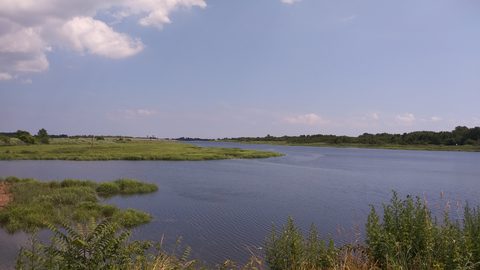
Marine Park grew up around Gerritsen Creek, the westernmost inlet of Jamaica Bay. A Native American village recorded in sources as Keshawchqueren hunted and fished here before Dutch settlers arrived in the seventeenth century, reportedly drawn to marshland that resembled their homeland. The Gerritsen family built a tide mill on the creek in that century, described as the first tide mill built in North America; it worked for roughly 250 years, until 1890, and an arsonist burned the abandoned structure in 1935. The park came afterwards and gave the neighborhood its name. Frederic B. Pratt and Alfred Tredway White jointly donated about 150 acres of land in 1917, the Whitney family added more from around 1920, New York City accepted the parkland offer in 1924, and the Brooklyn Board of Aldermen formally named it Brooklyn Marine Park in 1937.
-
walk
Fields, courts and shoreline paths along Gerritsen Creek, on land donated from 1917 and named in 1937.
-
The trailhead for the creek, with weekend hours and Urban Park Ranger programs run by the Salt Marsh Alliance.
-
Pilings from a seventeenth-century tide mill dam, still standing in the creek after the mill burned in 1935.
-
sight
The city's first municipal airport, dedicated in 1930 and part of Gateway National Recreation Area since 1972.
-
Two ice rinks, turf fields and a driving range inside four refurbished Floyd Bennett Field hangars.
-
sight
A 210-acre public course on Flatbush Avenue, open since 1963.
The creek, the park and the airfield
Gerritsen Creek once ran about eight blocks further north, into what is now Midwood; that stretch was converted to an underground storm drain north of Avenue U around 1920, and the creek's mouth and remaining open length lie inside the park. The pilings that carried the tide mill's dam are still visible in the water, reachable on the park's trails near the Salt Marsh Nature Center.
The park itself was designed by the landscape architect Charles Downing Lay, who won an Olympic silver medal for it in the town-planning and architecture category of the 1936 Summer Olympics art competitions. The land did not stay pristine. Through the middle of the twentieth century it was used as an illegal dumping ground for trash and abandoned cars, restoration work began in the 1990s, and a U.S. Army Corps of Engineers project budgeted $8.3 million in 2012 to restore salt-marsh habitat near the creek's mouth.
At the neighborhood's edge on Flatbush Avenue, Floyd Bennett Field was built between 1928 and 1930 as New York City's first municipal airport and dedicated in June 1930. It later served as Naval Air Station New York during and after the Second World War; the Navy left in 1970, and the site joined the National Park Service's Gateway National Recreation Area in 1972. Four of its historic hangars were refurbished into the Aviator Sports and Events Center, which opened in 2006.
Getting there
No subway station sits inside Marine Park, and buses do the work.
The subway station most commonly cited for the neighborhood is Kings Highway, at Kings Highway and East 16th Street, served by the Q at all times and the B on weekdays as an express; its own source places it on the Midwood and Homecrest border rather than in Marine Park. Flatbush Avenue–Brooklyn College, at Flatbush and Nostrand Avenues in the area called The Junction, is served by the 2 at all times and the 5 on weekdays and sits in Flatbush, bordering Flatlands and Midwood.
The B3 runs between Bergen Beach, at East 71st Street and Avenue U, and Bath Beach along Avenue U, the corridor that runs directly through Marine Park. The B41 comes south from Downtown Brooklyn at Cadman Plaza West along Flatbush Avenue and splits at Avenue P, one branch ending at Kings Plaza and the other going to Bergen Beach. The Q35 starts at the Flatbush Avenue–Brooklyn College station and runs down Flatbush Avenue past the Marine Park Golf Course and Floyd Bennett Field before crossing the Marine Parkway–Gil Hodges Memorial Bridge to Rockaway Park in Queens.
Frequently asked questions
- How do I get to Marine Park?
- By bus, mainly. No subway station is in the neighborhood; Kings Highway on the Q, with weekday B express service, is the station usually cited for it, and its own source places it on the Midwood-Homecrest border. The B3 runs along Avenue U through Marine Park, the B41 comes down Flatbush Avenue from Downtown Brooklyn, and the Q35 runs down Flatbush Avenue past the golf course and Floyd Bennett Field.
- What is the Gerritsen tide mill?
- A seventeenth-century Dutch tide mill built by the Gerritsen family on the shore of Gerritsen Creek, described as the first tide mill built in North America. It operated for roughly 250 years until 1890, and an arsonist burned the abandoned building in 1935. The wooden pilings that supported its dam remain visible in the creek and can be reached on the park's trails.
- What is Floyd Bennett Field?
- New York City's first municipal airport, built between 1928 and 1930 and dedicated in June 1930, later Naval Air Station New York. The Navy departed in 1970 and the field became part of Gateway National Recreation Area in 1972. It is open to the public, with historic hangars, trails and community gardens, and four hangars now house the Aviator Sports and Events Center.
- Can I visit the Hendrick I. Lott House?
- Not at present. The 1720 farmhouse, expanded in 1800 and designated a New York City Landmark on October 3, 1989 and listed on the National Register on March 3, 1994, is closed to the public while its interiors are restored, with structural work reported as scheduled to begin in 2026 ahead of a planned reopening as a historic house museum.
- Are there hotels in Marine Park?
- No hotel is listed here, and the other Brooklyn Community District 18 pages list none either. Plan on staying elsewhere in the city.
Connected pages
Nearby
-
Gerritsen Beach, Brooklyn: Bungalows, Vollies and the Point
· Gerritsen Beach, New York
Marine Park borders Gerritsen Beach directly along Gerritsen Avenue, and Gerritsen Creek supplies its salt marsh with fresh water.
Same region
-
Mill Basin, Brooklyn: The Island That Became a Peninsula
· Mill Basin, New York
Both sit in Brooklyn Community District 18, which groups Marine Park with Mill Basin, Canarsie, Bergen Beach, Georgetown and southern Flatlands.
-
Bergen Beach, Brooklyn: An Island, a Resort, a Parkway
· Bergen Beach, New York
The B3 bus runs along Avenue U between Bergen Beach and Bath Beach, through Marine Park.
-
Georgetown, Brooklyn: Named for a Development Half Built
· Georgetown, New York
Both sit in Brooklyn Community District 18, which groups Georgetown with Marine Park, Canarsie, Bergen Beach, Mill Basin and southern Flatlands.
-
Canarsie, Brooklyn: The Pier Where Golden City Burned
· Canarsie, New York
Both sit in Brooklyn Community District 18, which groups Canarsie with Marine Park, Bergen Beach, Mill Basin, Georgetown and southern Flatlands.
-
Plumb Beach, Brooklyn: Dunes, Horseshoe Crabs and a Filled Creek
· Plumb Beach, New York
Plumb Beach and Floyd Bennett Field both became part of Gateway National Recreation Area, created in 1972.
-
Flatlands, Brooklyn: Nieuw Amersfoort's Old Town Center
· Flatlands, New York
The Q35 runs down Flatbush Avenue through both neighborhoods, and both sit in Brooklyn Community District 18.
What travelers think
Log in to react.
No reviews yet.