Putnam, Connecticut: Mill Town Turned Antiques Capital
Putnam, Connecticut
Pictures from Putnam
See all 3 photos →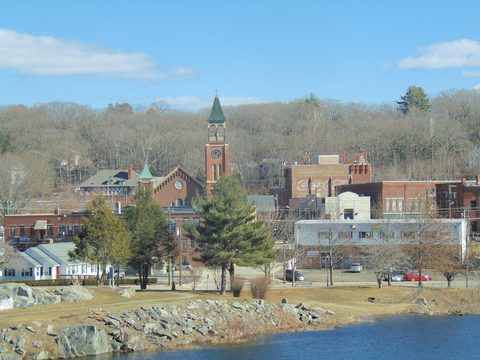
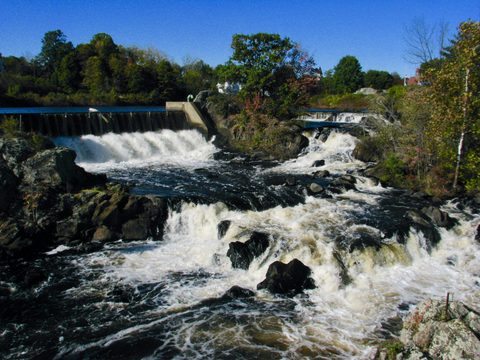
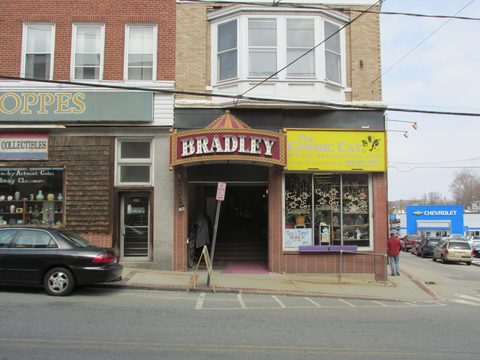
Putnam was originally known as Aspinock and was incorporated in 1855 from sections of Killingly, Pomfret, and Thompson, taking its name from Revolutionary War hero General Israel Putnam. The Quinebaug River powered the town's growth: grist and saw mills served local farmers through the mid-1700s, and by incorporation several large cotton mills lined the river alongside a new rail line. In August 1955, hurricanes Connie and Diane brought torrential rain across Connecticut within a week of each other; the resulting flood destroyed homes, businesses, and factories in Putnam and washed away the railroad bed, accelerating the decline of the town's mill economy. Putnam reinvented itself by filling its empty mills with antique dealers, and beginning in the early 2000s many of those shops gave way to restaurants and a walkable Main Street arts district — the character the town keeps today.
-
sight
A former vaudeville theater staging a full season of plays and musicals.
-
walk
A paved 2.7-mile path along the Quinebaug River.
-
An arts school in dance, theatre, music and creative arts, with its own student companies.
-
Research center and museum of Putnam's mill-town history.
-
food
A Main Street restaurant with a private event space, The Cellar.
-
food
A Main Street restaurant built around shareable 'flights' of food, drink and land-and-sea plates.
-
A Main Street pub-restaurant with sixteen rotating draft taps.
-
A Main Street brewery and taproom pouring about eleven house beers plus cider.
From Aspinock to antiques
The land along the Quinebaug River was first developed by grist and saw mills serving local farms in the mid-1700s. By 1855, when the town incorporated as Putnam — named for Revolutionary War hero General Israel Putnam — cotton mills and a rail line had already arrived, and the town became a manufacturing center supplying goods for Civil War soldiers. That mill economy ended abruptly in August 1955, when hurricanes Connie and Diane dropped heavy rain across Connecticut within a week of each other; the resulting flood destroyed homes, businesses, and factories in Putnam and washed away the railroad bed. The town's empty mill buildings found a second life as an antiques center, and beginning in the early 2000s many antique shops were replaced by restaurants and a small arts community — the walkable Main Street that visitors find today. Textile executive George Morse's mansion and the River Mills Heritage Trail, which interprets six former factory sites, still trace that manufacturing past.
Getting there
Putnam is a drive-to destination in the Quiet Corner: Interstate 395 is the main north-south corridor through town, and US Route 44 is the principal east-west route, with Routes 12, 21, and 171 feeding Main Street. There is no passenger rail station in Putnam. The nearest rail service is Union Station in Worcester, Massachusetts, about 30 miles north, with Amtrak's Lake Shore Limited and MBTA commuter rail to Boston; New London Union Station, about 45 miles south, offers Amtrak Northeast Regional trains and CTrail Shore Line East. The Northeastern Connecticut Transit District runs local bus service connecting Putnam to ten other Quiet Corner towns.
Where to eat and stay
Downtown Putnam's Main Street carries the town's dining, from 85 Main's lunch and dinner specials to Blackstone Putnam's land-and-sea flights, Courthouse Bar & Grille's burgers and steaks, and Bear Hands Brewing's taproom of house beers and ciders. Putnam has no hotel, inn, or B&B of its own; the closest confirmed options are the Inn at Woodstock Hill, about seven miles west in neighboring Woodstock, and the Quiet Corner Inn in Brooklyn.
Frequently asked questions
- How do I get to Putnam?
- By car — Interstate 395 is the main north-south corridor, and US Route 44 the principal east-west route, with Routes 12, 21, and 171 feeding Main Street. There is no passenger rail station in Putnam; the nearest rail service is in Worcester, MA (about 30 miles north) or New London Union Station (about 45 miles south).
- Why is Putnam known for antiques?
- After the town's textile mills declined, empty mill buildings were filled with antique dealers. Beginning in the early 2000s many of those shops gave way to restaurants and a small arts community along Main Street.
- What happened to Putnam in 1955?
- Hurricanes Connie and Diane brought heavy rain to Connecticut within a week of each other that August; the resulting flood destroyed homes, businesses, and factories in Putnam and washed away the railroad bed.
- Is there a train to Putnam?
- No — there is no passenger rail station in Putnam. The nearest rail service is Union Station in Worcester, Massachusetts (about 30 miles north) or New London Union Station (about 45 miles south).
- Where can I stay near Putnam?
- Putnam has no hotel, inn, or B&B of its own. The closest confirmed options are the Inn at Woodstock Hill, about seven miles west in neighboring Woodstock, and the Quiet Corner Inn in Brooklyn.
Foliage
Peak this week · estimated peak Oct 7–13
Derived from the Connecticut DEEP fall foliage map. DEEP's map is a climatological estimate last published in 2023; it describes a normal year, not this one. Stage names are ours. See the statewide forecast.
Connected pages
Nearby
-
Pomfret, Connecticut: The Wolf Den and a Hilltop Vineyard
· Pomfret, Connecticut
US Route 44 runs directly from Pomfret into Putnam.
-
Woodstock, Connecticut: A Pink Cottage on Route 169
· Woodstock, Connecticut
The drive into Woodstock begins at I-395 Exit 47 in Putnam.
-
Thompson, Connecticut: A Train Wreck and the First Paved Oval
· Thompson, Connecticut
The two towns share a border
-
Killingly, Connecticut: Cotton Mills, a Diner, and a Tiffany Birthplace
· Killingly, Connecticut
Interstate 395 continues north from Killingly directly into Putnam.
Same region
-
Thompson, Connecticut: A Train Wreck and the First Paved Oval
· Thompson, Connecticut
US Route 44 links Thompson to Putnam and East Putnam.
-
Canterbury, Connecticut: Prudence Crandall's School
· Canterbury, Connecticut
Both are served by the Northeastern Connecticut Transit District's regional bus network.
What travelers think
Log in to react.
No reviews yet.