Woodstock, Connecticut: A Pink Cottage on Route 169
Woodstock, Connecticut
Pictures from Woodstock
See all 3 photos →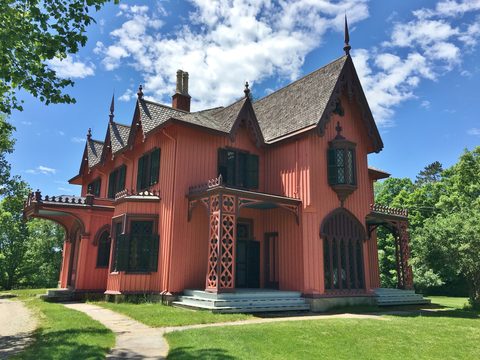
Woodstock was settled in 1686 by thirteen men from Roxbury, Massachusetts, who first named the plantation New Roxbury; Judge Samuel Sewall suggested the name Woodstock, after the English town, in 1690. Massachusetts had purchased the land from the Mohegans in 1682, and the town remained part of that colony until 1749, when it incorporated and joined Connecticut, resolving a long-running boundary dispute. Woodstock was a farming community through the 18th century, developed shoe factories in the 19th, then reverted largely to farming while becoming a summer destination for wealthy East Coast families. The best-known symbol of that era is Roseland Cottage, the pink Gothic Revival summer home New York merchant and abolitionist Henry C. Bowen built in 1846. Bowen opened his adjoining park to the public in 1876; today Woodstock is Connecticut's second-largest town by land area, after New Milford, and home to the Woodstock Fair, one of the state's oldest agricultural fairs.
-
sight
The 1846 pink Gothic Revival summer home of Henry C. Bowen.
-
walk
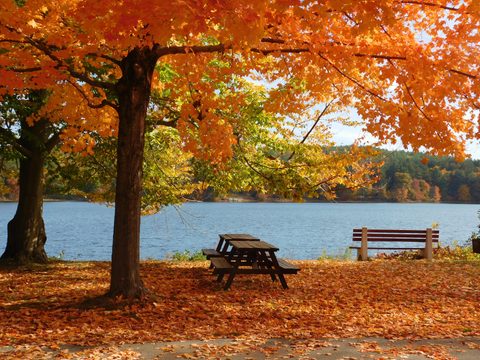
A lake, golf course, and picnic grounds opened to the public in 1876.
-
sight
One of Connecticut's oldest agricultural fairs, held over Labor Day weekend.
-
The town's historical society and archive.
-
Fine dining in a Woodstock mansion.
-
Hop-forward IPAs and lagers, live music on weekends.
-
21 rooms in a country house; restaurant is private-events only.
New Roxbury to the pink cottage
Thirteen men from Roxbury, Massachusetts settled the plantation in 1686 and first called it New Roxbury; the name changed to Woodstock in 1690 at the suggestion of Judge Samuel Sewall. Massachusetts had bought the land from the Mohegans in 1682, and the town remained part of that colony until 1749, when it incorporated and became part of Connecticut. Farming defined Woodstock through the 18th century; a 19th-century turn to industry made it known for shoe factories before the town reverted largely to farming and became a summer destination for wealthy East Coast families. New York merchant, publisher, and abolitionist Henry C. Bowen built his pink Gothic Revival summer house, Roseland Cottage, in 1846, and opened his adjoining park to the public in 1876. The Woodstock Fair, run by the Woodstock Agricultural Society, reaches its 165th edition in 2026 — one of Connecticut's oldest continuously held agricultural fairs.
Getting there
Woodstock is a drive-to town: from I-395, take Exit 47 at Putnam, follow Route 44 west about a mile, then Route 171 west about three miles to Route 169 north. Route 169 itself is a 32-mile National Scenic Byway running the length of town and on to the Massachusetts line. There is no passenger rail anywhere in Windham County — neither the CTrail Hartford Line nor Shore Line East reaches this part of the state. From Boston, the drive is about I-90 west to the Auburn interchange, then I-290 and I-395 south; from Providence, I-95 north to I-395 north.
Roseland Cottage and Roseland Park
Roseland Cottage, a National Historic Landmark operated by Historic New England, sits on Route 169 with a boxwood garden and what is described as the nation's oldest surviving indoor bowling alley; it hosts an annual Fine Arts and Crafts Festival each October. Henry Bowen's adjoining Roseland Park, opened to the public in 1876 and still run by the Trustees of the Bowen Family Trust, wraps a lake with a nine-hole public golf course — Connecticut's second oldest — plus boating, a playground, and picnic grounds; swimming is not permitted. For lodging, the Inn at Woodstock Hill offers 21 rooms in a country house near the junction of Route 169 and Plaine Hill Road; its restaurant currently serves private events only.
Frequently asked questions
- How do I get to Woodstock?
- By car — from I-395, take Exit 47 at Putnam, follow Route 44 west about a mile, then Route 171 west about three miles to Route 169 north. There is no passenger rail anywhere in Windham County.
- What is Roseland Cottage?
- The 1846 pink Gothic Revival summer home of New York merchant and abolitionist Henry C. Bowen, now a National Historic Landmark operated by Historic New England, with a boxwood garden and the nation's oldest surviving indoor bowling alley.
- When is the Woodstock Fair?
- The fair runs the week including Labor Day, opening the Thursday before and closing Labor Day Monday. It's run by the Woodstock Agricultural Society and reaches its 165th edition in 2026.
- Can I swim at Roseland Park?
- No — swimming isn't permitted on Roseland Lake. The park does allow boating and fishing, and has a nine-hole public golf course, Connecticut's second oldest.
- Where can I stay in Woodstock?
- The Inn at Woodstock Hill has 21 rooms in a country house near Route 169 and Plaine Hill Road. Its restaurant currently operates for private events only, not general public dining.
Foliage
Peak this week · estimated peak Oct 7–13
On the Yankee Roots foliage driving route.
Derived from the Connecticut DEEP fall foliage map. DEEP's map is a climatological estimate last published in 2023; it describes a normal year, not this one. Stage names are ours. See the statewide forecast.
Connected pages
Nearby
-
Pomfret, Connecticut: The Wolf Den and a Hilltop Vineyard
· Pomfret, Connecticut
Route 169 runs directly between the two village centers.
-
Putnam, Connecticut: Mill Town Turned Antiques Capital
· Putnam, Connecticut
The drive into Woodstock begins at I-395 Exit 47 in Putnam.
-
Thompson, Connecticut: A Train Wreck and the First Paved Oval
· Thompson, Connecticut
I-395 Exit 47 (US 44) serves the Putnam/Woodstock side of Thompson.
-
Union, Connecticut: Graphite, Forest, and Connecticut's Least-Populated Town
· Union, Connecticut
The two towns share a border
-
Eastford, Connecticut: A Forest Town Split from Ashford
· Eastford, Connecticut
The two towns share a border
Shared history
-
Eastford, Connecticut: A Forest Town Split from Ashford
· Eastford, Connecticut
Crystal Pond Park, 134 wooded acres, sits on the Eastford/Woodstock town line.
-
Union, Connecticut: Graphite, Forest, and Connecticut's Least-Populated Town
· Union, Connecticut
Nipmuck State Forest also spans into Woodstock, and Route 197 links Union to North Woodstock.
-
Canterbury, Connecticut: Prudence Crandall's School
· Canterbury, Connecticut
Route 169's 32-mile National Scenic Byway threads Canterbury and Woodstock, with Pomfret in between.
Same region
-
Pomfret, Connecticut: The Wolf Den and a Hilltop Vineyard
· Pomfret, Connecticut
Both on the Yankee Roots foliage route
-
Brooklyn, Connecticut: A General's Grave and America's Oldest Fair
· Brooklyn, Connecticut
Both on the Yankee Roots foliage route
-
Sterling, Connecticut: A Dye House and the Birthplace of Dow Jones
· Sterling, Connecticut
The nearest lodging to Sterling is The Inn at Woodstock Hill, in Woodstock.
-
Union, Connecticut: Graphite, Forest, and Connecticut's Least-Populated Town
· Union, Connecticut
Both on the Yankee Roots foliage route
-
Ashford, Connecticut: Colonel Knowlton's Rangers
· Ashford, Connecticut
Both on the Yankee Roots foliage route
What travelers think
Log in to react.
No reviews yet.