Killingly, Connecticut: Cotton Mills, a Diner, and a Tiffany Birthplace
Killingly, Connecticut
Pictures from Killingly
See all 3 photos →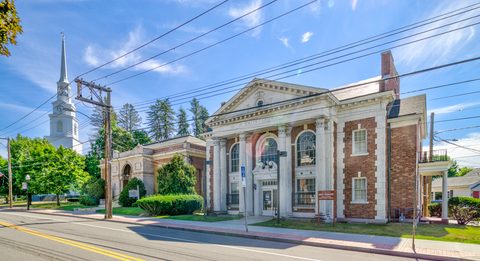

Killingly was settled in 1700 and incorporated in 1708, beginning as a cluster of mill villages on the Five Mile and Quinebaug Rivers; English colonists first called the area "Aspinock" before Governor Gurdon Saltonstall suggested "Kellingly," later altered to Killingly. In the first half of the 19th century Killingly was the largest producer of cotton goods in Connecticut, and it later became known as "the curtain capital of the world." Mary Dixon Kies, born in South Killingly in 1752, received a U.S. patent in 1809 for weaving straw with silk and thread — often cited as the first patent issued to a woman in her own name. Charles Lewis Tiffany, founder of Tiffany & Company, was born in Killingly in 1812 and worked in his father's store and cotton mill before leaving for New York. Danielson has had a notable Laotian community since 1979, when the first refugee family arrived sponsored by a local couple.
-
Local-history museum and genealogical research center.
-
sight
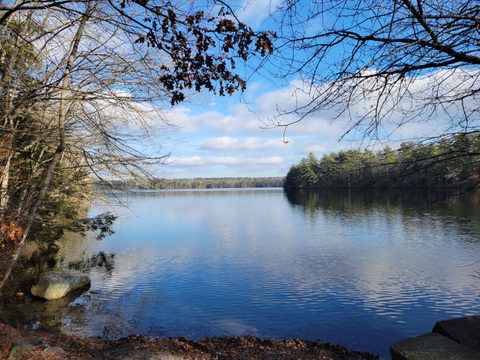
367 acres named for a pre-Revolutionary iron furnace.
-
162 acres on a pond straddling the Rhode Island line.
-
A paved riverside path through downtown Danielson.
-
sight
Tandem skydiving for first-timers, May through October.
-
A 20-acre National Register district of 19th-century commercial buildings.
-
food
Small-batch craft brewery and kitchen in Dayville.
-
Organic, locally sourced cafe with vegan and gluten-free options.
Cotton, curtains, and a Tiffany birthplace
Killingly was settled in 1700 and incorporated in 1708, beginning as a cluster of mill villages on the Five Mile and Quinebaug Rivers. In the first half of the 19th century Killingly was the largest producer of cotton goods in Connecticut, later known as "the curtain capital of the world." Mary Dixon Kies, born in South Killingly in 1752, received a U.S. patent in 1809 for weaving straw with silk and thread — often cited as the first patent issued to a woman in her own name; she is buried in Old South Killingly Cemetery. Charles Lewis Tiffany, founder of Tiffany & Company, was born in Killingly in 1812 and worked in his father's general store and cotton mill office before leaving for New York. The borough of Danielson, originally "Danielsonville" for Gen. James Danielson, has had a notable Laotian community since September 1979, when the first refugee family arrived sponsored by Daniel and Carolyn O'Leary — a heritage visible today in the borough's Lao restaurants.
Getting there
Interstate 395 is the primary north-south corridor through Killingly, meeting US Route 6 and Route 101 near downtown Danielson; Route 12 also passes through and divides downtown. There is no passenger rail station in Killingly or Danielson; the Norwich and Worcester Railroad reached the village by 1840 and shaped Main Street's growth, but no passenger service remains. The nearest Connecticut rail service is CTrail Shore Line East at New London, reached by driving south on I-395. Metro-North's New Haven Line and the CTrail Hartford Line do not serve northeastern Connecticut at all.
Frequently asked questions
- How do I get to Killingly?
- By car — Interstate 395 is the main corridor, meeting US Route 6 and Route 101 near downtown Danielson. There is no passenger rail station in Killingly; the nearest Connecticut rail service is Shore Line East at New London.
- Is there a train to Killingly?
- No. Killingly has no passenger rail station today, and Metro-North's New Haven Line and the CTrail Hartford Line do not serve northeastern Connecticut at all. Drive south on I-395 to reach Shore Line East at New London.
- What is the Danielson Main Street Historic District?
- A 20-acre National Register district with more than 40 commercial buildings from about 1850-1920, including the 1901 Bugbee Memorial Library, the 1855 Westfield Congregational Church and the 1856 Attawaugan Hotel.
- Can I go skydiving in Killingly?
- Yes — Skydive Danielson offers tandem jumps for first-timers at Danielson Airport, operating seasonally May through October, seven days a week.
- Is there a hotel in Killingly?
- No hotel or inn inside Killingly could be independently confirmed as bookable; travelers should check availability directly before planning around any single property.
Foliage
Near peak this week · estimated peak Oct 14–20
Derived from the Connecticut DEEP fall foliage map. DEEP's map is a climatological estimate last published in 2023; it describes a normal year, not this one. Stage names are ours. See the statewide forecast.
Connected pages
Nearby
-
Putnam, Connecticut: Mill Town Turned Antiques Capital
· Putnam, Connecticut
Interstate 395 continues north from Killingly directly into Putnam.
-
Thompson, Connecticut: A Train Wreck and the First Paved Oval
· Thompson, Connecticut
Interstate 395 continues north from Killingly to the Massachusetts line at Thompson.
-
Sterling, Connecticut: A Dye House and the Birthplace of Dow Jones
· Sterling, Connecticut
The two towns share a border
-
Pomfret, Connecticut: The Wolf Den and a Hilltop Vineyard
· Pomfret, Connecticut
The two towns share a border
-
Plainfield, Connecticut: Four Villages and a Fish Hatchery
· Plainfield, Connecticut
The two towns share a border
-
Brooklyn, Connecticut: A General's Grave and America's Oldest Fair
· Brooklyn, Connecticut
The two towns share a border
Same region
-
Plainfield, Connecticut: Four Villages and a Fish Hatchery
· Plainfield, Connecticut
Interstate 395 and Route 12 both connect Killingly south to Plainfield.
-
Brooklyn, Connecticut: A General's Grave and America's Oldest Fair
· Brooklyn, Connecticut
Interstate 395 Exit 41 for Route 12/101 serves Dayville in Killingly, near Brooklyn.
-
Sterling, Connecticut: A Dye House and the Birthplace of Dow Jones
· Sterling, Connecticut
Sterling and Killingly are both eastern Windham County Quiet Corner towns reached via I-395.
What travelers think
Log in to react.
No reviews yet.