Orientation
Sterling, Connecticut: A Dye House and the Birthplace of Dow Jones
Sterling, Connecticut
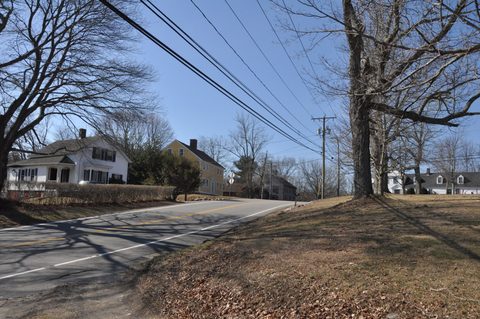

Sterling was the northern section of Voluntown until it separated and obtained town privileges from the Connecticut Assembly in May 1794. The town was named for Dr. John Sterling, a local resident who pledged to give the town a library in return for the honor but never fulfilled the promise — the community later built its library through private fundraising. Sterling's first mill opened in 1800 on the Quandock River, and the Pike family ran the town's dye works for roughly 100 years beginning in 1811, when William Pike pioneered chlorine bleaching of fabric. Dow Jones co-founder Charles Dow was born in Sterling in 1851 into a farming family. The Comte de Rochambeau's French army marched through and camped in Sterling in 1781, en route to join Washington's forces.
Getting there
Sterling is reached entirely by car: take I-395 to Exit 32 in the Moosup section of Plainfield and head east on Route 14, or east on Route 14A (Plainfield Pike) through Oneco. Route 14 continues into Rhode Island as Rhode Island Route 14. There is no passenger rail service in Sterling or anywhere in Windham County; the railbed that carried the New Haven Railroad through town from 1898 to 1968 is now the Moosup Valley State Park Trail. The nearest CTrail and Amtrak platforms are well to the south and west.
Rochambeau's route and a dye house dynasty
The Sterling Hill Historic District, listed on the National Register in 1986, preserves 15 principal structures on a ridge that straddles the Plainfield-Sterling line, including the Dorrance Homestead (c. 1716) and the Gallup Homestead, or Dorrance Inn (c. 1732). Rochambeau's French army camped here in 1781 on the march to join Washington. The Pike family ran Sterling's dye works for a century starting in 1811, when William Pike pioneered chlorine bleaching of fabric; his son James later developed a permanent fast-black dye process.
What's here
-
Moosup Valley State Park Trail
A 5.8-mile rail-trail spanning Sterling and Plainfield.
-
Sterling Hill Historic District
A ridge-top 18th-century village on the Rochambeau march route.
-
Sterling Historical Society
Monthly meetings preserving local documents and artifacts.
-
Sterling Public Library
Lends museum and park discount passes.
-
Weidele's Pizza & Pub
Sterling's main sit-down restaurant on Main Street.
Questions
How do I get to Sterling?
By car — take I-395 to Exit 32 in Moosup (Plainfield) and head east on Route 14 or Route 14A. There is no passenger rail service anywhere in Windham County.
What is the Sterling Hill Historic District?
A ridge-top village straddling the Plainfield-Sterling line, listed on the National Register in 1986, with 15 principal structures including 18th-century houses and the Greek Revival Sterling Hill Baptist Church. The houses are private residences, viewable from the road.
Is there a restaurant in Sterling?
Weidele's Pizza & Pub on Main Street serves pizza, wings and fried seafood; call ahead to confirm current hours.
Foliage
Turning this week · estimated peak Oct 14–20
On the Connecticut Heritage foliage driving route.
Derived from the Connecticut DEEP fall foliage map. DEEP's map is a climatological estimate last published in 2023; it describes a normal year, not this one. Stage names are ours. See the statewide forecast.
Connected pages
Nearby
-
Killingly, Connecticut: Cotton Mills, a Diner, and a Tiffany Birthplace
· Killingly, Connecticut
The two towns share a border
-
Voluntown, Connecticut: A Volunteer Town on the Rhode Island Line
· Voluntown, Connecticut
Route 49 continues north from Voluntown's boat launch directly into Sterling.
-
Plainfield, Connecticut: Four Villages and a Fish Hatchery
· Plainfield, Connecticut
The two towns share a border
Shared history
-
Plainfield, Connecticut: Four Villages and a Fish Hatchery
· Plainfield, Connecticut
The Sterling Hill Historic District and the Moosup Valley State Park Trail both straddle the Plainfield-Sterling line.
Same region
-
Killingly, Connecticut: Cotton Mills, a Diner, and a Tiffany Birthplace
· Killingly, Connecticut
Sterling and Killingly are both eastern Windham County Quiet Corner towns reached via I-395.
-
Woodstock, Connecticut: A Pink Cottage on Route 169
· Woodstock, Connecticut
The nearest lodging to Sterling is The Inn at Woodstock Hill, in Woodstock.
-
North Stonington, Connecticut: The Town That Wasn't Named Jefferson
· North Stonington, Connecticut
Both on the Connecticut Heritage foliage route
-
Voluntown, Connecticut: A Volunteer Town on the Rhode Island Line
· Voluntown, Connecticut
Both on the Connecticut Heritage foliage route
-
Plainfield, Connecticut: Four Villages and a Fish Hatchery
· Plainfield, Connecticut
Both on the Connecticut Heritage foliage route